
You’ll learn how to style a coffee table that feels intentional, calm, and collected without looking staged. Think layered heights, mixed textures, and small curated vignettes that balance function with beauty. I’ll walk you through book pedestals, trays, sculptural greenery, and the subtle rules designers use—so you can create a surface that breathes and invites—while saving a few pro moves for what comes next.
Layer Heights for Visual Interest
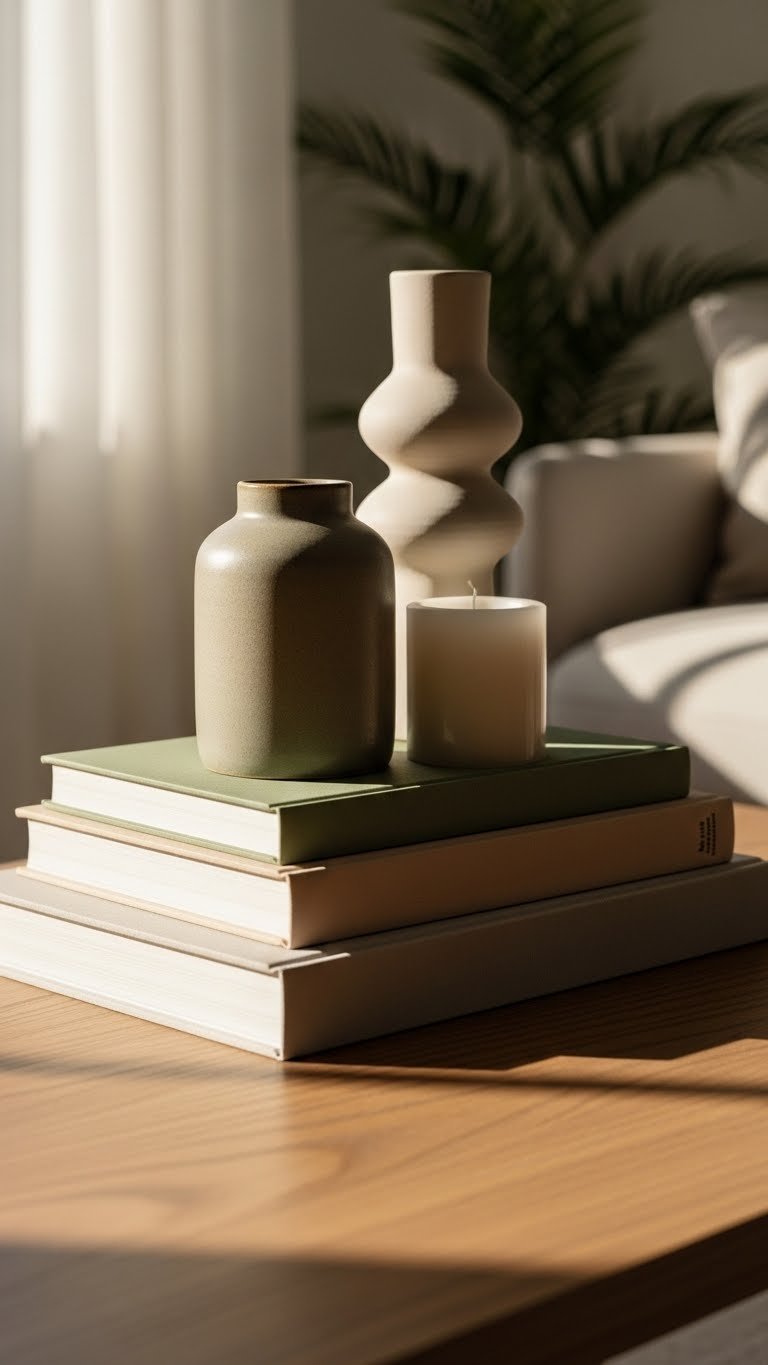
When you arrange items on a coffee table, vary heights to create depth and a curated look: stack two or three books as a low base, add a medium-height vase or candle, and finish with a taller sculptural object or plant.
You’ll use varying platforms and staggered heights to guide the eye, keep the display breathable, and let each piece feel intentionally free and unconfined.
Mix Textures for Depth
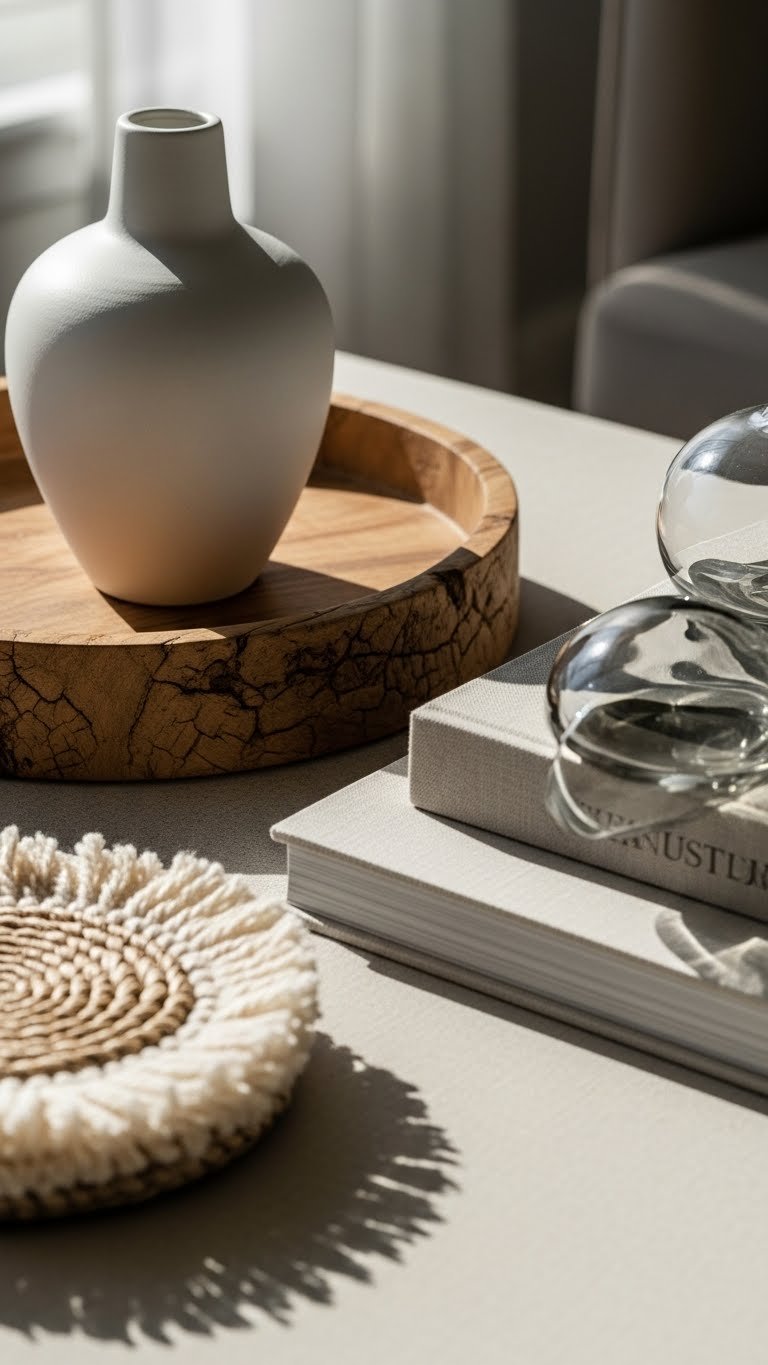
Layer different textures to give your coffee table dimensionality and tactile appeal: pair a smooth ceramic vase with a rough-hewn wooden tray, tuck a linen-covered book beneath a glossy glass object, and add a soft woven coaster or boucle accent to soften the mix.
Then mix rough linen with smooth glass pieces, let natural fibers breathe, and edit to keep the look free and intentional.
Contrast Shapes to Create Tension

If you want a coffee table that feels dynamic, pair opposing shapes—think a round ceramic vase against a rectangular tray or an angular metal object beside a soft, curvy bowl—to create visual tension and movement. You’ll lean into asymmetrical geometry and sculptural silhouettes, letting contrasts breathe. Keep scales varied, surfaces minimal, and arrangements spare so each shape asserts freedom and purpose without clutter.
Group Objects Into Curated Vignettes

Although each object can stand alone, groupings give the table purpose and personality. You’ll arrange pieces like a museum grouping: varied heights, textures, and intented focal points that read as a single scene. Embrace negative space, anchor with a tray, and use color blocking subtly to define zones. Let each vignette feel edited, free, and deliberate — a calm, curated statement.
Add a Pop of Color
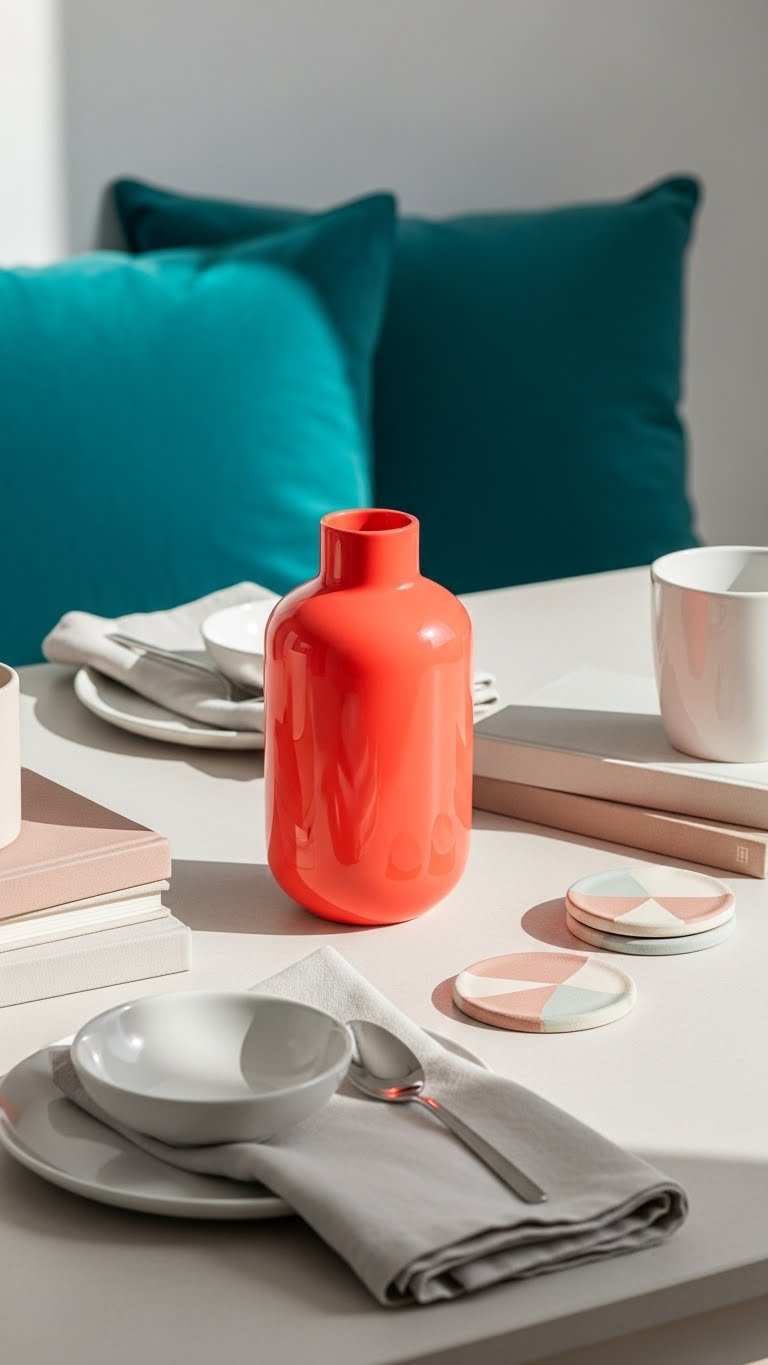
Why not let a single bright piece do the talking? You pick one vivid object — a vase, book or artwork — and everything else steps back.
Pair bold pillows nearby to echo color without clutter, tuck neutral accents around, and set ceramic coasters as small, functional art. The result feels intentional, free, and modern: one confident hue liberates the whole tabletop composition.
Anchor With a Tray
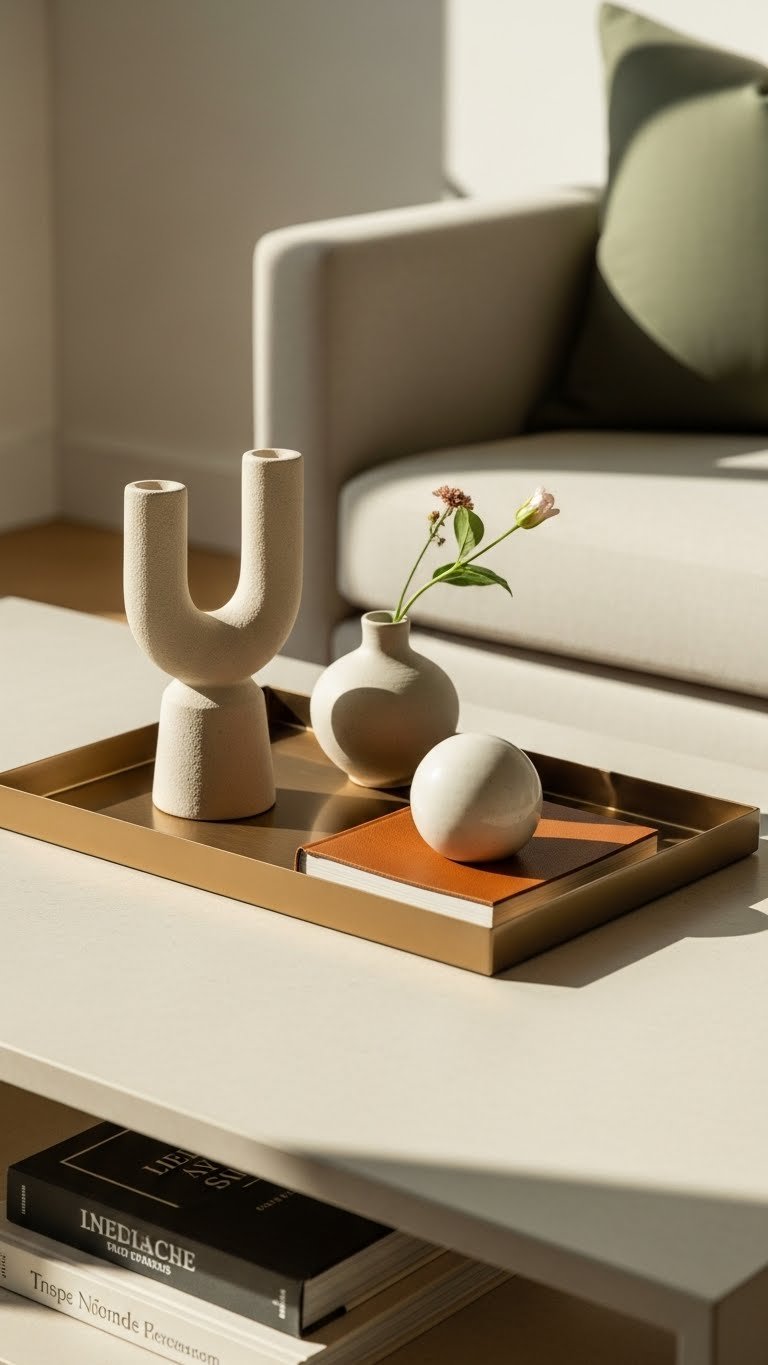
Pull a tray together to ground your tabletop and keep styling from drifting into clutter. Choose a minimalist anchor — a low-profile tray in warm metal or matte wood — then arrange a weighted centerpiece, a small vase, and one tactile object.
You’ll create a calm focal point that feels curated, airy, and liberated, letting each piece breathe while keeping your coffee table confidently composed.
Stack Books as a Base
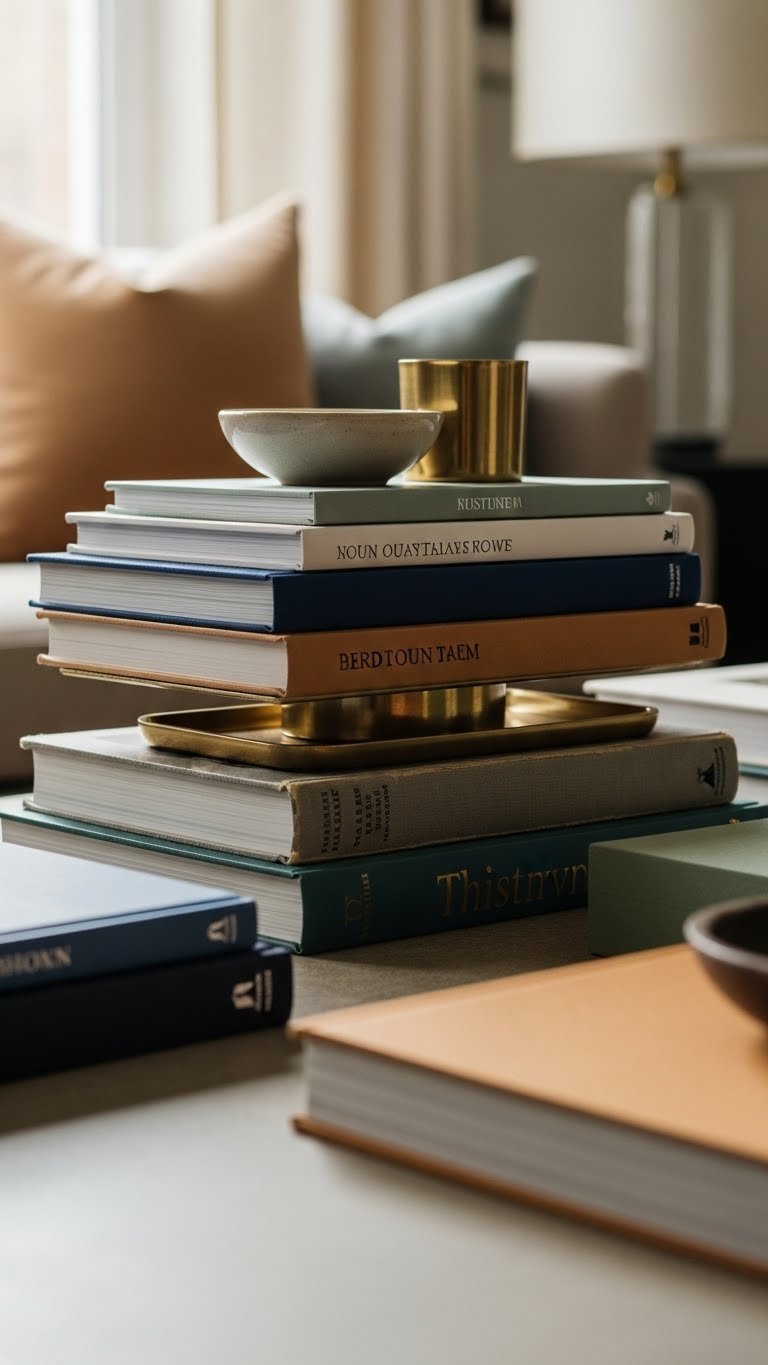
Books make an instant pedestal: stack two to four hardcover volumes to lift a smaller object and create layered height on your coffee table.
You’ll mix textures — glossy spines, worn vintage covers — to add character. Let the stack act as curated display and subtle hidden storage by sliding a slim tray or box beneath. You’ll edit boldly, keeping the arrangement airy and free.
Incorporate Living Greenery
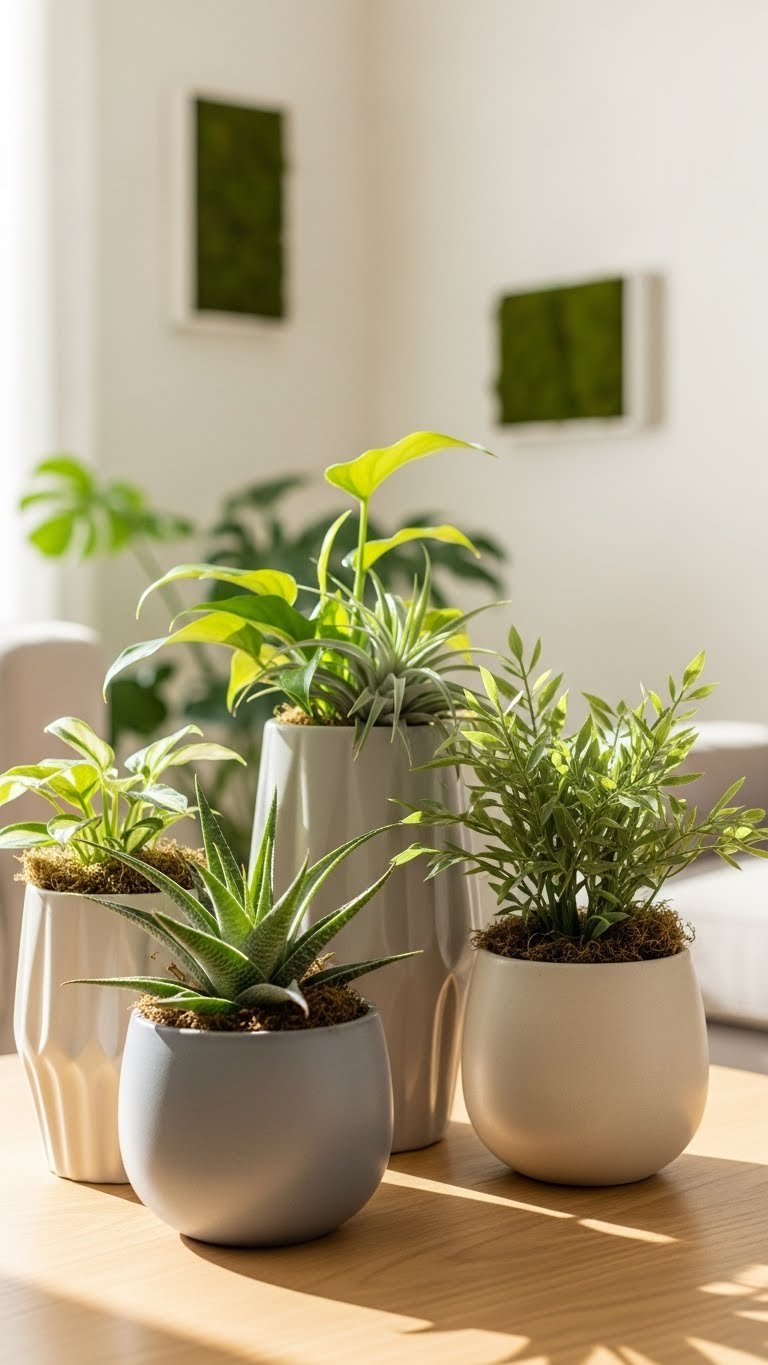
Adding living greenery brings instant freshness and a softer scale to your coffee table vignette. Choose air purifying foliage or low maintenance succulents in sculptural pots, mixing textures and heights for a collected look. Try a small vertical moss tray or a discreet wall mounted planter behind the table to extend the scene. You’ll enjoy a calm, liberated corner that breathes.
Use Tall Floral Arrangements Sparingly

Greenery softens the table’s silhouette, so when you introduce tall florals keep them deliberate and rare. You’ll use scale restraint: one dramatic stem group anchors a moment without overpowering sightlines. Choose vase placement to respect traffic and conversation, offsetting height with low objects nearby. Let tall blooms feel intentional — a liberated accent, not a constant obstruction.
Balance Opposing Sides
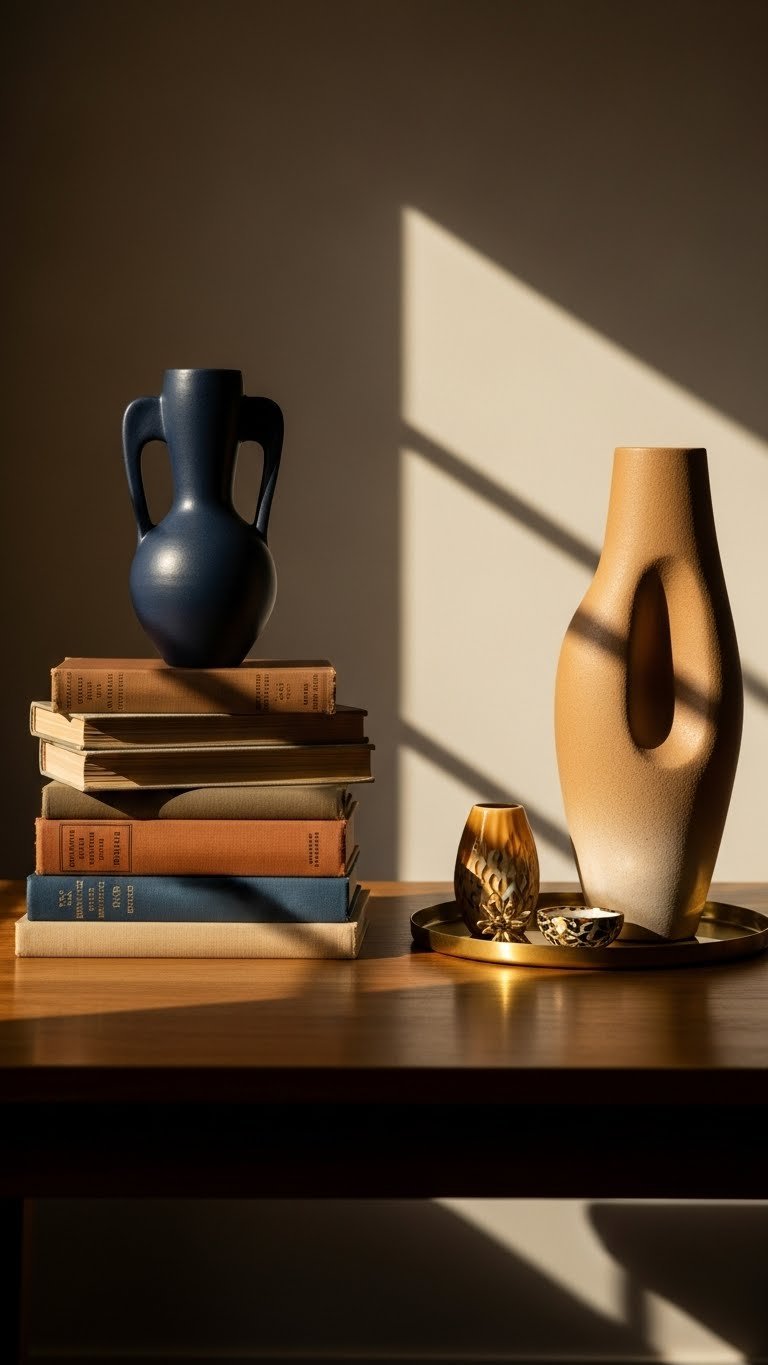
When you arrange objects, aim to balance opposing sides so the table reads as a cohesive whole rather than two competing clusters. You’ll create visual tension by offsetting weight, color, or height—one side anchored, the other lighter—but maintain asymmetric harmony. Trust contrast: a stack of books opposite a sculptural object, a low tray balancing a tall vase, freedom in curated imbalance that still feels intentional.
Combine Materials for Richness

Although you can lean into a single palette, mixing materials—wood, metal, glass, stone, and fabric—gives a coffee table depth and tactile interest. You’ll pair raw edge wood with smoked glass, balance cool metal trays and warm stone coasters, and soften with a small fabric runner. Choose pieces that contrast in texture and scale so the arrangement feels curated, free, and intentional.
Style a Mini Library

Think of a mini library as a small, deliberate vignette—stack a few favorite books horizontally to create varying heights, tuck a slim hardcover vertically as a mini bookend, and add one or two tactile objects (a ceramic vase, a brass clip) to punctuate the spread. Curate a mini bookshelf corner with your pocket classics collection, a scented candle, and a low tray for keys—free, calm, intentional.
Place a Statement Sculpture

After you’ve curated that intimate mini library, introduce a single sculptural piece to anchor the table and lift the composition. Choose a form that reads as modern minimalism — clean lines, tactile presence — or something outdoor inspired like weathered stone or driftwood.
You’ll let that singular object set tone, invite movement, and free the rest of the surface to breathe.
Layer Small Dishes and Bowls

Layer small dishes and bowls to add depth and purpose without cluttering the surface. You’ll mix textures and sizes—small bowls for keys or matches, nested dishes for trinkets—so each piece feels intentional. Position them off-center, let negative space breathe, and rotate items to keep things effortless. The result is curated utility that keeps your coffee table airy, personal, and ready for living.
Add Mirrored or Metallic Accents
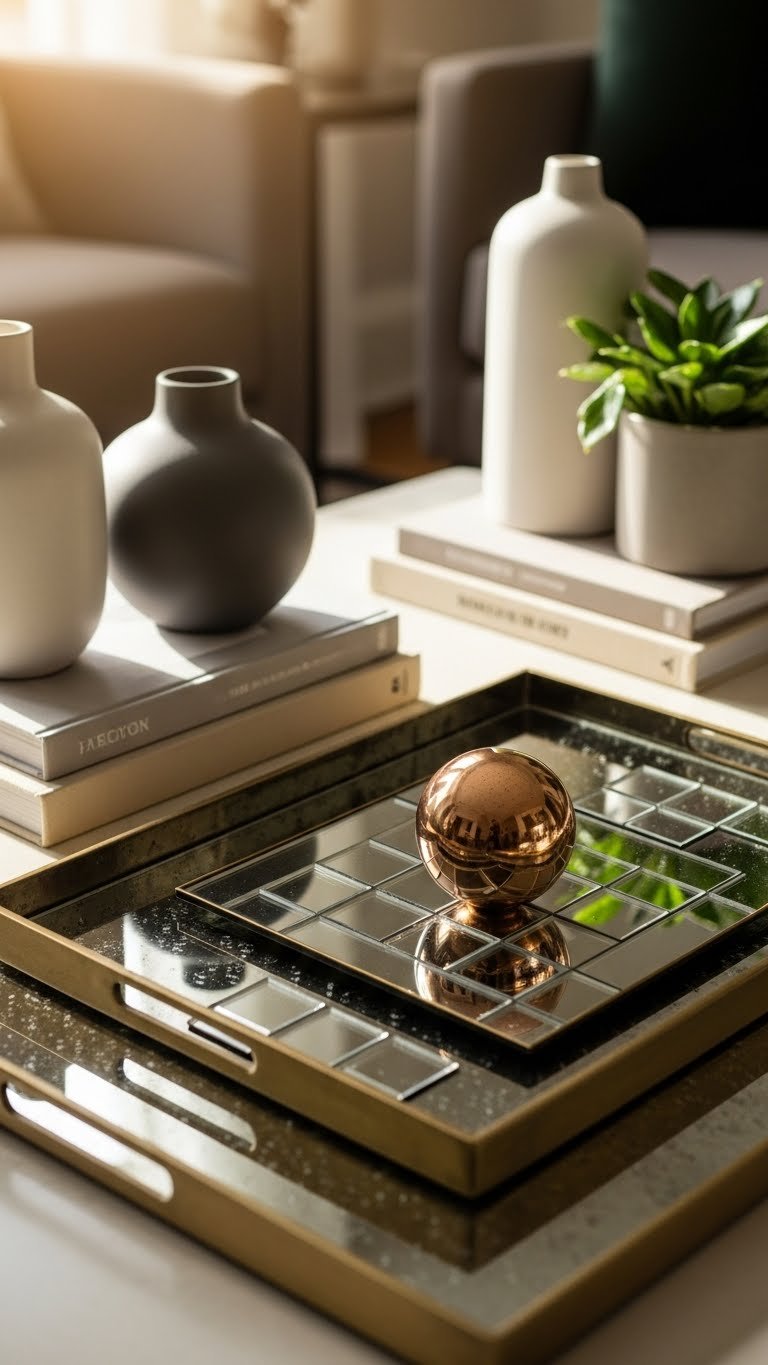
Introduce mirrored or metallic accents to catch light and add a refined edge to your coffee table styling. You’ll layer antique mirrors as trays or small tiles, pairing them with hammered metals for texture. Choose a single focal metallic piece, balance with matte objects, and let reflections amplify plants, books, and open space—giving your table a liberated, polished look without clutter.
Use Personal Treasures as Focal Points
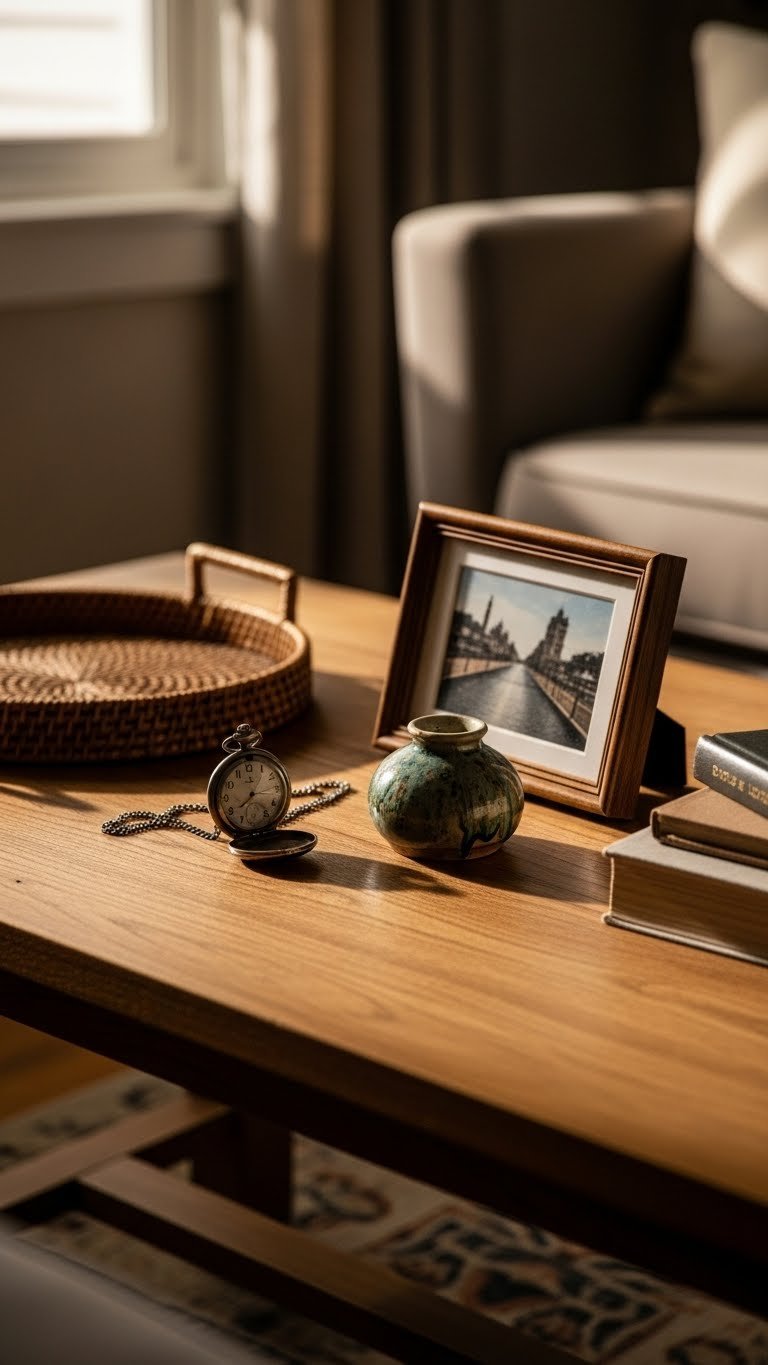
Anyone can make a coffee table feel uniquely theirs by choosing one or two personal treasures as the visual anchor—think a vintage pocket watch, a framed travel photo, or a small ceramic heirloom. You’ll create an heirloom spotlight that grounds the surface.
Arrange surrounding pieces to amplify a storytelling display: a low stack of books, a textured tray, and negative space so your story breathes.
Include Functional Items for Entertaining
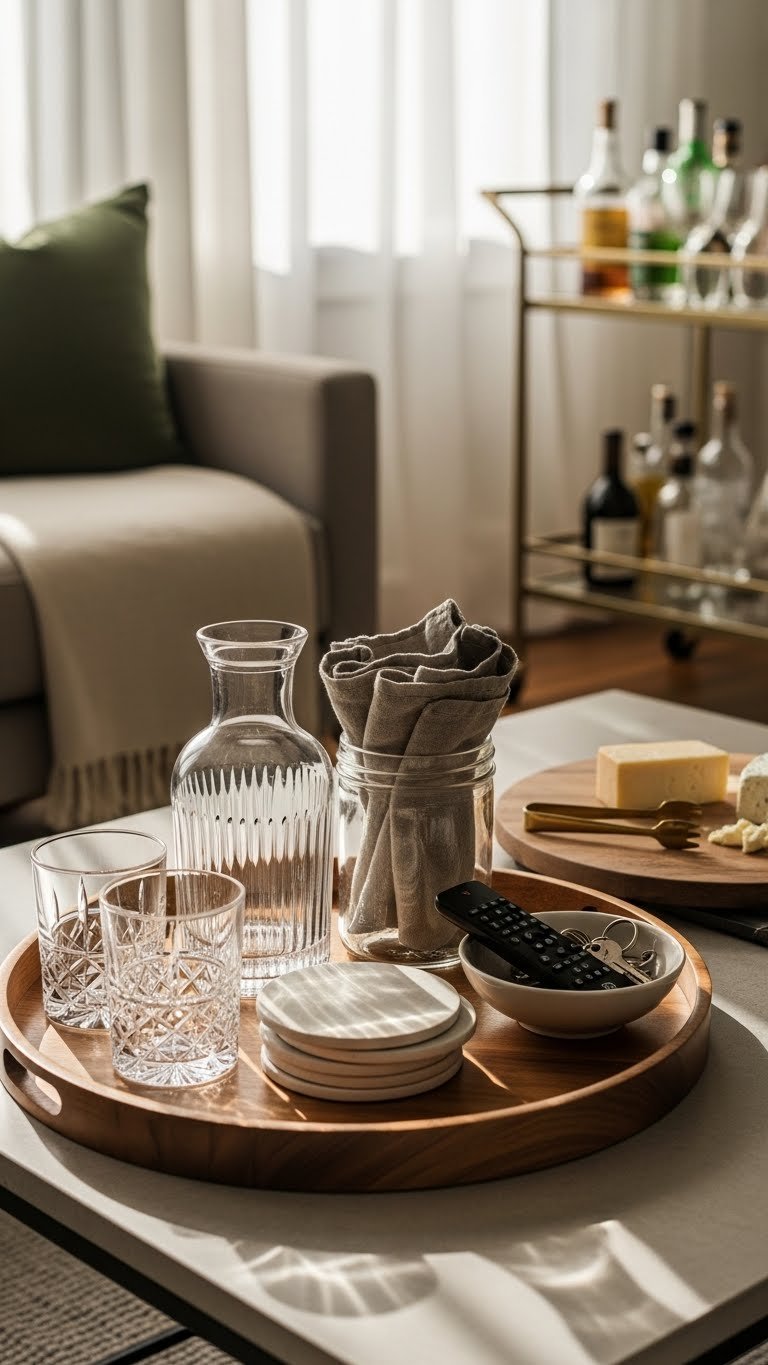
When you’re planning a vignette with guests in mind, blend beauty with purpose: keep a stylish tray for drinks, a stack of coasters, an accessible jar of napkins, and a small bowl for keys or remotes so the table looks curated and stays useful. Add serving essentials like a compact cheese board and tongs; link to a nearby bar cart for overflow, keeping the scene effortless and free.
Soften With Textiles on Nearby Ottomans

Layering textured throws and plush cushions on nearby ottomans instantly softens the room and invites guests to linger.
Choose a plush velvet throw draped casually over an ottoman edge, pair it with a neutral woven pouf for contrast, and add a single sculptural cushion for balance. You’ll create a tactile, relaxed corner that feels curated, inviting, and easy to live in.
Create Symmetry With Rule of Thirds
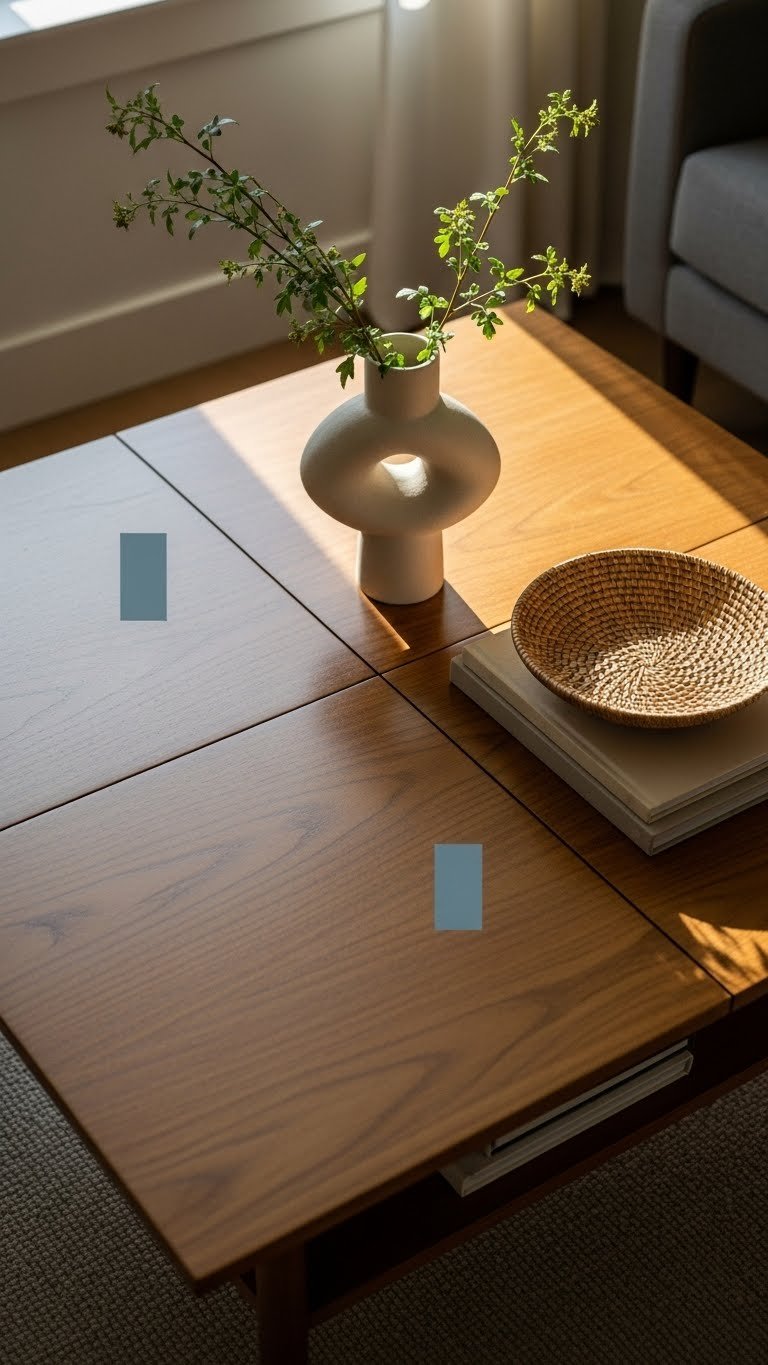
Even if your pieces differ in scale, use the rule of thirds to anchor the coffee table visually: divide the surface into three zones and place a focal object on one intersection, a lower, textural item on another, and a complimenting negative space on the third. You’ll use golden thirds to create balance; set visual anchors, vary height, repeat a hue, and leave breathing room for freedom.
Highlight Curiosity Cabinet Finds
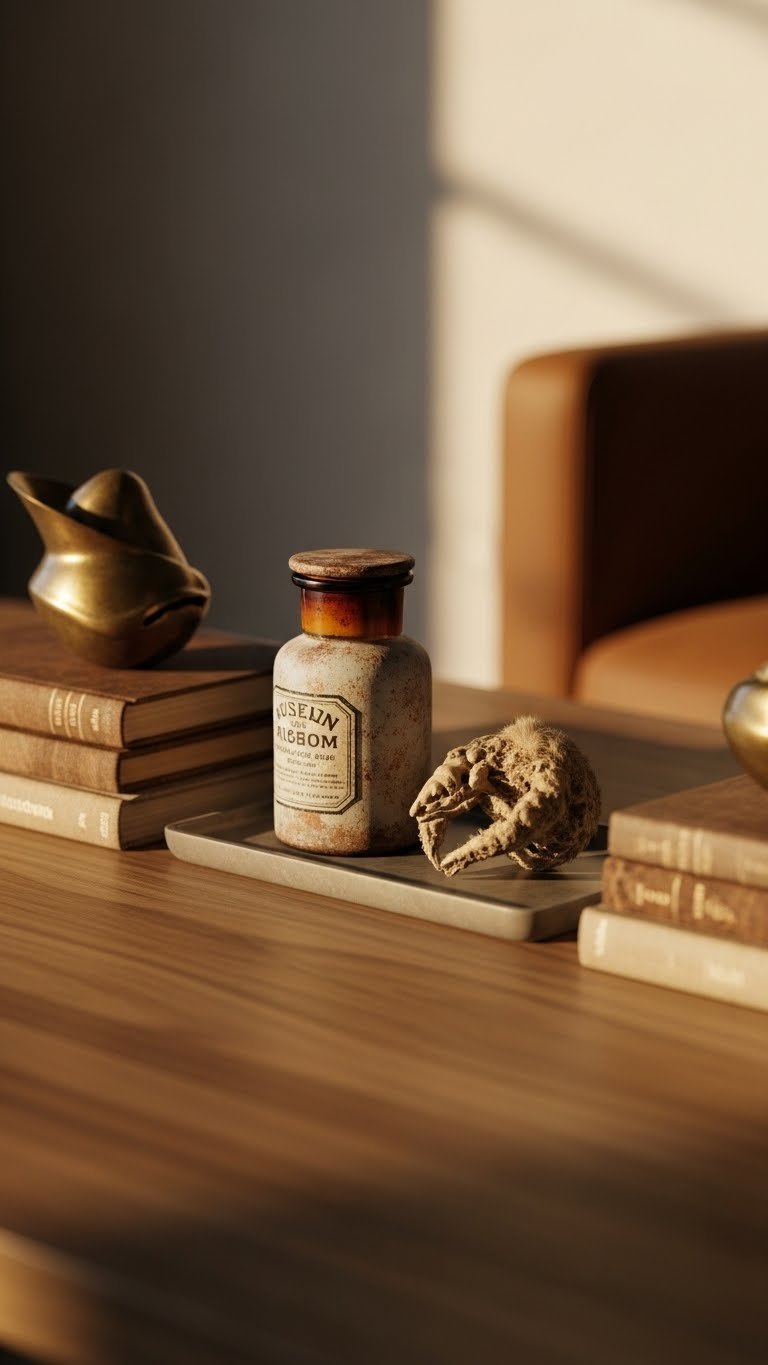
Curiosity transforms a coffee table into a tiny museum—place a beloved cabinet find front and center so its story becomes the room’s conversation starter. You’ll spotlight a vintage apothecary jar or an unexpected taxidermy piece, pairing it with a low tray and sculptural book stack. Keep accessories minimal, let patina and oddity speak, and invite guests to lean in and explore.
Keep Negative Space for Breathing Room

After you’ve centered an intriguing cabinet find, resist the urge to crowd the rest of the table. Leave airy margins around objects so each piece breathes. You’ll create visual respite, letting texture and shape speak. Edit ruthlessly: one sculptural book, a small plant, a tray with negative space. This curated minimalism frees the room, invites movement, and feels intentional rather than cluttered.