
You’ll shape a home that feels intentional by leaning into a strong color story, tactile layers, and curated finishes. Start with a dominant hue—deep green or warm taupe—echo it in upholstery, cabinetry, and rugs, then soften with bouclé throws, velvet cushions, and hand‑loomed rugs. Add sculptural lighting, vintage brass, and framed art for personality, and keep negative space to avoid clutter—here are 25 practical ideas to make it sing.
Embrace Dark Green as a Statement Color

When you choose dark green as a statement color, you introduce depth and sophistication that anchors a room without overpowering it. You’ll pair deep forest walls with vintage brass fixtures, balance emerald velvet seating against matte ceramics, and let natural light liberate textures.
You’ll curate touches that feel intentional, confident, and open—creating a space that invites exploration without confining your style.
Use Color Drenching to Unify Rooms
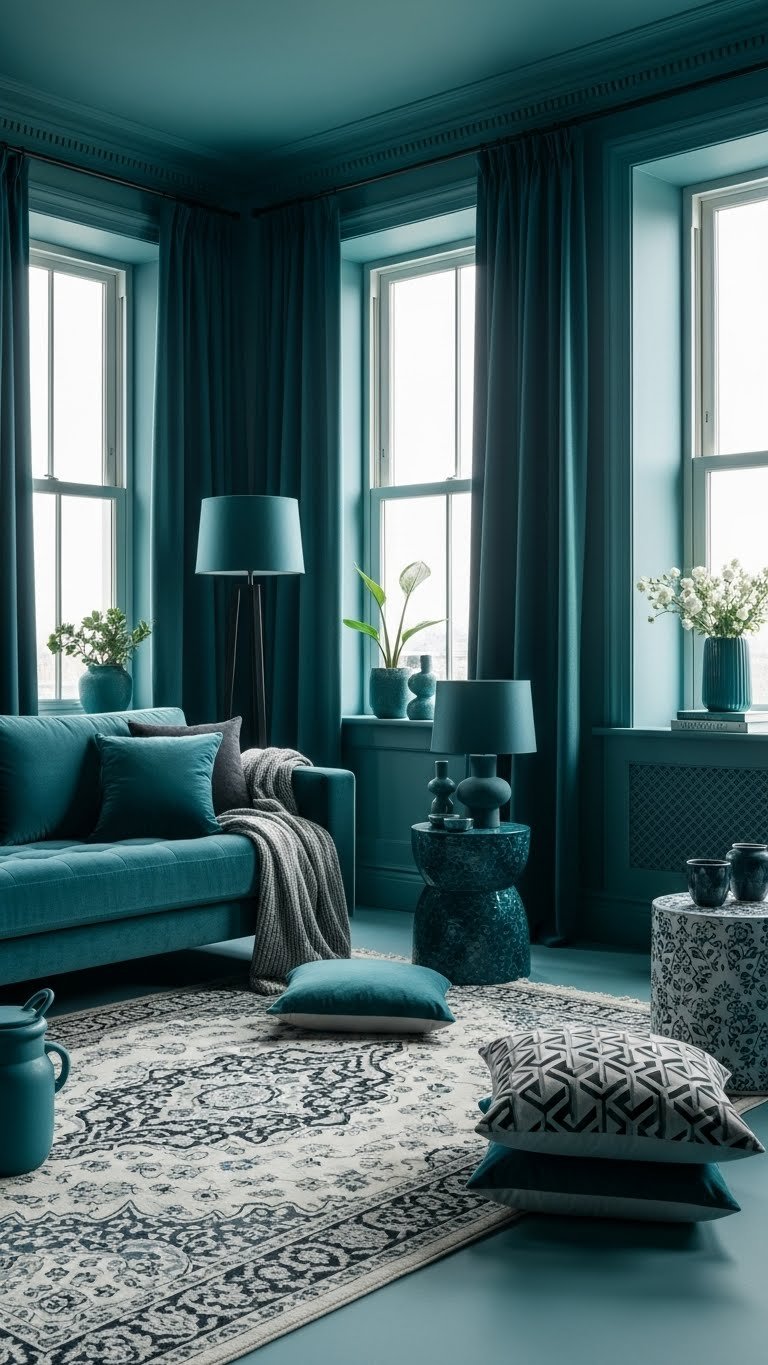
Think of color drenching as painting the mood of a room with one confident hue: you pick a dominant color and layer it across walls, upholstery, rugs, and accessories so the space reads as a cohesive whole. You’ll control tonal shifts with deliberate shade shifts, balance boldness with negative space, and add monochrome accents for texture and freedom — a unified, liberated canvas.
Create Tuxedo Cabinets in the Kitchen
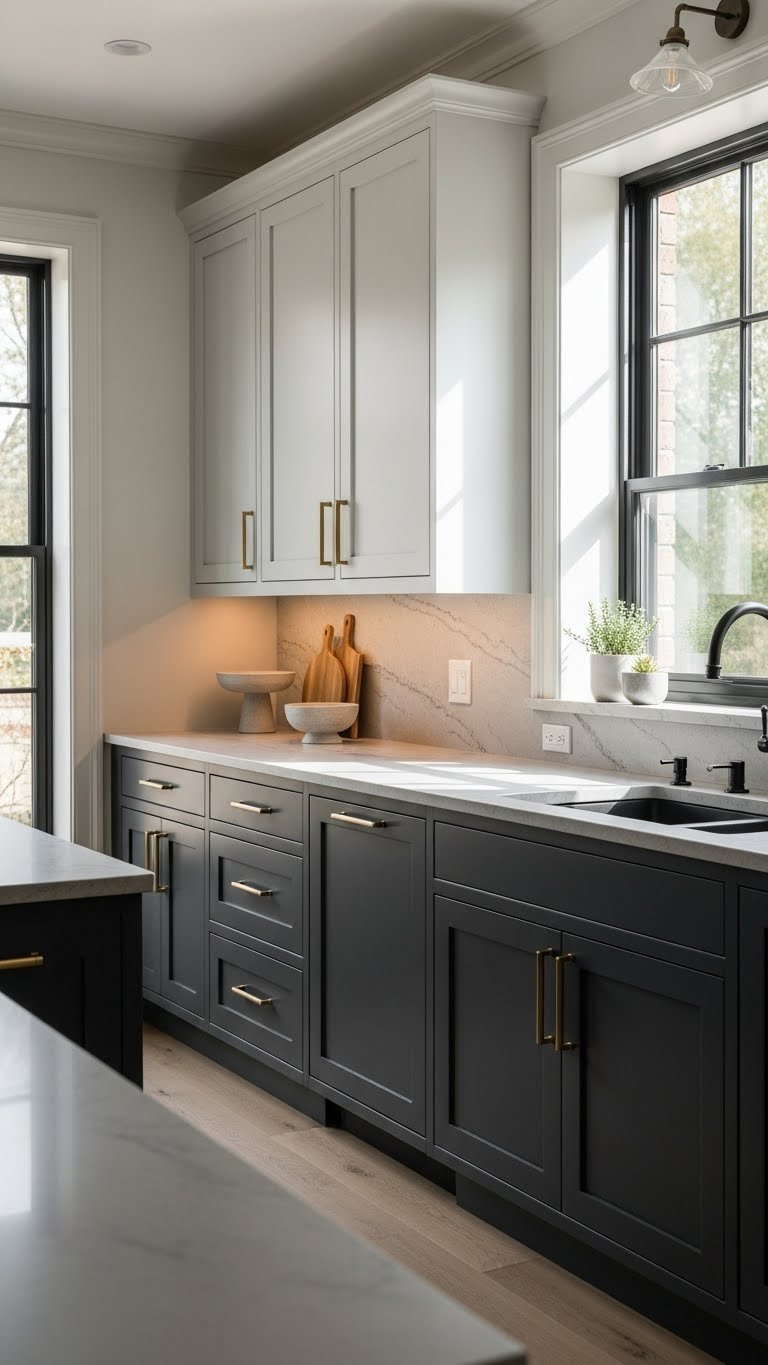
Color drenching taught you how a single hue can unify a room; applying the same principle to cabinetry gives your kitchen a similarly polished, intentional look by splitting finishes between upper and lower cabinets. You’ll create tuxedo cabinets by pairing contrast finishes — light uppers, deep lowers — and selecting bold hardware choices that feel liberated yet refined, balancing proportion, scale, and clean lines throughout.
Layer Textured Fabrics Like Bouclé
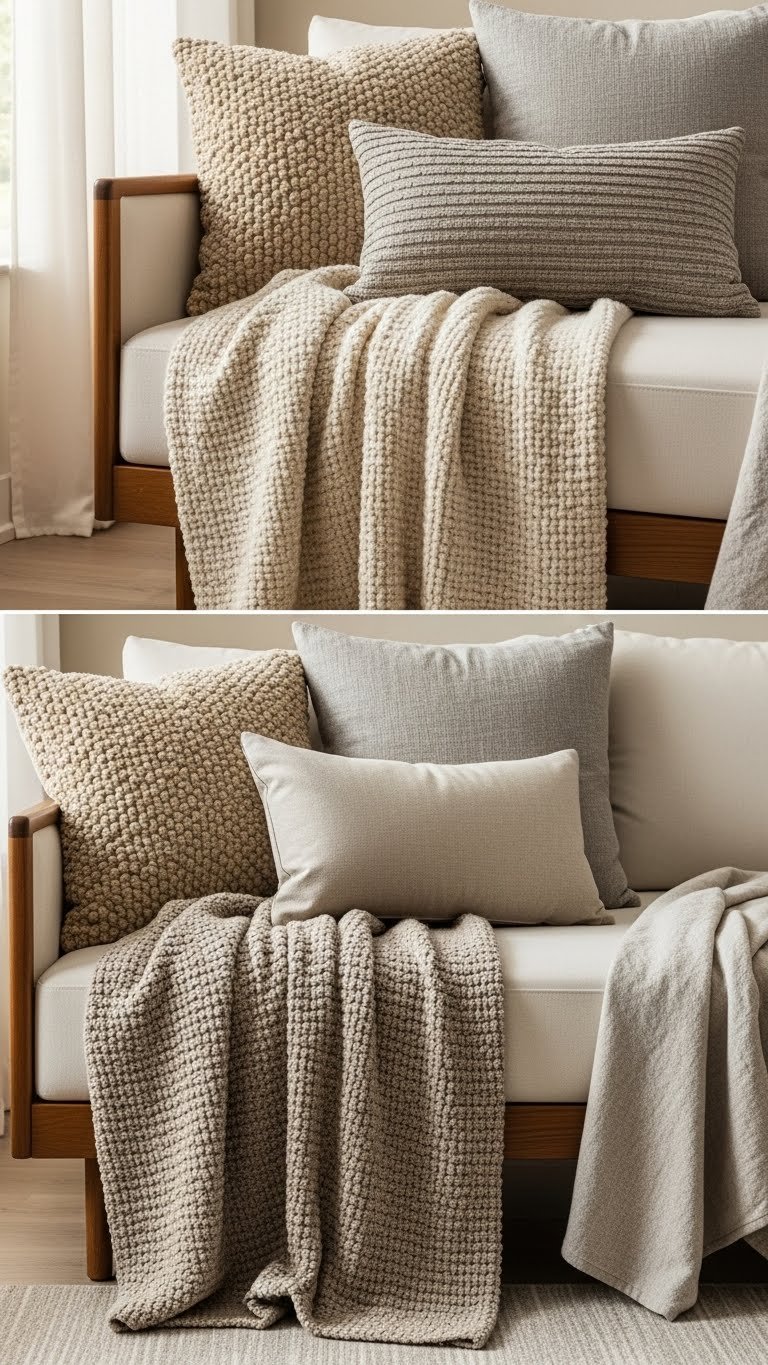
Often you’ll find that layering textured fabrics like bouclé instantly elevates a room by adding depth and tactile interest without changing the color story.
You’ll mix bouclé throws over a sleek sofa, scatter textured pillows in varied scales, and balance softness with crisp lines.
Choose neutral hues, tactile contrasts, and purposeful placement so each piece feels liberated, curated, and effortlessly cohesive.
Incorporate Fluted Wood and Ribbed Details
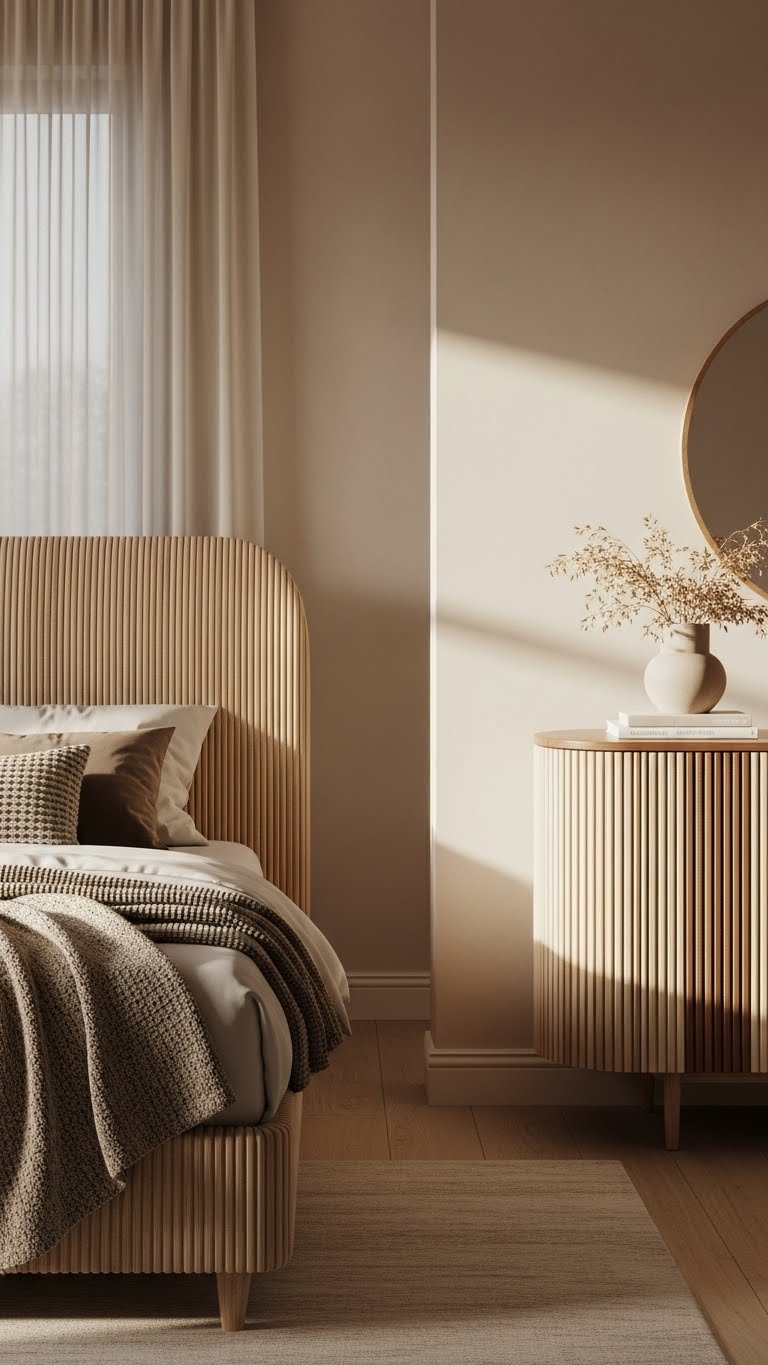
After you’ve layered soft bouclé and varied textiles, introduce fluted wood and ribbed details to add linear rhythm and sculptural warmth. You’ll balance surfaces with a fluted bedhead anchoring the bedroom and a ribbed console defining entryways.
Choose matte finishes, subtle stain variations, and rounded profiles to keep looks relaxed yet purposeful. These elements bring tactile interest without overpowering open, free layouts.
Paint a Colorful Mural as a Focal Point
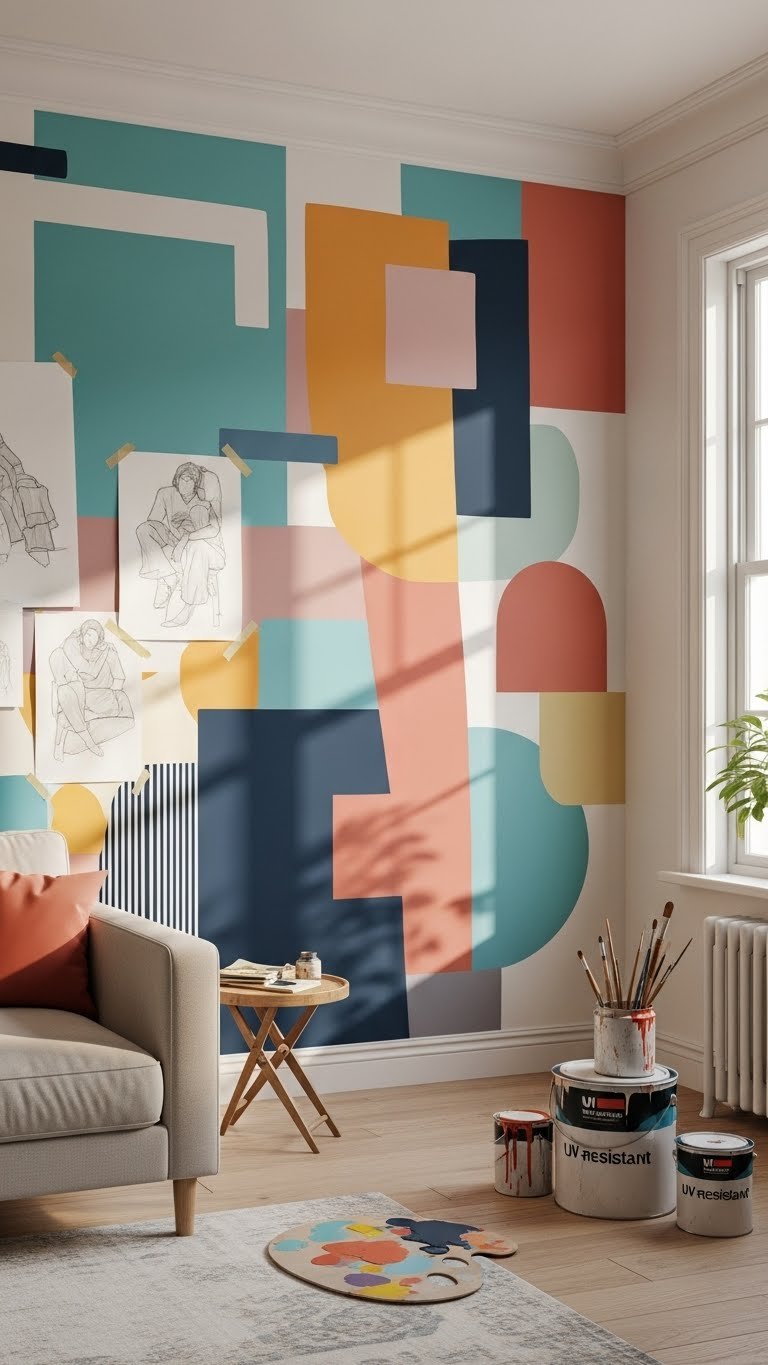
Make a bold mural the room’s anchor by choosing a palette and scale that complement your existing finishes and light. You’ll plan composition, sketch proportions, and select paints that resist fading. Use a bold accent to tie furnishings, introduce geometric motifs for structured movement, and balance negative space so the mural breathes. You’ll preserve freedom by tailoring color and form to your personal rhythm.
Wallpaper Ceilings for Unexpected Interest

Turn your gaze upward and give the fifth wall the same design consideration as floors and walls: wallpapering a ceiling can add depth, pattern, and surprise without overwhelming the room.
You can layer printed papers over textured plaster for tactile contrast, or align botanical stencils within a subtle repeat.
Choose scale, matte finishes, and trimmed edges to keep the look bold yet refined.
Mix Jewel Tones for Rich Depth
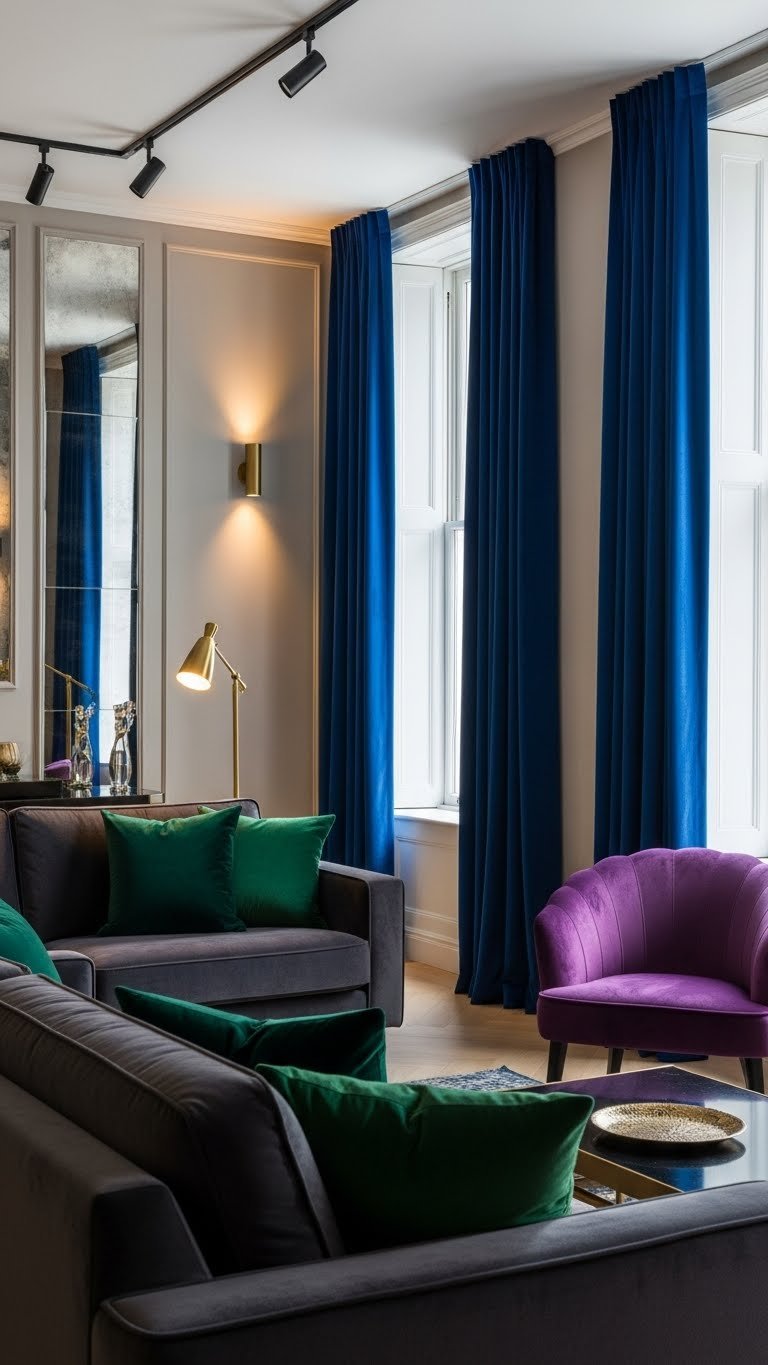
While jewel tones can feel dramatic, pairing them thoughtfully brings depth without overpowering the space: think emerald cushions, sapphire drapery, and a single amethyst accent chair to create layered color that reads rich rather than heavy.
You’ll balance intensity with neutral walls, brass lighting, velvet accents for tactile warmth, and jeweled mirrors to reflect color — a liberated, refined palette that feels deliberate.
Introduce Art Deco Furnishings
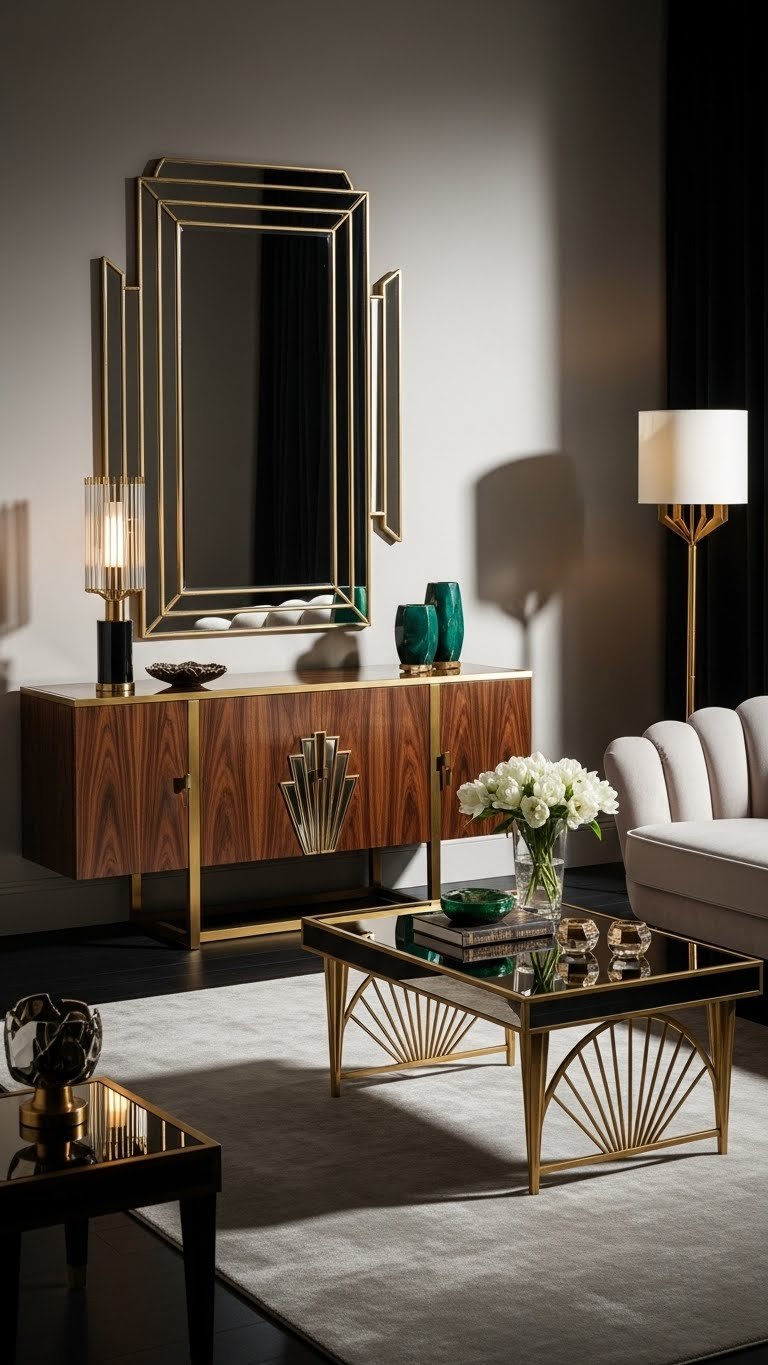
Start with a few statement pieces that channel Art Deco’s geometric glamour—think a streamlined walnut console with brass inlay, a low-profile sofa with scalloped tufting, or a mirrored cocktail table with fan-shaped legs.
You’ll balance bold silhouettes with geometric mirrors, lacquered credenzas and sculptural lighting, keeping finishes polished and colors controlled so rooms feel liberated, deliberate and unmistakably elegant.
Blend Contemporary and Postmodern Pieces
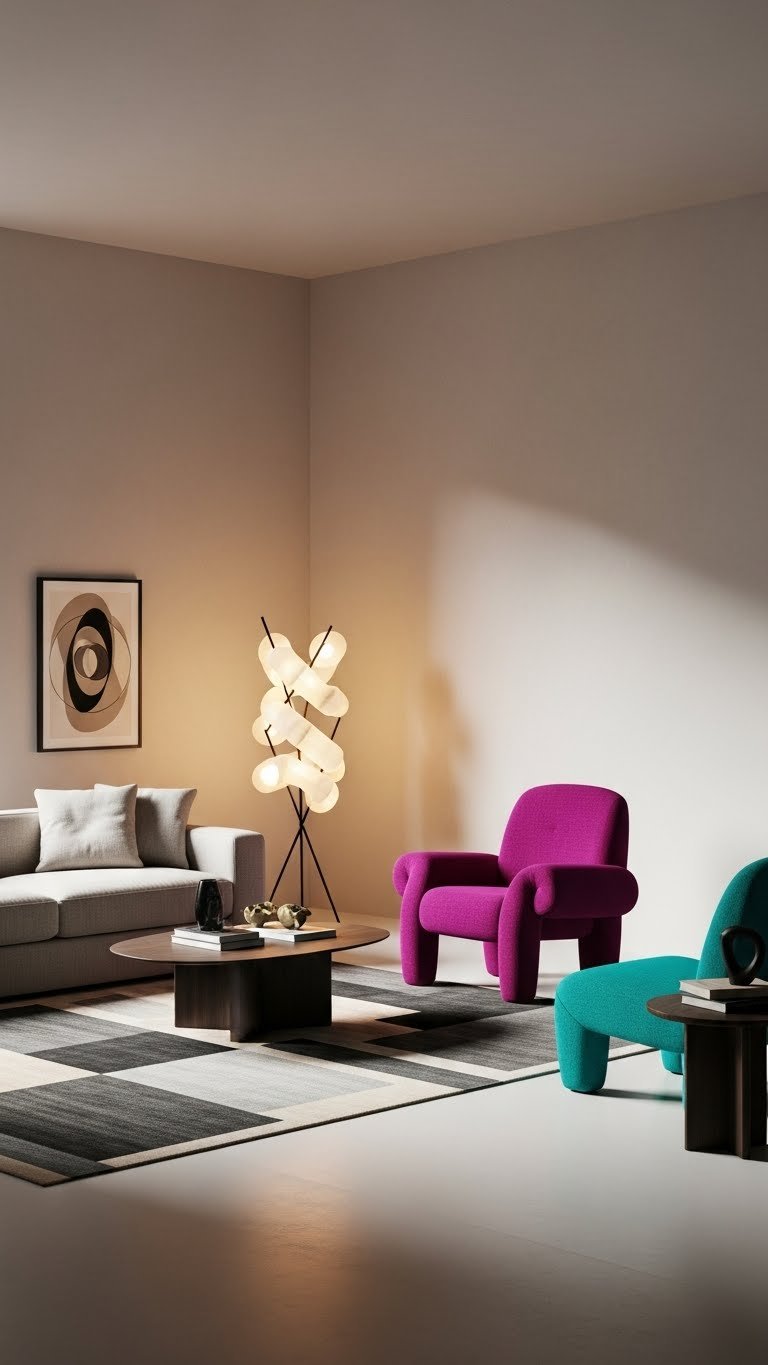
When you layer contemporary restraint over postmodern exuberance, you get rooms that feel fresh but richly idiosyncratic: pair a pared-back sectional in neutral linen with a sculptural, brightly colored postmodern armchair, and let a single statement lamp or graphic rug bridge the two vocabularies.
You’ll balance contrasting silhouettes, use sculptural lighting as anchor, and edit boldly so each piece breathes.
Add One or Two Brutalist Accents

If you want to ground a mostly soft, contemporary scheme, introduce one or two brutalist accents to provide sculptural weight and tactile contrast. Choose a raw concrete side table or a sculpted pedestal to anchor a room; pair it with bold geometric lighting and spare accessories.
You’ll keep the rest airy, letting these pieces assert presence without overpowering your freedom of expression.
Reimagine Mid‑Century Modern Selectively
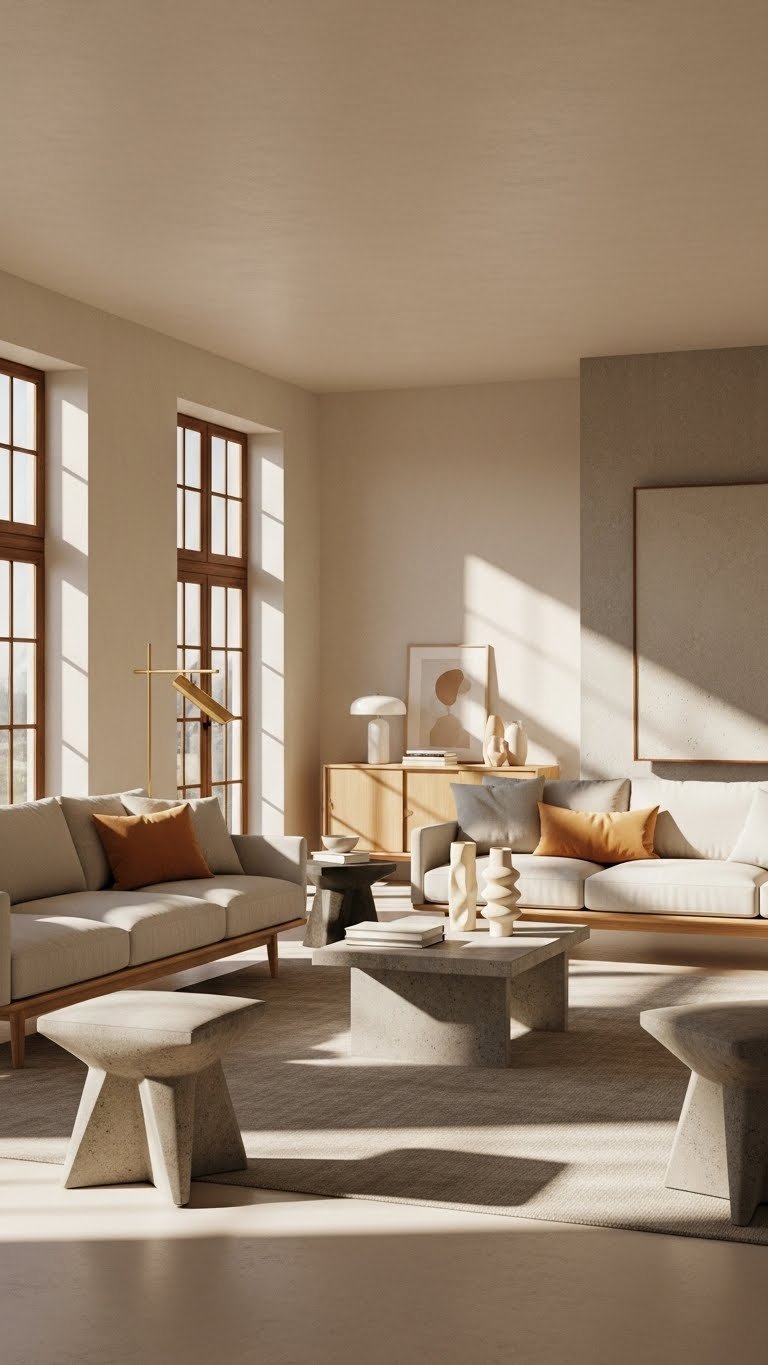
After anchoring a soft palette with one or two brutalist pieces, consider reimagining mid‑century modern selectively to keep the room feeling both fresh and timeless.
You’ll pursue a selective revival, choosing pieces with clean lines and tailored silhouettes that support airy layouts. Mix iconic forms sparingly, prioritize proportion and comfort, and let curated details suggest freedom without overwhelming the calm.
Bring in Natural Stone and Wood Finishes

Bring in natural stone and warm wood to ground the airy mid‑century palette and add tactile depth.
You’ll layer hand hewn mantels, reclaimed oak shelving, and matte stone hearths for honest texture.
Choose walnut accents and raw edges to keep spaces feeling free, while river rock planters and pebble insets bring subtle organic contrast without overwhelming the streamlined silhouettes you love.
Build Indoor Greenery and Living Walls
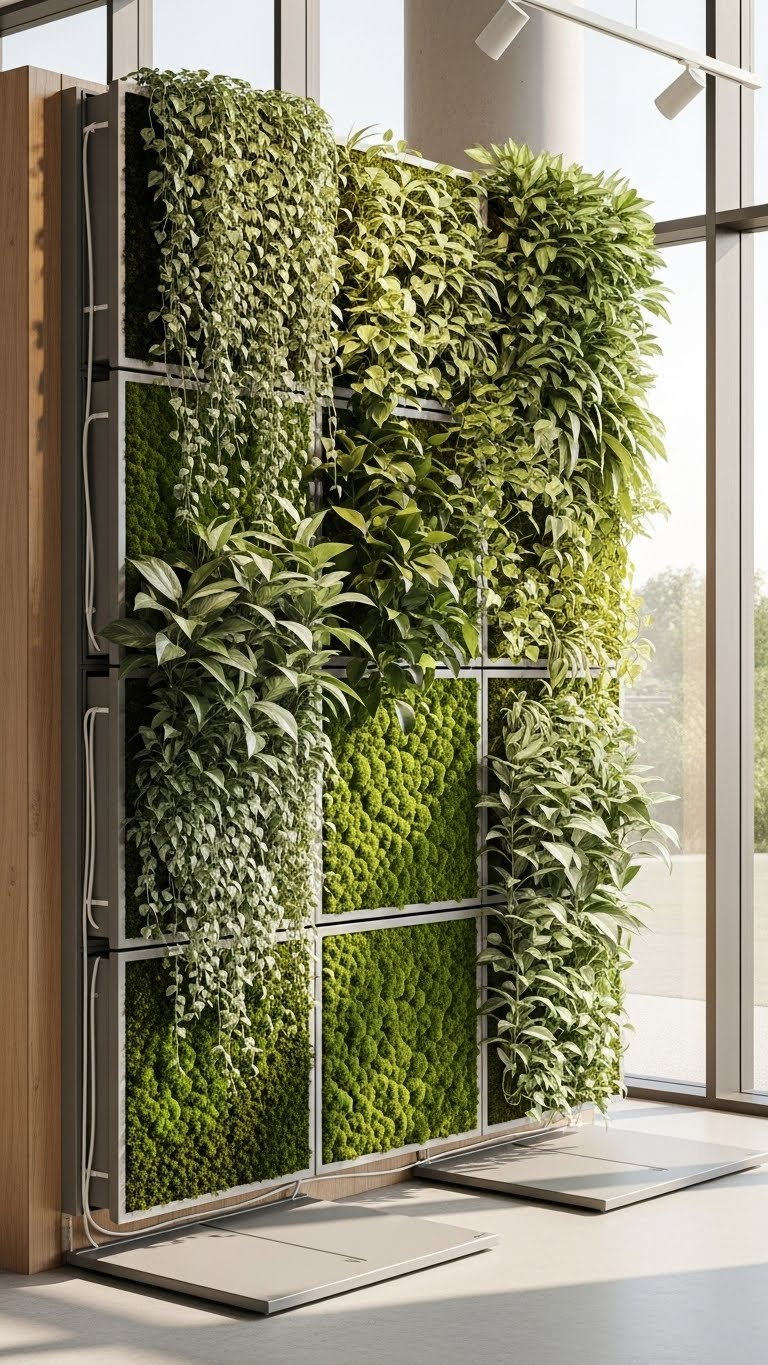
When you introduce indoor greenery and living walls, you’re adding a living layer that softens hard surfaces and elevates the room’s tactile and visual richness.
You’ll choose modular living wallkits or bespoke frames, mix trailing vines with moss panels for texture, and plan light, irrigation, and access.
The result feels liberated, deliberate, and effortlessly curated, anchoring spaces without clutter.
Choose Organic Modern Materials and Textiles
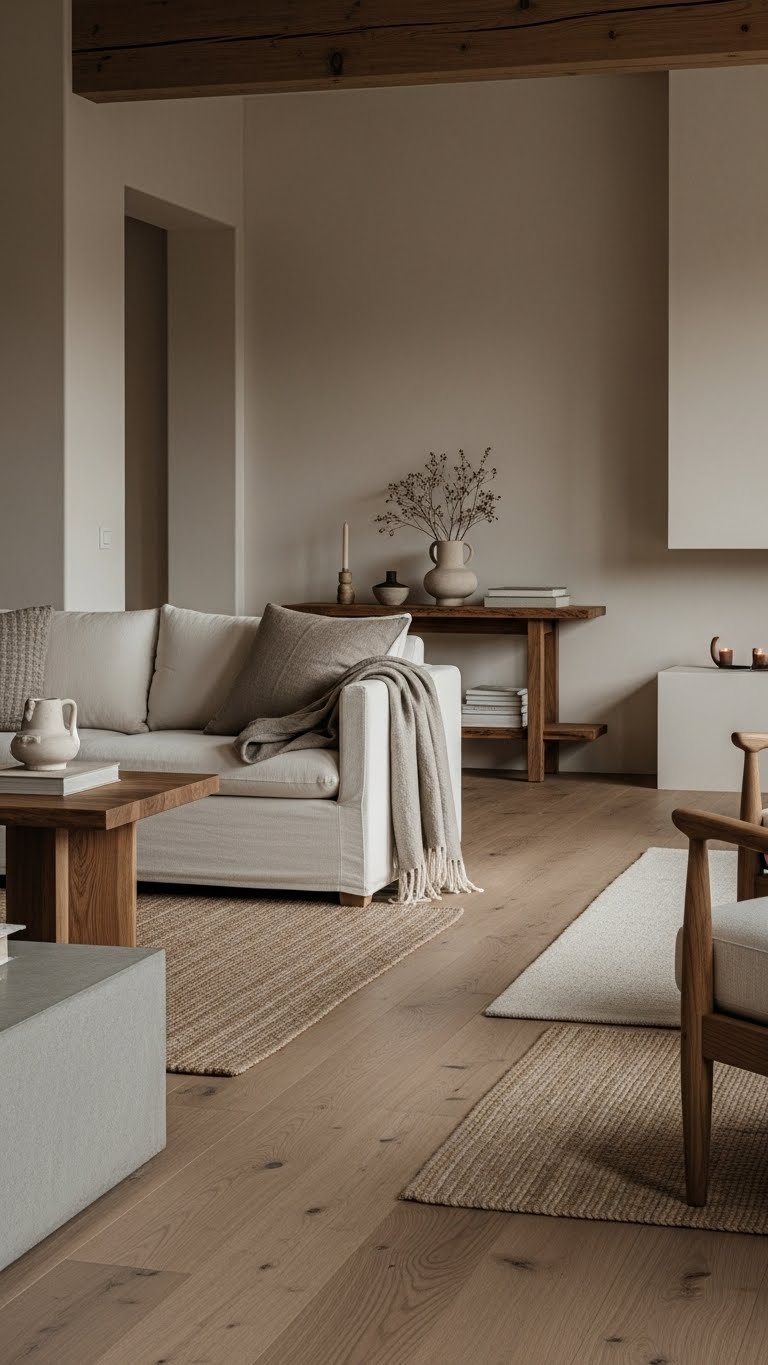
Layer in tactile, organic-modern materials to anchor the room with warmth and restraint: think wide-plank oak and warm-washed walnut, honed concrete surfaces, hand-loomed wool rugs, and linen slipcovers with visible slubs. You’ll favor organic linens and hemp rugs, muted palettes, and restrained sheen. Mix matte metals and raw edges, keep proportions airy, and let texture deliver freedom without fuss.
Prioritize Handcrafted, Artisanal Objects
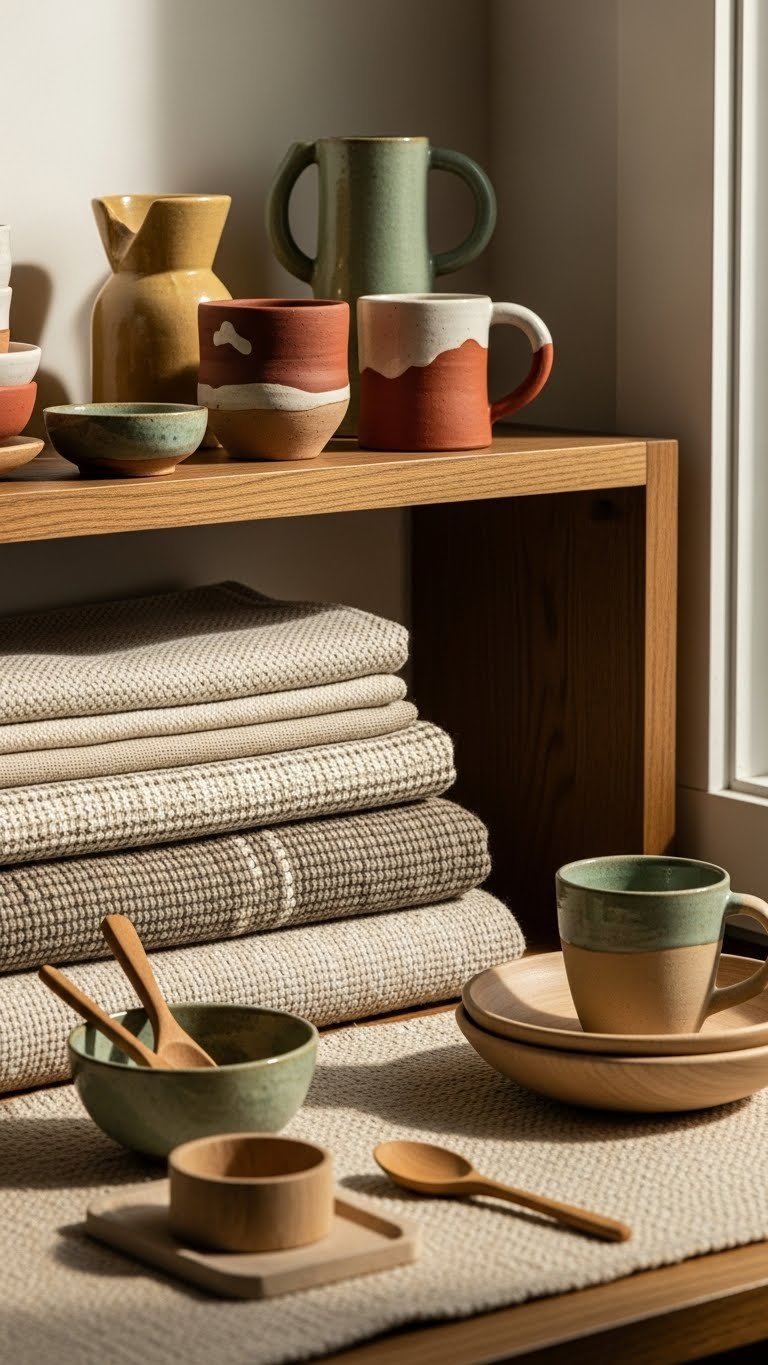
After grounding the room in honest materials and tactile textiles, let handcrafted objects provide the finishing notes that make the space feel personal and purposeful.
You’ll seek handmade ceramics for imperfect glazes and sculptural form, pair them with artisanal textiles for layered warmth, and curate pieces that celebrate makerly detail.
Choose objects that free your eye and invite daily use.
Choose Unique, Bold Backsplashes
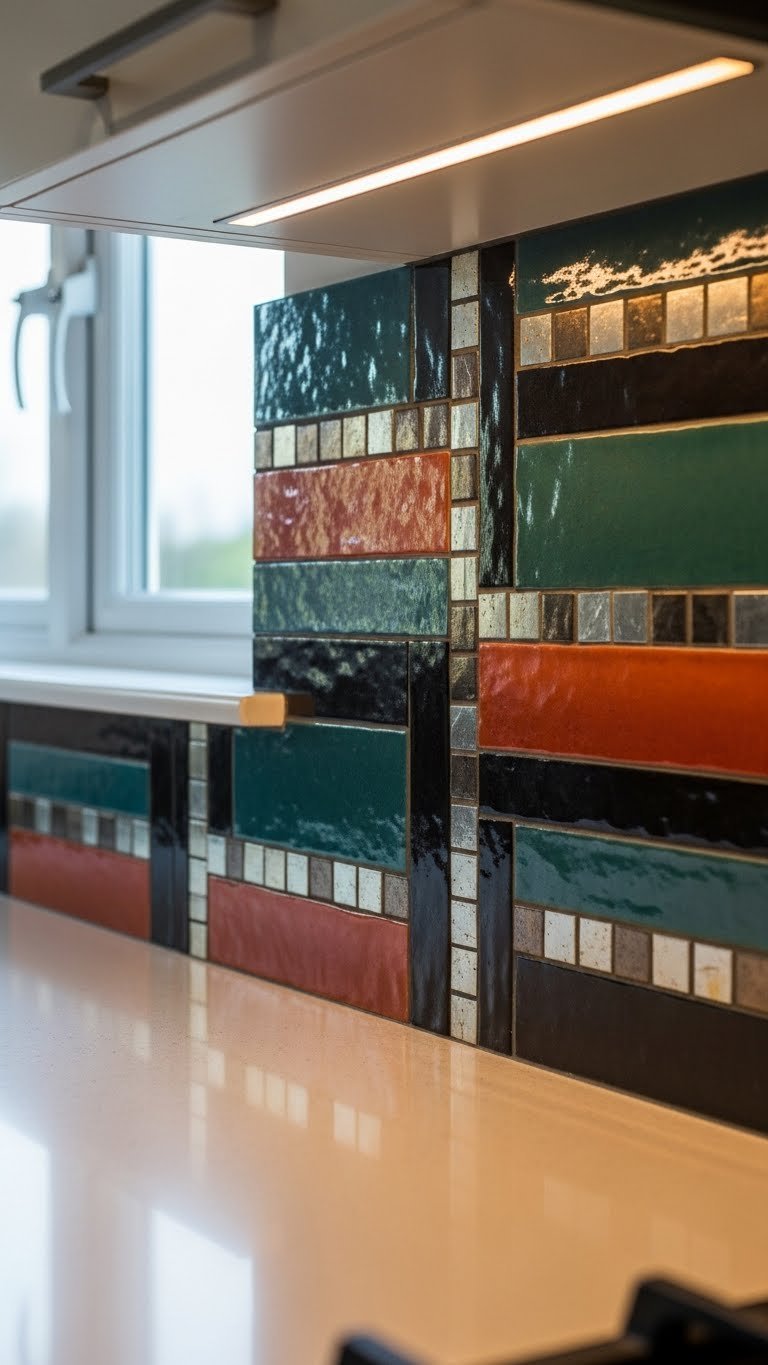
Don’t shy away from a backsplash that steals the scene — pick a bold pattern, unexpected material, or saturated color to anchor the room and reflect your taste. You’ll mix hand painted encaustics with glass or a metals mosaic to create texture and movement.
Choose scale, grout color, and finish deliberately so your backsplash feels artful, durable, and wholly yours.
Design Accessible Wet Rooms With Style
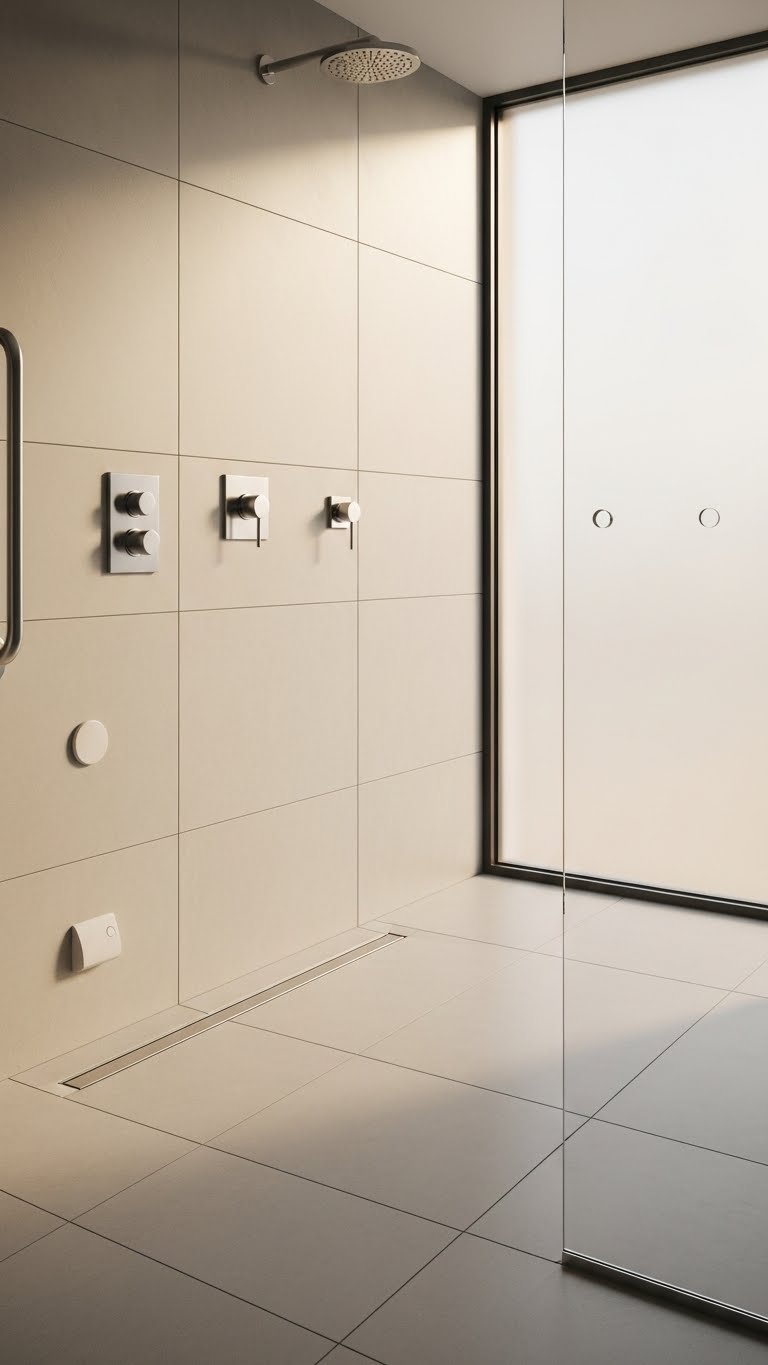
When you design an accessible wet room, prioritize graceful solutions that feel intentional rather than clinical: flush thresholds, gently sloped floors, and continuous tile create a seamless plane that’s both safer and visually cohesive.
You’ll balance aesthetics and function with subtle wet floor alarms, elegant drains, and tactile controls that guide touch. Choose muted palettes, durable finishes, and uncluttered fittings for liberating, refined bathing.
Install Nonslip Flooring and Built‑In Seating

To keep that seamless, safe feeling underfoot, choose nonslip flooring that looks as refined as it performs—textured large-format tiles, matte porcelain, or stone-effect surfaces with a low-profile grit finish provide grip without shouting “safety.” Pair the floor choice with a built-in seating strategy that reads like architecture: a cantilevered bench or tiled fold-down seat aligned with the shower’s slope and drain keeps water moving away while offering a sturdy, ergonomic rest point.
Layer Personal Art and One‑of‑a‑Kind Finds
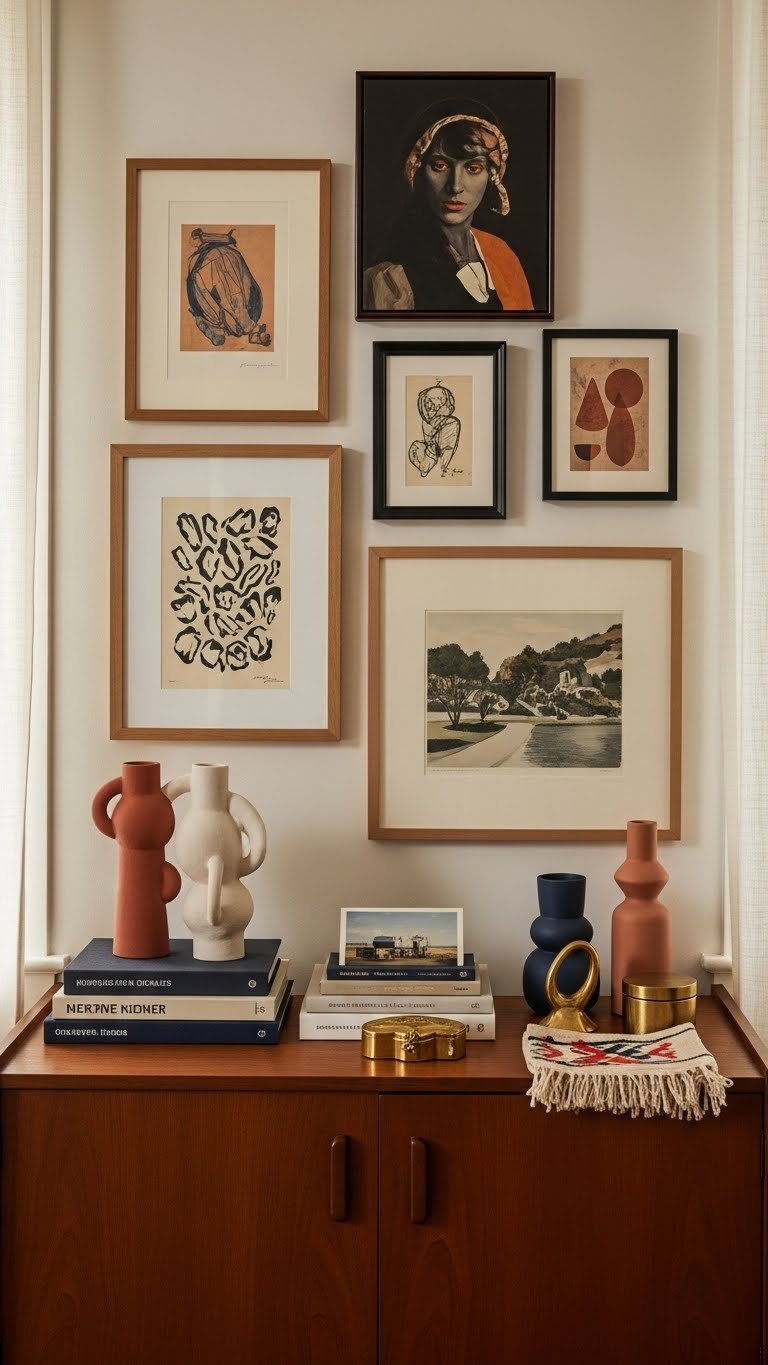
Layer in personal art and one‑of‑a‑kind finds to give your rooms an unmistakable signature—mix framed prints and paintings with sculptural objects, vintage photographs, handmade ceramics, or travel keepsakes so each piece feels deliberately placed rather than tacked on.
Curate with custom framing for cohesion, create heirloom displays that honor provenance, and let bold, personal choices free your spaces while remaining thoughtfully edited.
Mix Period Styles for an Eclectic Look
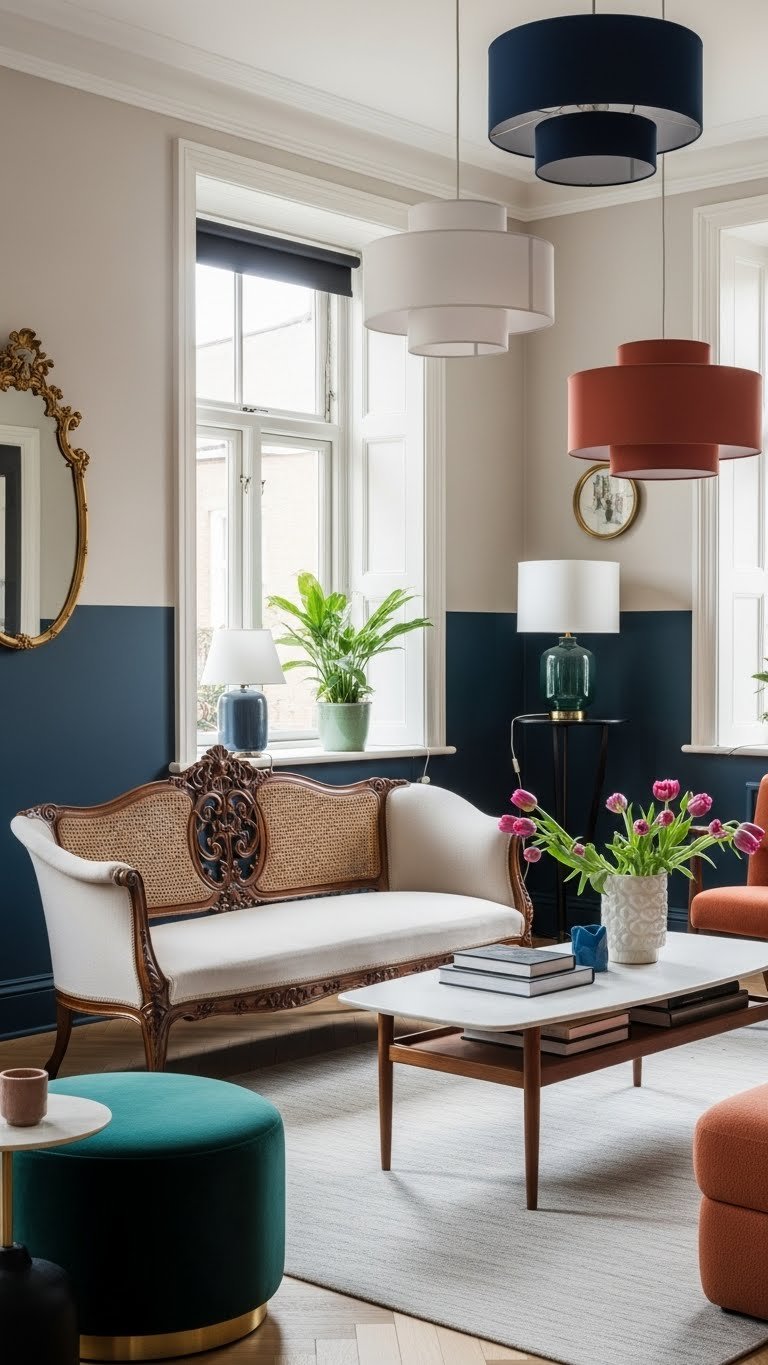
Although you might be drawn to a single era, mixing period styles lets you craft a layered, unexpected interior that reads cohesive rather than chaotic.
You’ll balance antique modern pieces with clean lines, pairing a Victorian minimalist silhouette with bold contemporary lighting.
Prioritize scale, consistent color accents, and tactile contrast so each era speaks without clashing, giving your home freedom to feel curated and alive.
Avoid Overused Farmhouse and Barn Door Cues
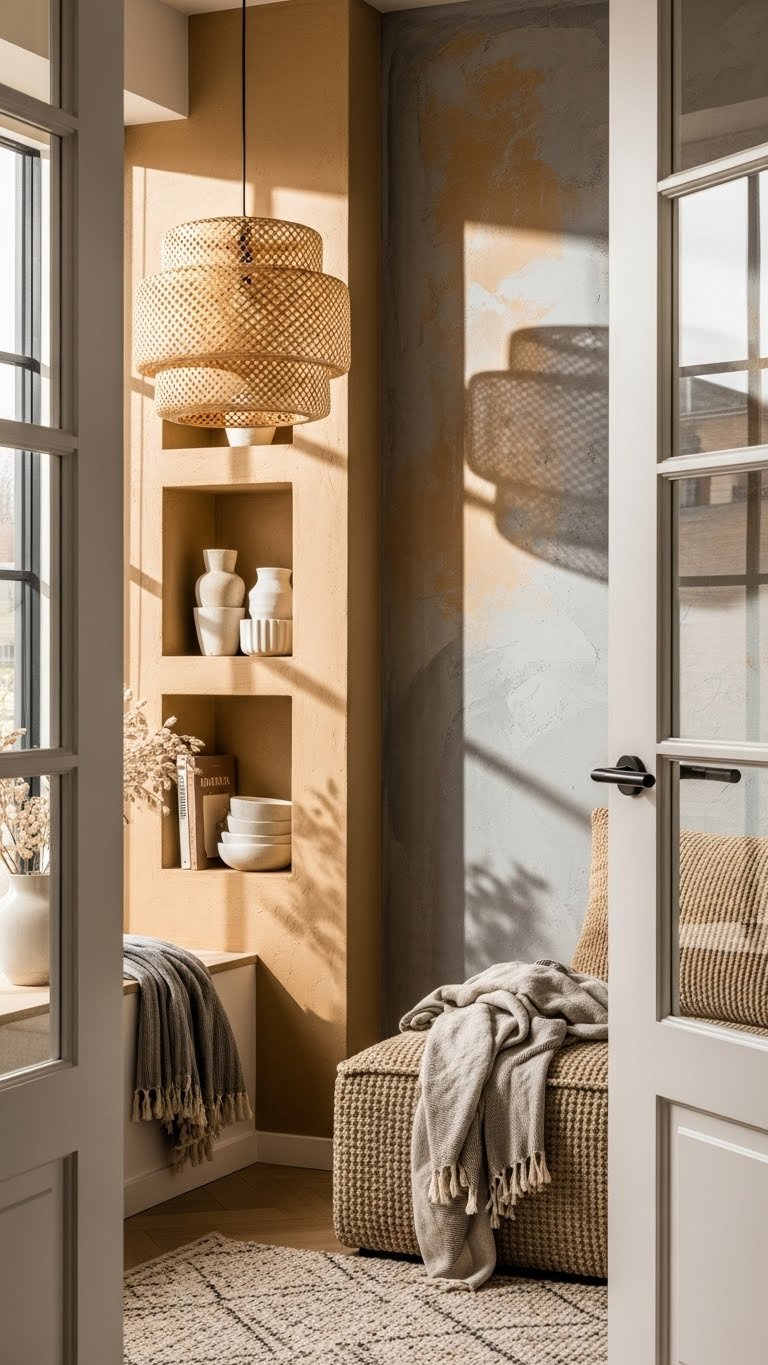
If you want your home to feel distinctive, steer clear of the tired farmhouse tropes—shiplap walls, sliding barn doors, mason jars—as default design moves. Instead, choose confident alternatives: modern rattan lighting, plaster niches with curated objects, textured wall treatments, and bespoke hardware.
You’ll craft a freer, more personal aesthetic that nods to warmth without repeating the ubiquitous country clichés.
Curate a Balanced Color Palette With Purpose
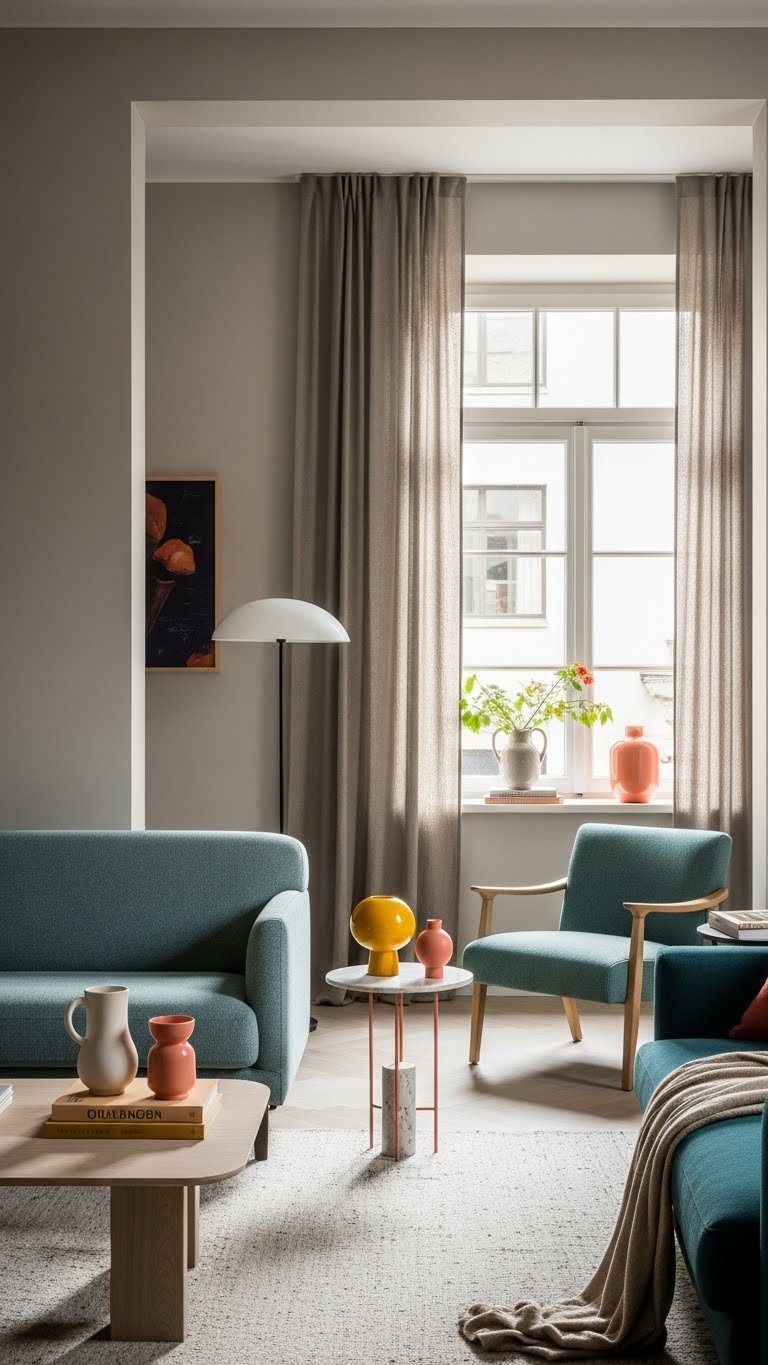
When you plan a palette with intention, every hue earns its place and the room reads as one composed statement rather than a collection of afterthoughts. You’ll choose a dominant, supporting and accent color, respect seasonal undertones, and let texture and light shape palette narration. Balance saturation and value, edit bravely, and create rooms that feel deliberate, liberating, and cohesive without sacrificing personal freedom.