
You’ll want an office that feels deliberate and calm, where blue-green tones set focus and sunny accents spark energy without noise. Think natural light, tunable task lamps, ergonomic seating, tidy cable runs, and reachable tool kits paired with plants and low shelving to define zones. Add a quiet nook and seasonal swaps to keep things fresh — and then consider which single change will actually shift how you work.
Incorporate Blue-Green Color Schemes to Enhance Focus

When you choose a blue-green palette, you create a calm yet alert backdrop that helps you focus without feeling sterile.
You’ll layer aqua gradients on walls or screens to introduce depth, then use teal accents in textiles, lighting, and desk organizers for clarity. This restrained approach frees your choices, supports concentration, and keeps the workspace airy, intentional, and ready for creative work.
Add Vibrant Yellow or Orange Accents for Energy
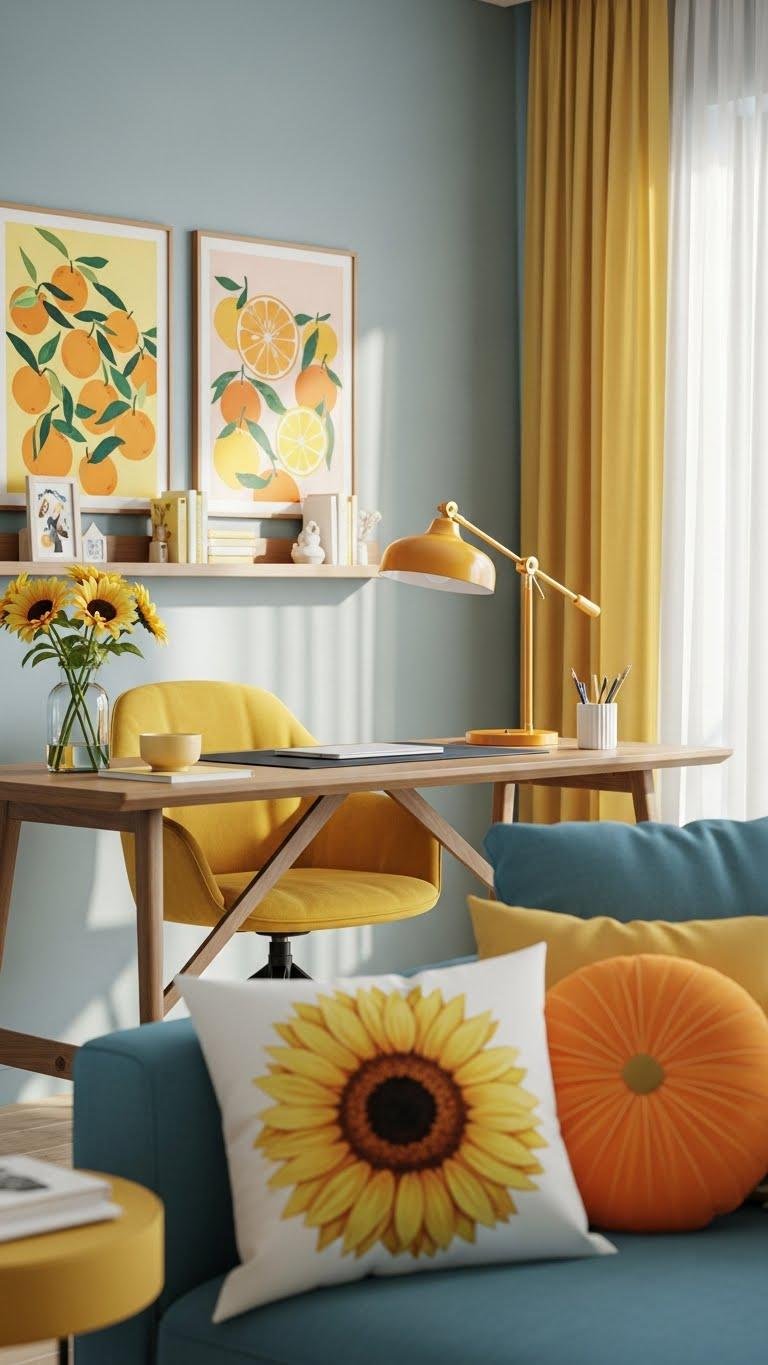
To brighten that calm blue-green base, introduce pops of vibrant yellow or orange that spark energy without overwhelming the room. You’ll place citrus art above a desk, choose accent pillows in sunflower or tangerine hues, and add a sleek lamp with a warm shade. These intentional bursts lift mood, guide focus, and let you work freely while keeping the palette balanced.
Maximize Natural Light Exposure
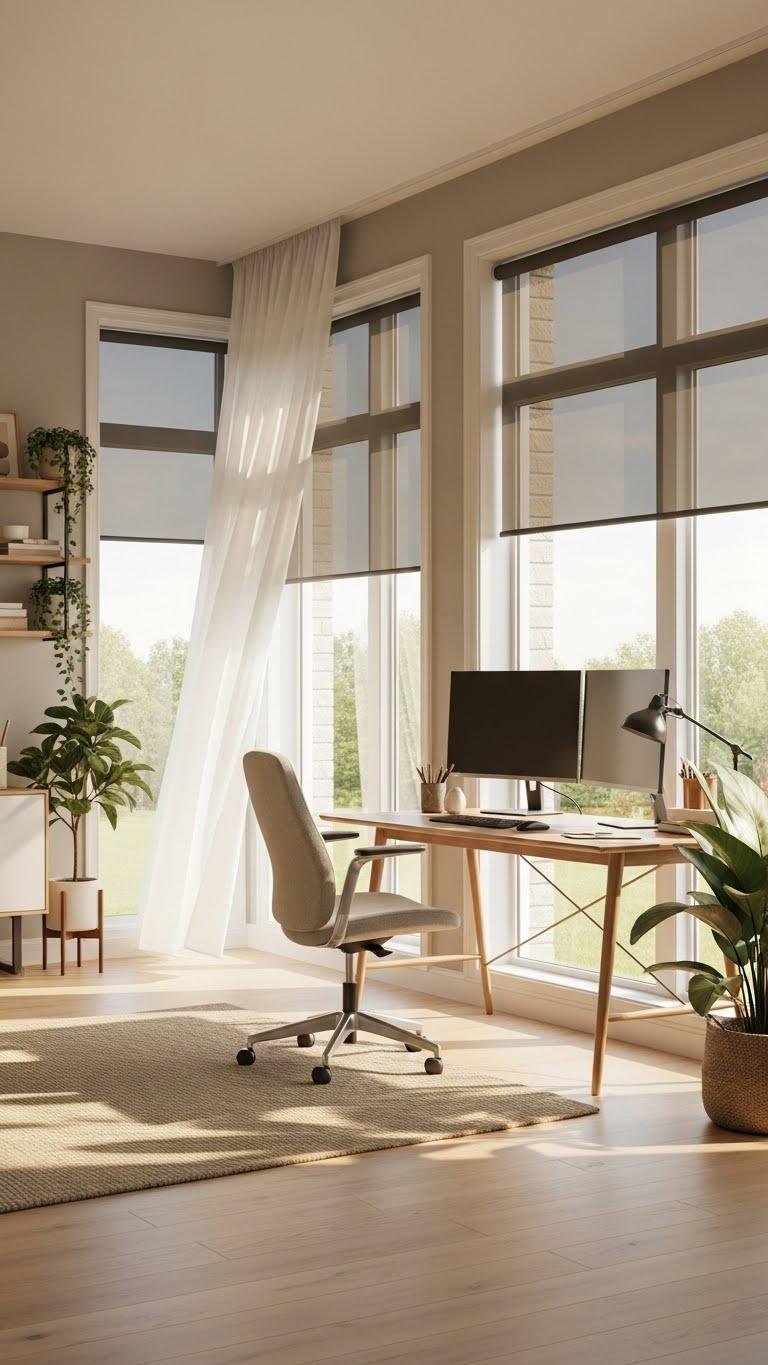
Although you might love the painted walls and curated accents, maximizing natural light is the simplest way to elevate both mood and productivity in your office.
You’ll track sun angle seasonally, tilt blinds for soft diffusion, and choose sheer curtains for balanced illumination. Implement glare control with adjustable shades and matte surfaces so light liberates focus without harsh reflections or interruptions.
Position Workstations Near Window Views
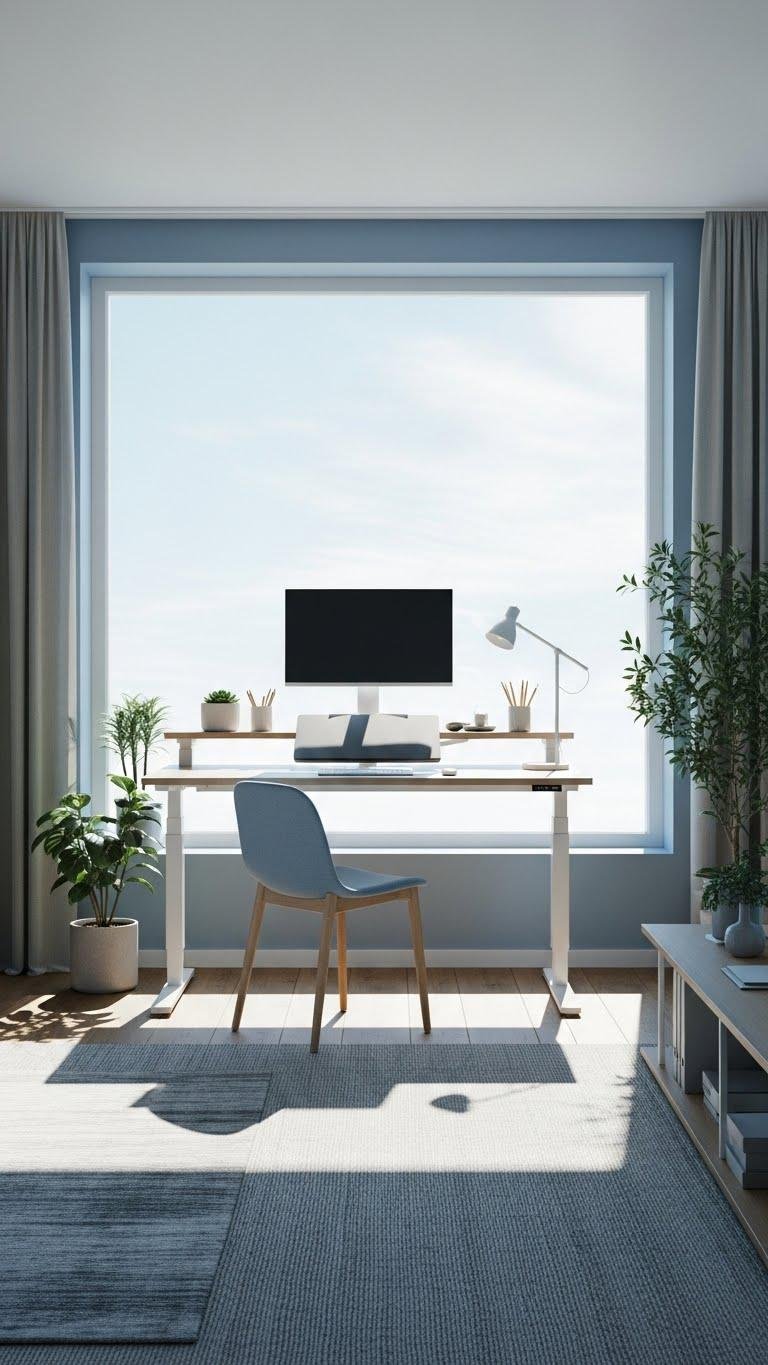
Beneath a window’s sweep of sky, place your workstation so natural views become a built-in refresh without stealing focus. Align desk height and monitor tilt for window ergonomics, reducing glare while keeping sightlines open. Define areas with subtle cues—plants, rugs, sight-based dividers—to create view based zoning that supports flow, concentration, and the freedom to glance outward and return to work.
Install High-Performance Task Lighting

Mount focused, adjustable task lighting so you get crisp, shadow-free illumination exactly where you need it. You’ll aim for minimal contrast glare by angling fixtures and adding diffusers.
Choose bulbs with tunable color temperature to match task demands and circadian preference. Slim, directional lamps free desk space, give precise control, and let you work with clarity and a sense of liberated design.
Introduce Indoor Plants for Biophilic Benefits

Often you’ll find that a single well-placed plant transforms a workspace: it softens hard lines, improves air quality, and gives your room a calm focal point.
Choose resilient species that suit light and schedule, prioritize simple plant care, and place them where they reduce glare and add texture.
Their subtle air purification and living presence support focus, creativity, and a freer, calmer workday.
Create a Living Wall or Vertical Garden

If you want to make the most of vertical space, a living wall or vertical garden brings lush texture and clean lines without stealing floor area.
You’ll choose moss mosaics for low-maintenance artful panels, or sleek hydroponic panels for efficient watering and growth. Install modular frames, plan for light and access, and let greenery define a liberating, focused workspace that’s both refined and purposeful.
Use Ergonomic Chairs for Comfort and Support
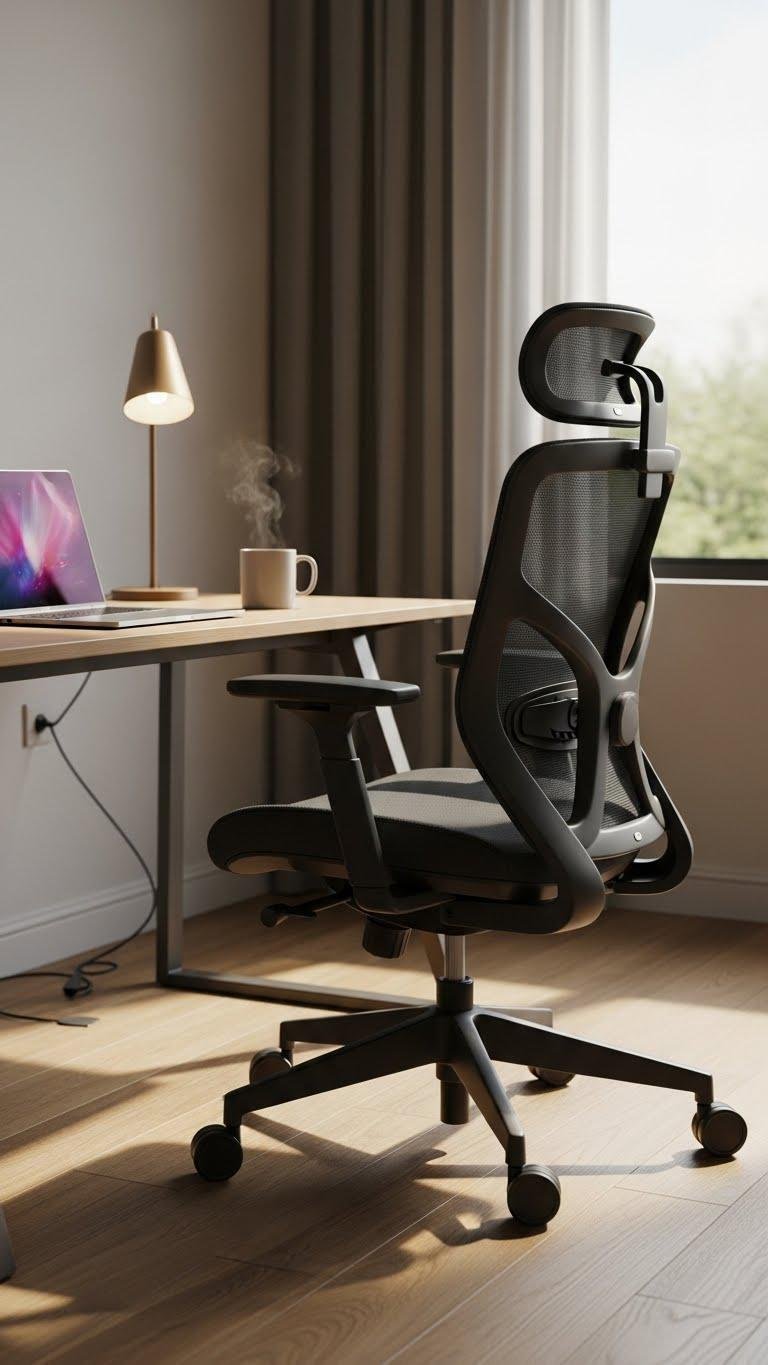
Regularly choosing an ergonomic chair transforms your desk into a supportive workspace that reduces strain and boosts focus.
You’ll appreciate precise lumbar support, adjustable armrests and careful seat depth selection so your posture stays free and mobile.
Choose breathable mesh for cool comfort during long sessions.
The chair becomes a quiet ally, letting you move confidently and work with clear, unfettered intent.
Add Adjustable Standing Desks
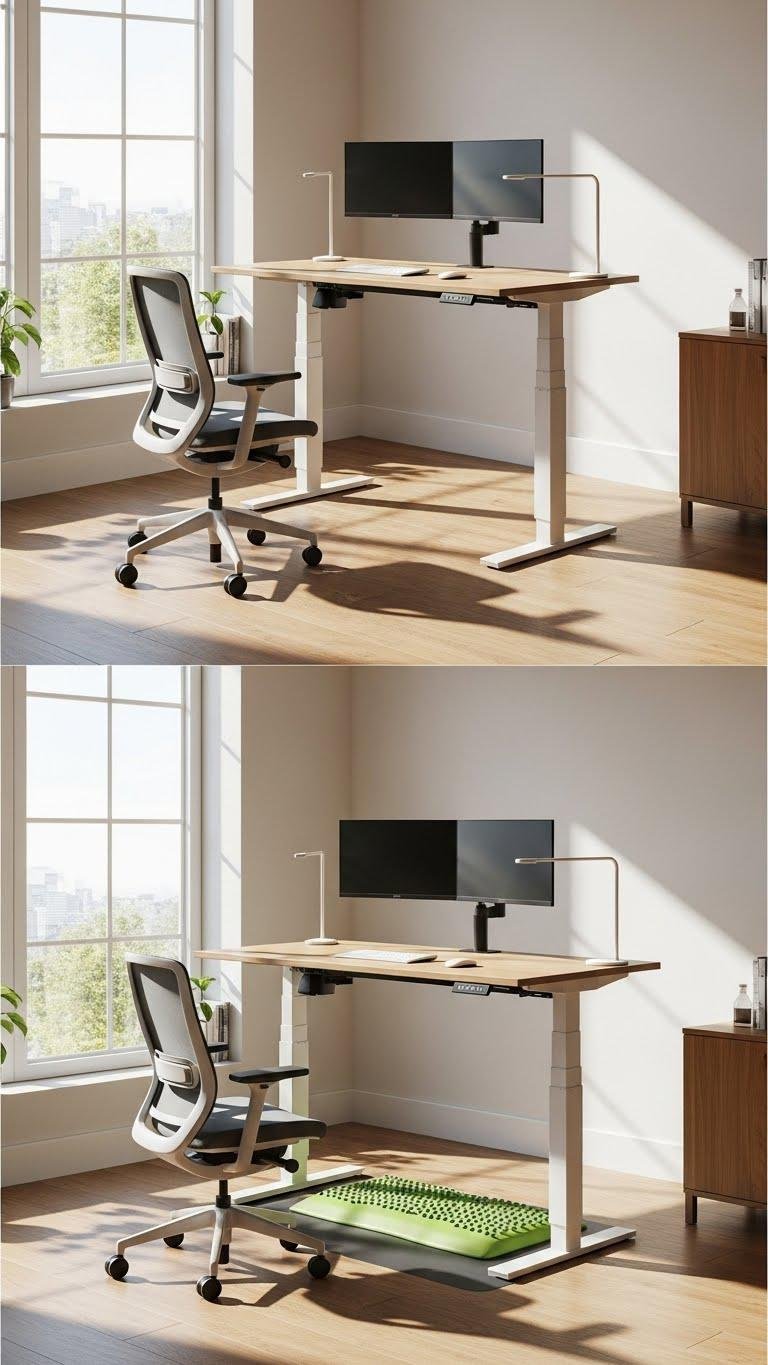
Pairing an ergonomic chair with an adjustable standing desk lets you shift posture throughout the day and keep your body responsive. Choose clean lines and reliable height adjusters so shifts feel effortless; set presets that match tasks.
Add an anti fatigue mat for comfort during standing stretches, and position monitors and lighting for open, uncluttered movement that supports focus and autonomy.
Select Functional yet Stylish Storage Solutions
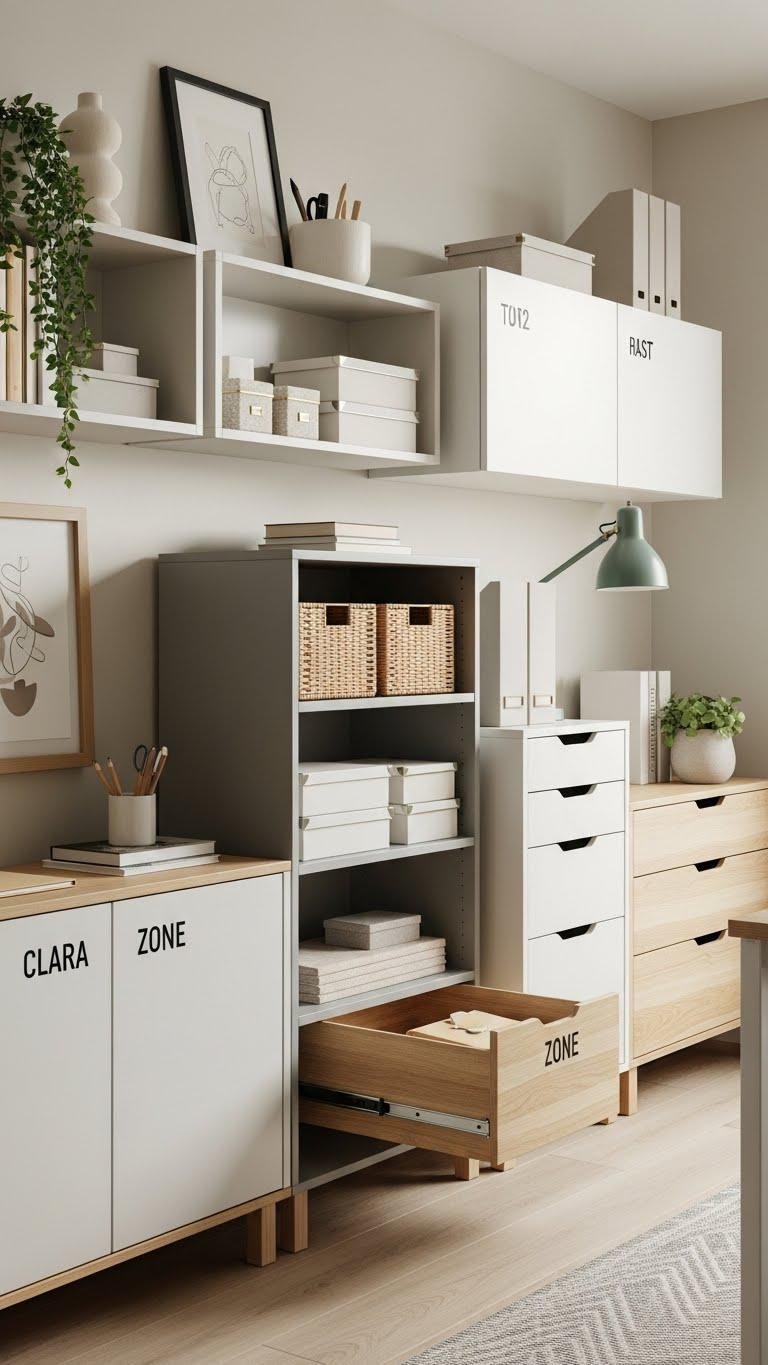
Streamline your workspace with storage that’s both purposeful and pretty: choose modular shelving, low-profile cabinets, and stackable drawers that echo your room’s lines while hiding clutter.
You’ll pair Modular cabinets with open shelves and Woven baskets for soft texture, grouping supplies by task. Keep surfaces clear, label zones, and pick finishes that invite movement—so your office feels free, ordered, and ready for work.
Personalize Desks With Photos and Meaningful Objects
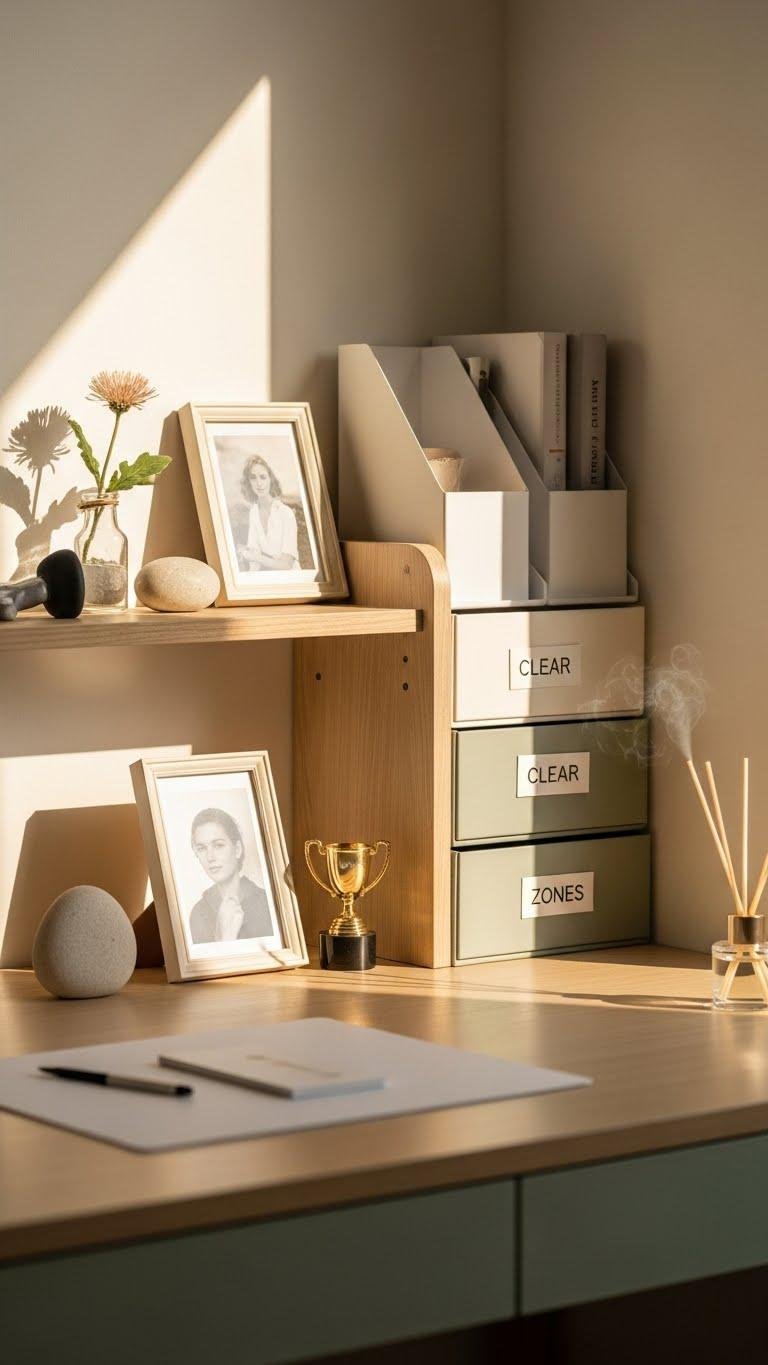
Once your storage keeps clutter off the desk and zones are clearly labeled, bring in a few personal touches that make the space feel like yours. Choose a small frame or two, arrange memory trinkets that spark calm and ambition, and limit items to maintain openness. Add subtle desk scenting—a single reed or roller—to evoke focus without overwhelming freedom or visual flow.
Design Quiet Nooks for Deep Work

When you need uninterrupted focus, carve out a quiet nook that clearly signals work-only time: choose a corner with soft, indirect light, set a comfortable chair and a desk scaled to the tasks you’ll do, and use a low-profile divider or shelving to block visual distractions without closing the space off.
Then add acoustic pods or focused alcoves, clean lines, tactile textiles, and subtle task lighting to preserve freedom and flow.
Create Collaborative Zones for Team Work

Shifting from solitary focus to shared momentum, create collaborative zones that invite conversation, quick brainstorming, and hands-on teamwork without stealing the calm of nearby quiet nooks.
You’ll place mobile whiteboards, modular seating, and clear sightlines so ideas travel freely.
Add discrete snack stations and flexible lighting to fuel energy.
Keep boundaries subtle — rugs, low shelving, and sound-absorbing panels define space without confinement.
Incorporate Natural Materials Like Wood and Stone
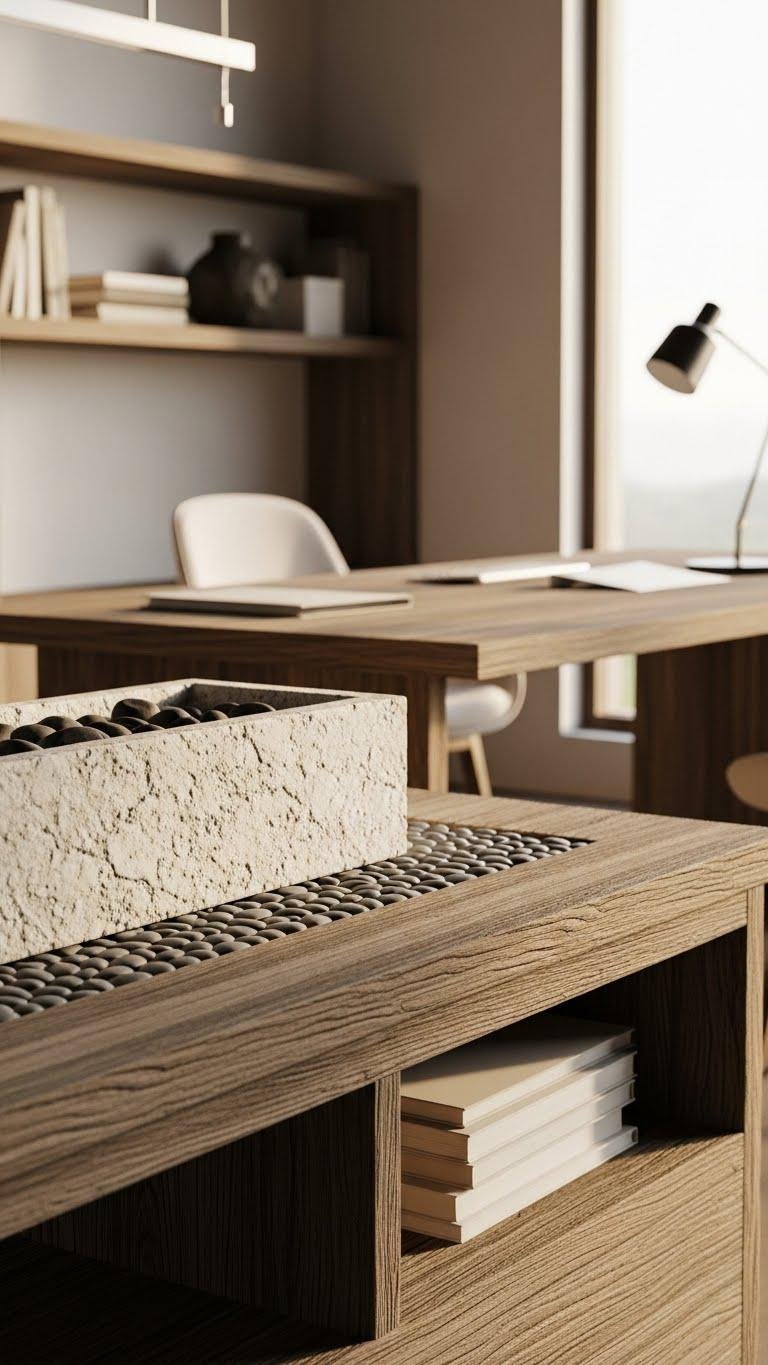
Bring warm, tactile surfaces into your office by layering wood and stone for both beauty and durability.
You’ll pair reclaimed wood desks or shelving with river stone accents to ground the space, creating tactile contrast and honest textures. Choose matte finishes, visible grain, and low-sheen sealants so surfaces age gracefully. This minimalist, breathable approach lets you move freely and work with calm focus.
Use Strategic Color Zoning to Define Areas

Layering wood and stone gives your office a tactile backbone; now use color zoning to map function onto that foundation. You’ll apply zoning psychology: assign calming blues to focus zones, energizing yellows to collaborative nooks, and muted greens to respite corners.
Plan deliberate color gradations at thresholds so movement feels intentional. This clarity lets you work freely within a purposeful, beautiful layout.
Add Sound-Absorbing Panels and Rugs

Because acoustics shape how a space feels as much as finishes do, add sound-absorbing panels and rugs to sculpt the office’s sonic landscape and keep focus intact. You’ll choose acoustic artwork for personality and targeted panels for echo control, blending texture and color.
Wide rugs deliver footfall reduction, delineate zones, and invite movement without noise — practical, freeing, and quietly intentional.
Use Plants to Define Pathways and Zones

If you want to guide movement and create distinct areas without walls, use plants as living markers that both beautify and organize the floorplan. Place pathway planters to trace routes, vary heights for sightlines, and group zoned foliage to signal work, collaboration, or quiet zones. You’ll gain fluid circulation, soft boundaries, and a breathable, independent workspace that feels intentional and free.
Choose Calming Artwork and Nature Photography

Why not let art set the room’s emotional temperature? Choose calming pieces that free your focus: minimalist landscapes and muted abstracts hung at eye level.
You’ll balance scale and negative space, pick natural tones, and position frames to catch soft light. These choices soothe nerves, invite clarity, and support independent work without distraction, letting your creativity move unconfined.
Maintain Clear, Clutter-Free Surfaces
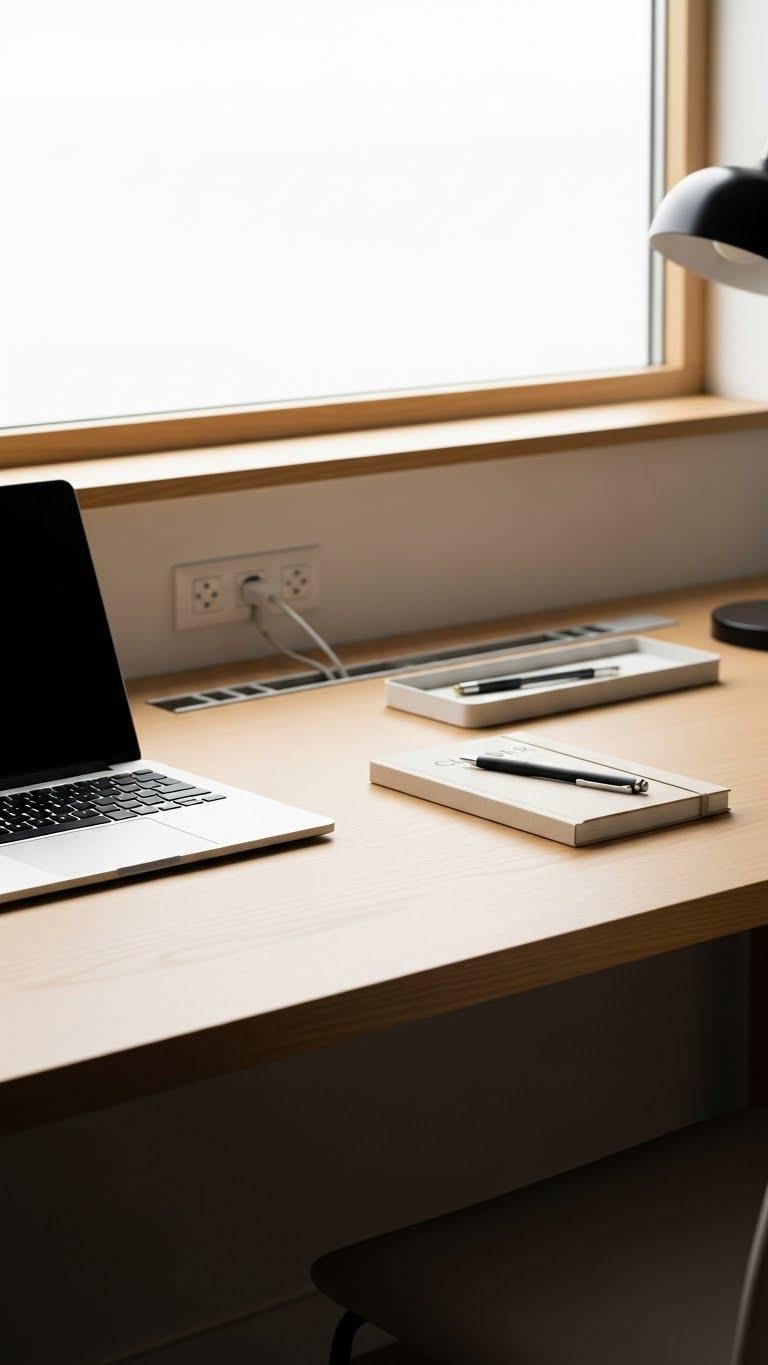
Regularly clear your desk so every surface serves a purpose.
You’ll keep essentials within reach using minimalist trays and invisible storage, reducing visual noise and freeing attention. Prioritize a few curated tools, hide cables and paperwork, and rotate items to match tasks. Clean lines and deliberate emptiness let you move freely, focus faster, and reclaim creative space without excess.
Introduce Scent Strategies With Subtle Aromas

Often a faint, carefully chosen scent can anchor a room the way a clean line anchors a layout, so pick aromas that support focus and calm rather than compete for attention. You’ll use subtle aromatherapy with small desk diffusers, light citrus spritzing for brightness, and herbal notes for calm. Create memory anchors by repeating scents tied to routines, keeping intensity low and choices intentional.
Offer Flexible Seating Options
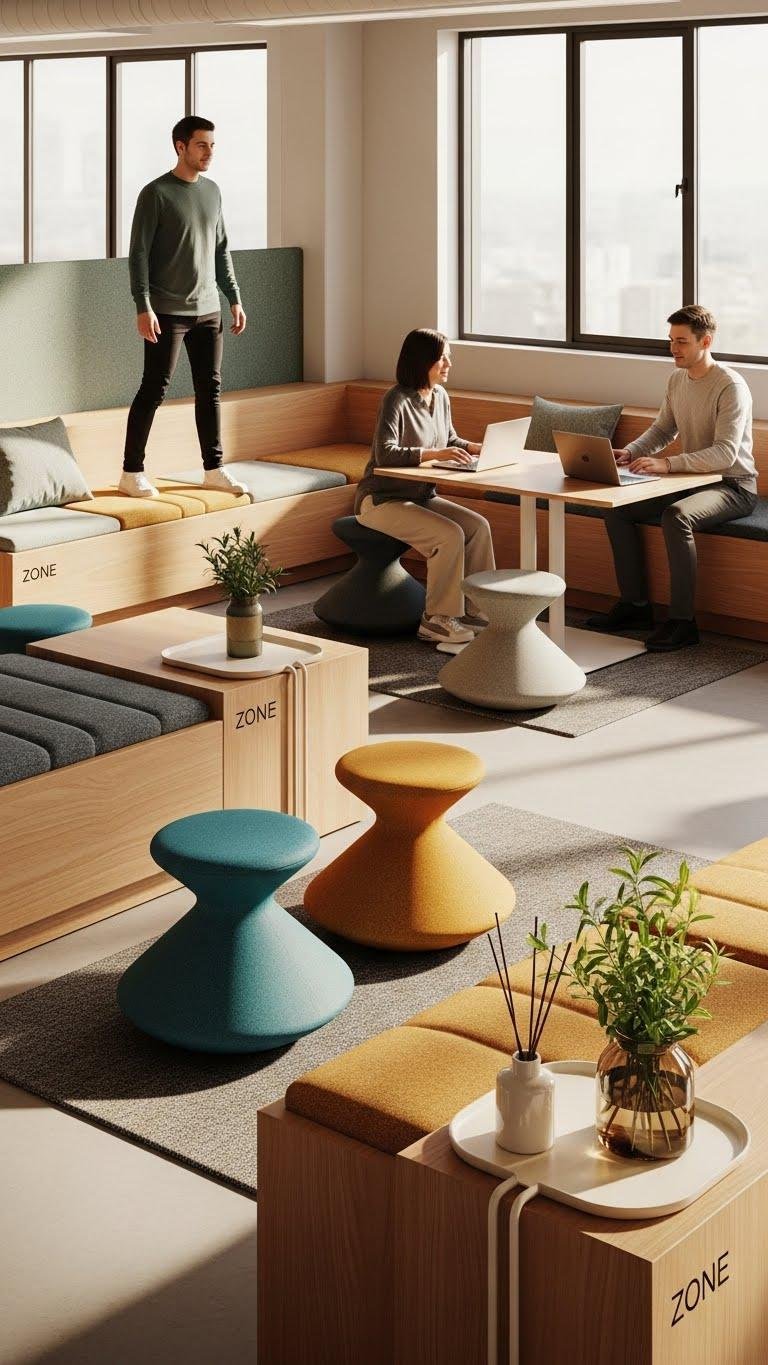
Scent can cue a moment of pause; seating shapes how you inhabit that pause. Choose modular benches for shared work and quick stand-rest shifts, arranging pieces to open pathways. Add wobble stools at collaboration points so you can stay mobile and focused. Mix heights and textures, label zones subtly, and let people choose posture and position to match task, mood, and freedom.
Use Glass Partitions to Preserve Light and Privacy
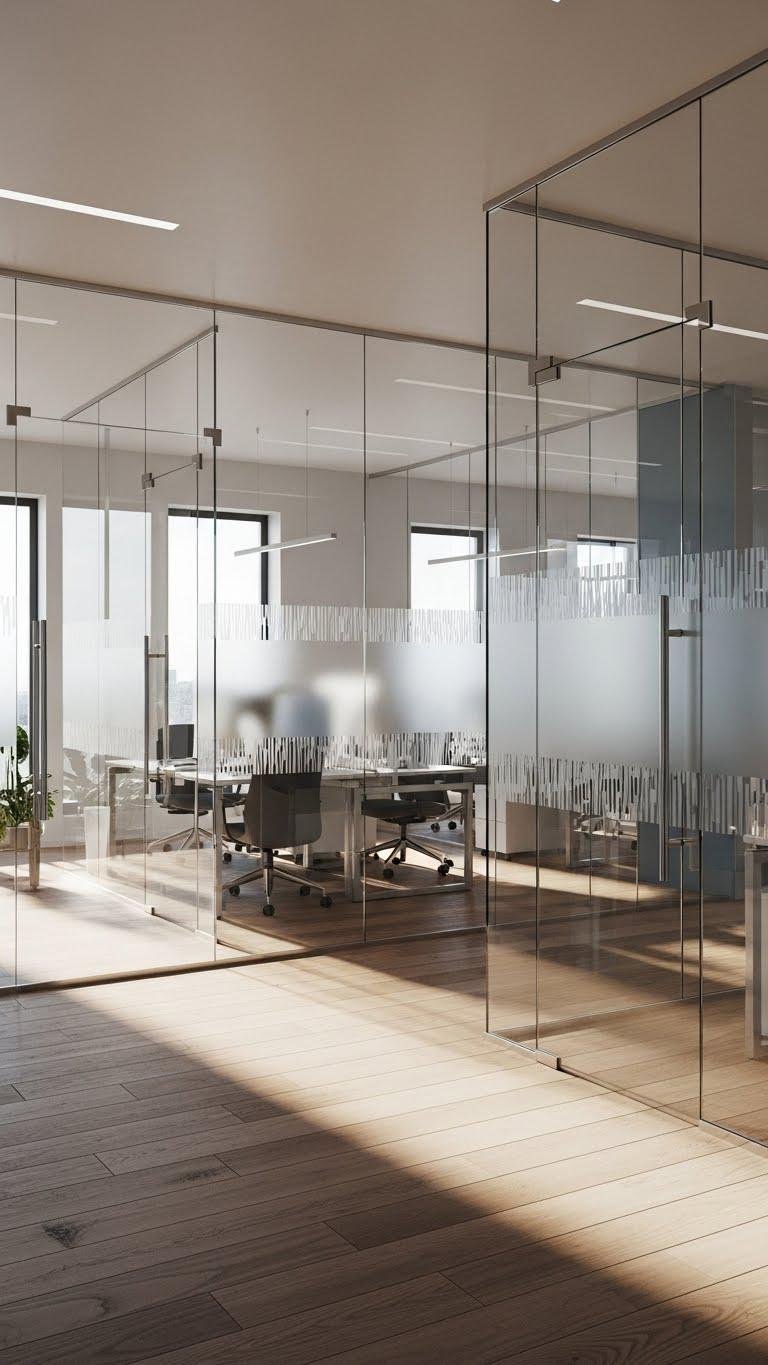
Bring light through while carving out focus: glass partitions let you define zones without boxing people in, so daylight travels deep into the plan while acoustic films, frit patterns, or frosted bands give visual privacy where it matters. You’ll choose frameless elegance or slim profiles, apply frosted privacy selectively, and balance transparency with sound control so teams feel open, mobile, and respected.
Incorporate Standing Meeting Areas
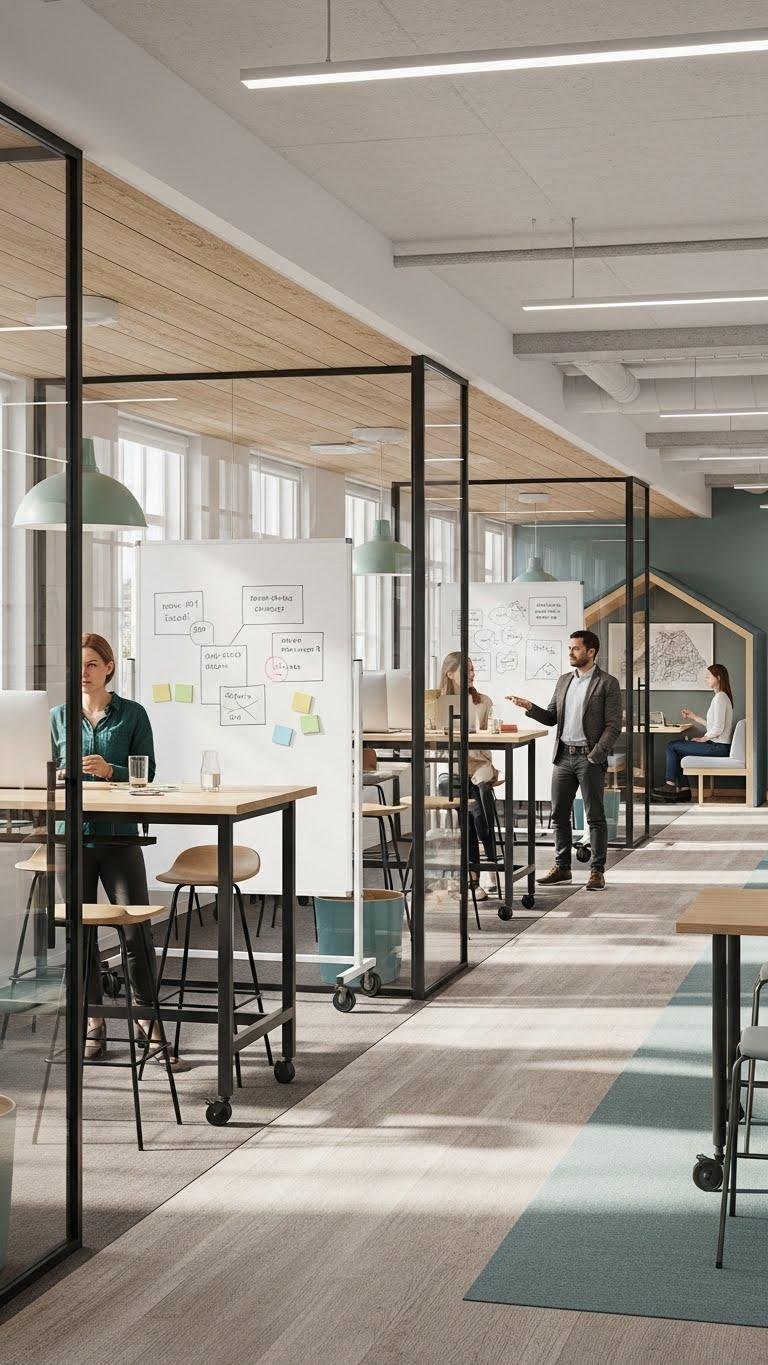
With glass partitions preserving daylight and privacy, add standing meeting areas to keep collaboration quick, focused, and physically engaging.
You’ll favor uncluttered high tables, stools on casters, and mobile whiteboards so ideas move as freely as people.
Design clear sightlines, cozy corners for one-on-ones, and durable surfaces that invite standing sessions.
Encourage quick standups and spontaneous problem-solving without anchoring anyone.
Implement Cable Management and Tech Organization

Against a backdrop of clean surfaces and open sightlines, organize cables and tech so your workspace looks intentional and functions without friction.
Tidy hidden cable runs, label cords, and anchor power strips beneath desks. Use modular docks to consolidate devices, swap peripherals quickly, and minimize desktop clutter.
You’ll gain visual calm and the freedom to move, adapt, and focus without techno-distraction.
Add Task-Specific Tool Kits and Accessible Supplies
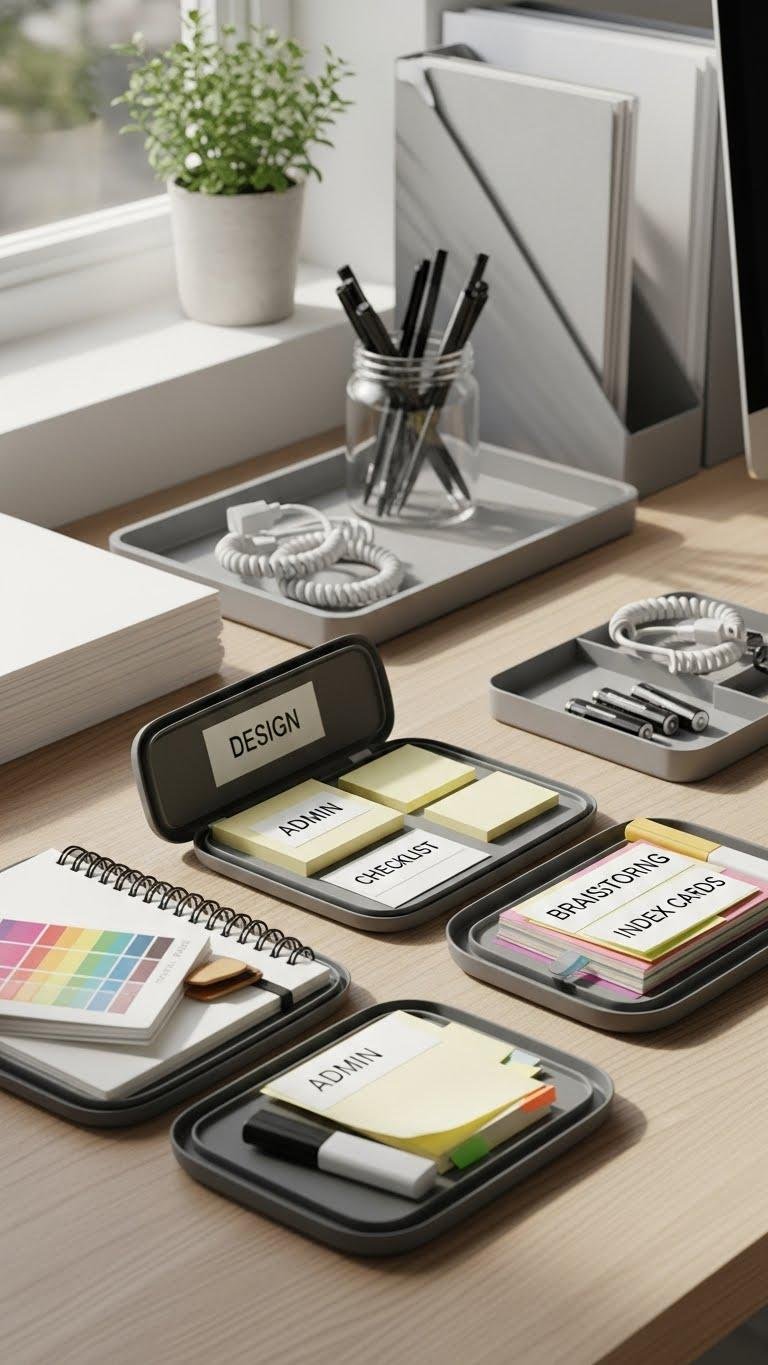
Set up compact, task-specific kits so you can grab what you need and get to work fast. Curate Task kits for design, admin, and brainstorming—labelled, portable, and minimal. Position Supply stations within reach: paper, pens, chargers, spare batteries. You’ll move freely, finish tasks with clarity, and enjoy an uncluttered desk that supports focused, efficient flow without unnecessary extras.
Create a Dedicated Relaxation or Recharge Corner

When you need a pause to recharge, carve out a small corner that invites calm and clear-headed breaks. Choose a low-profile chaise or woven pouf, soft throw, and adjustable lamp. Use plants, a subtle sound diffuser, and a timer for mindful breathing sessions. Keep it uncluttered so you can inhale, reset, or take a focused mini napspot without obligations.