
You’ll make shelves feel intentional, not accidental, by arranging books, objects, and art with rhythm, scale, and texture in mind. Start with low horizontal stacks and add three-to-five curated pieces—matte ceramics, a brass form, a small vase—then mix wood, glass, and metal while leaving generous negative space. Keep things edited and varied in height, and you’ll want to try a few of these setups for different moods…
Curated Book Stacks With Sculptural Accents
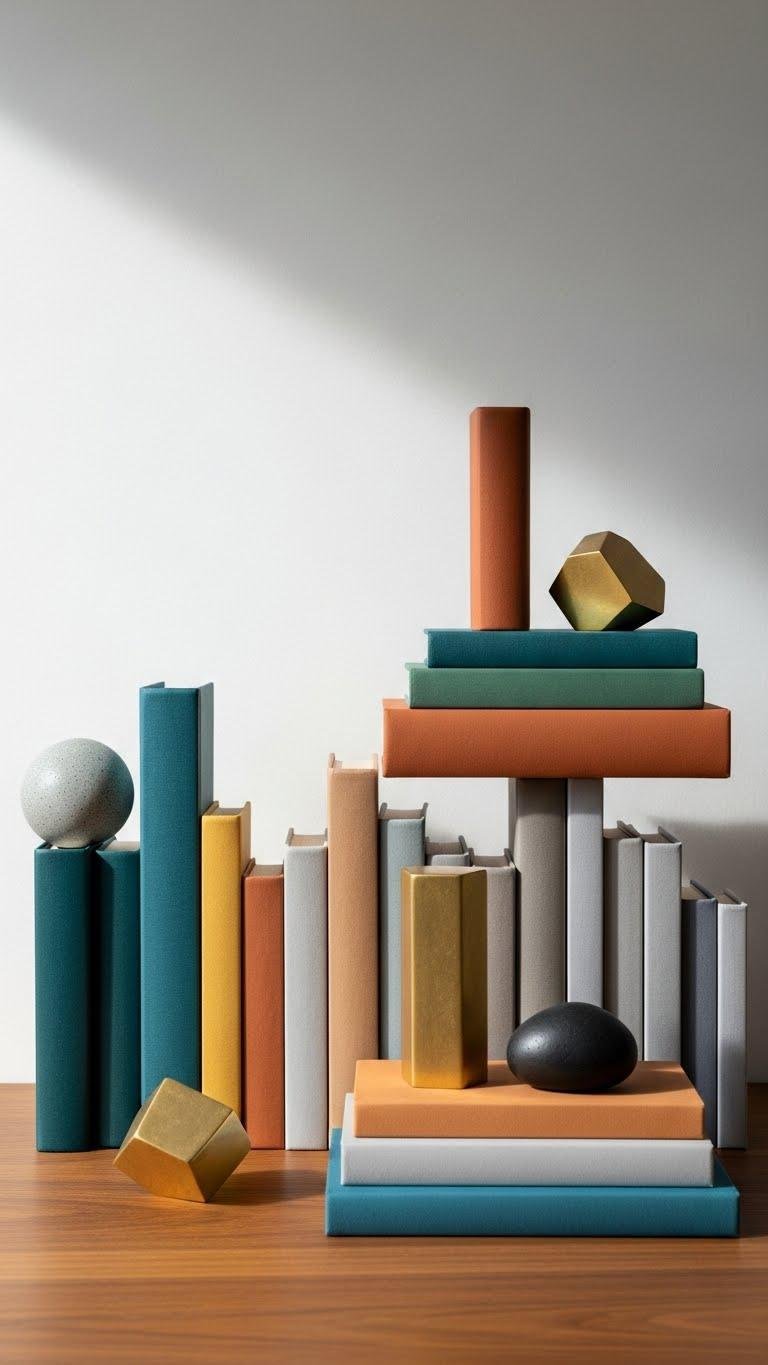
Start by stacking books in deliberate groupings—mix heights, colors, and genres to create visual rhythm while keeping the arrangement purposeful.
You’ll anchor stacks with sculptural spines and small objects that punctuate negative space.
Let stacked silhouettes read like curated statements: strong, spare, mobile.
You’ll edit relentlessly, favoring freedom over clutter, so each cluster breathes and invites touch.
Layered Artwork Leaning on Shelves
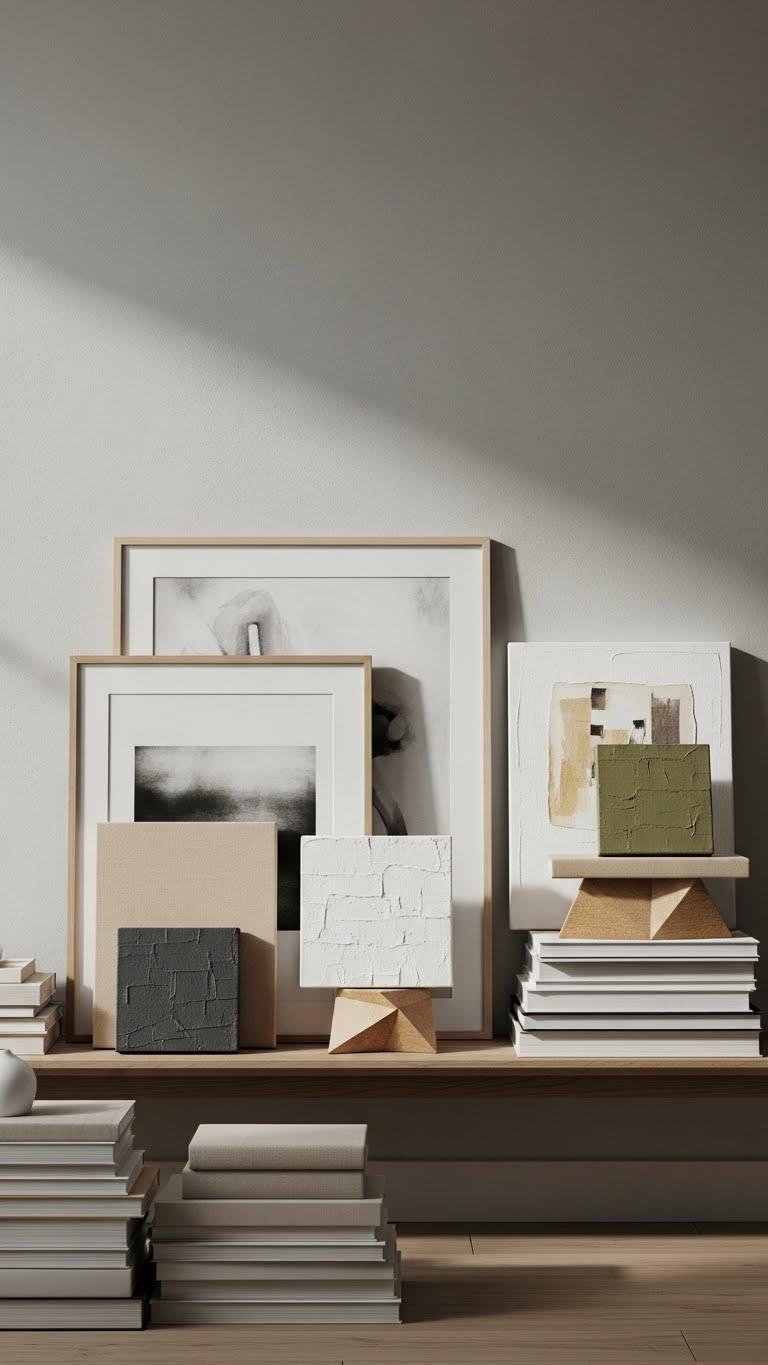
After you’ve pared down book stacks into sculptural groupings, lean artwork against the wall to add layered depth and a relaxed, gallery-like energy. You’ll mix framed prints, small canvases and leaning mixed media pieces to create a layered minimalist look. Let varied scales overlap, keep colors restrained, and leave breathing room so each piece reads confident, free, and effortlessly curated on your shelves.
Mixed-Material Vignettes With Wood and Metal
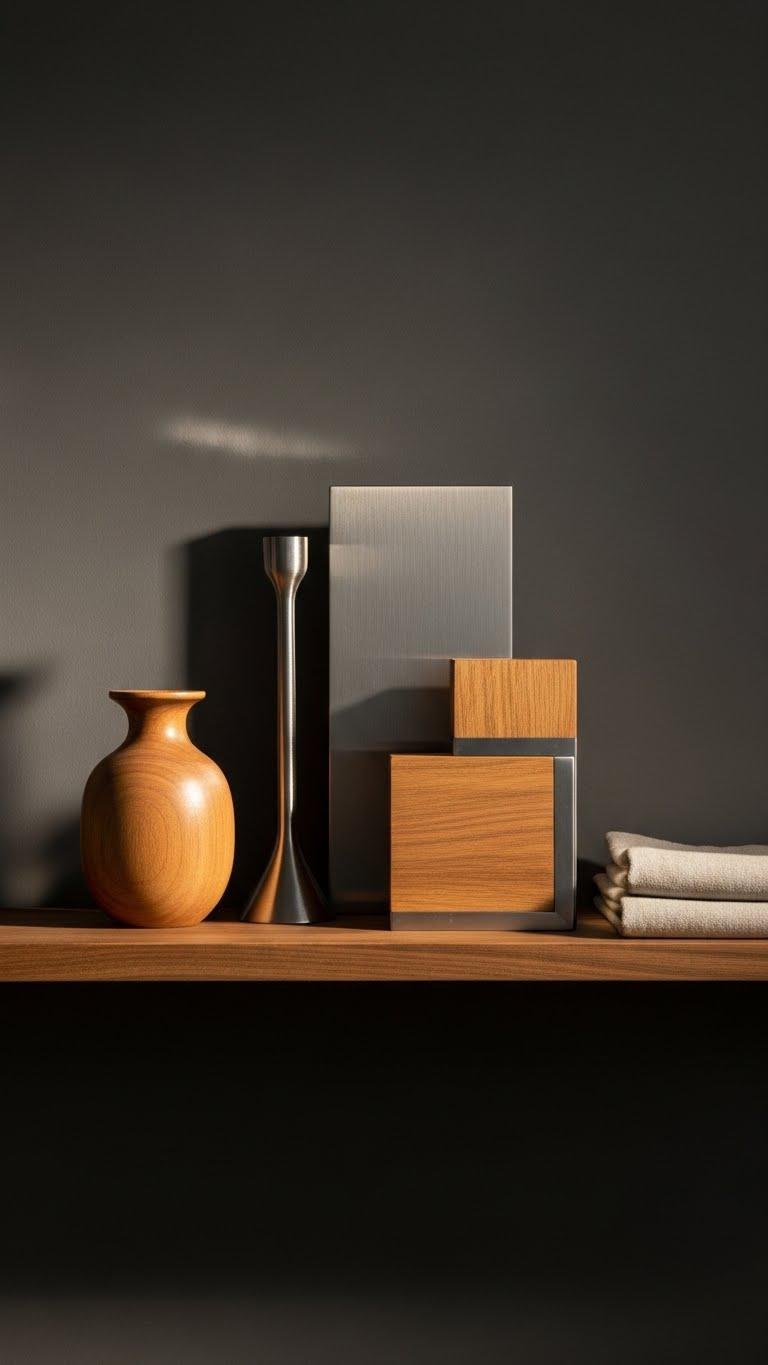
Pair warm wood with cool metal to create vignettes that feel both grounded and modern. You’ll mix pieces showing rustic patina with sleek steel to get an elegant industrial contrast. Edit ruthlessly: choose three to five objects, vary heights, and leave air between them. Let metal edges sharpen wooden curves so your shelves read confident, free, and intentionally curated.
Woven Baskets for Texture and Storage

Tuck woven baskets into your shelving to add tactile warmth and smart storage without fuss. You’ll choose natural fibers that age beautifully, anchoring shelves while hiding clutter.
Use varying sizes for an effortless storage solution that respects rhythm and negative space. Keep styling minimal—one or two baskets per shelf—to maintain airflow and freedom, letting the room breathe while staying organized.
Tall Obelisks and Pitchers for Vertical Interest
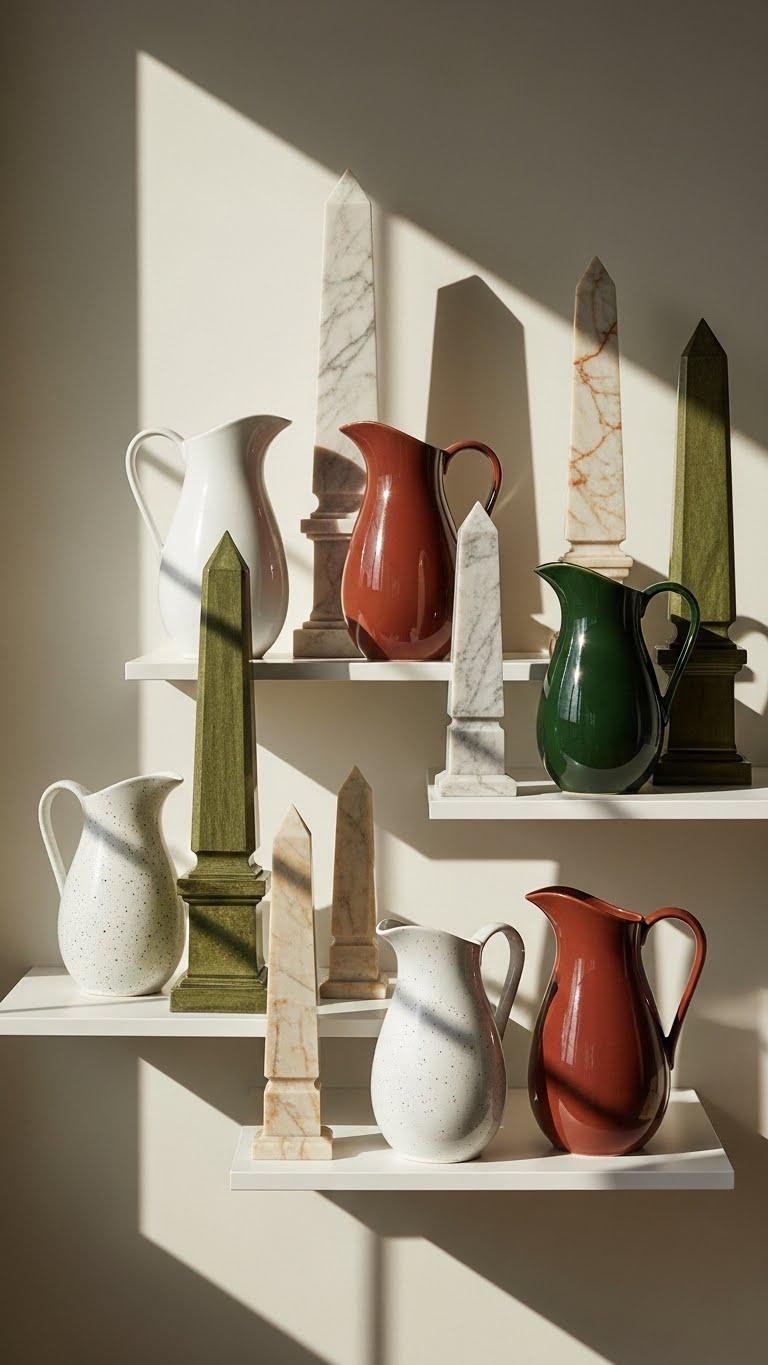
When you want to draw the eye upward and break horizontal lines, tall obelisks and pitchers deliver instant vertical interest with effortless elegance.
You’ll pair Marble obelisks with Glazed pitchers to punctuate shelves, mix heights, and create a liberated, curated feel. Place them in asymmetrical groupings, let negative space breathe, and choose finishes that reflect your light and mood for instant, confident style.
Horizontal Book Platforms for Small Objects
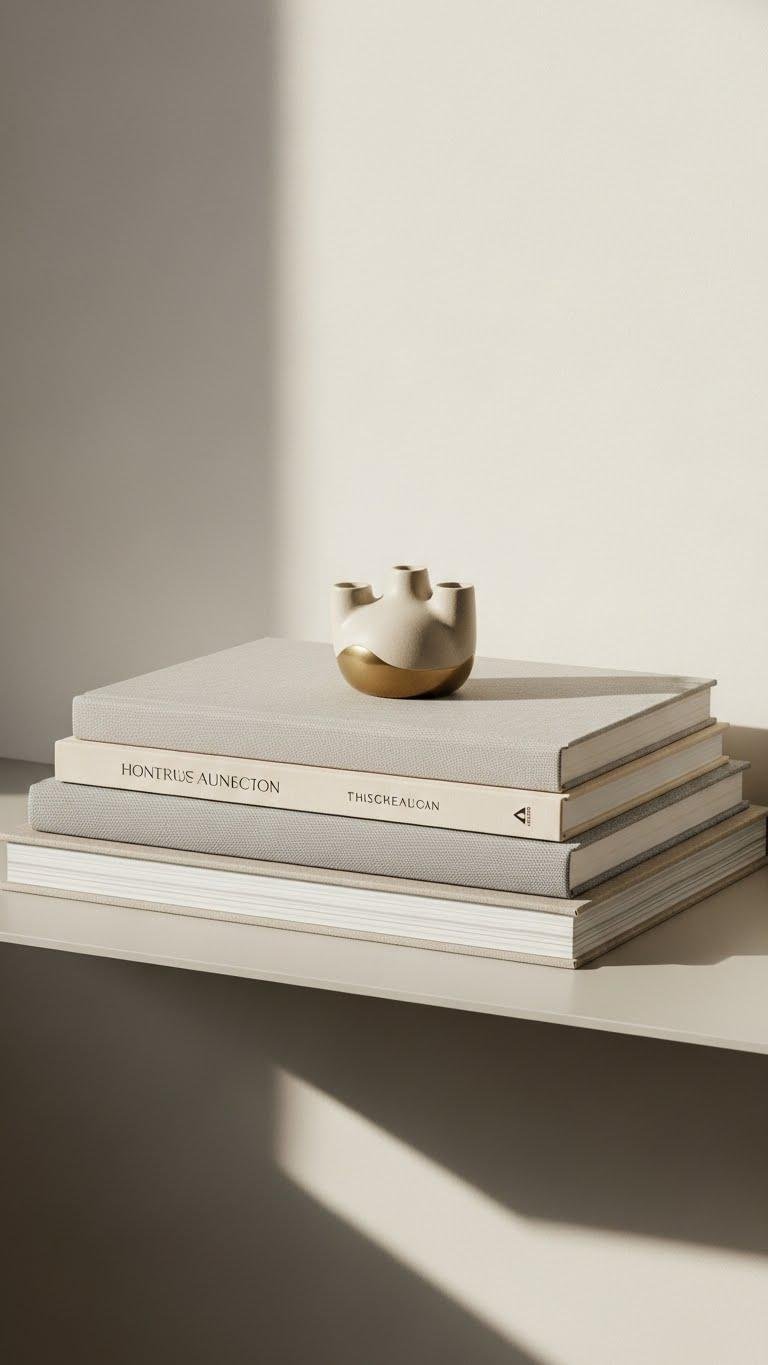
Lay a low stack of books flat to create a refined horizontal platform that elevates small objects and anchors a shelf’s composition. You’ll use compact platforms to vary height without clutter, pairing them with floating ledges for airy balance.
Choose tactile covers and a single objet d’art to signal intent; you’ll gain polished simplicity that feels free, deliberate, and effortlessly curated.
Dried Olive Branch Arrangements in Ceramic Vases
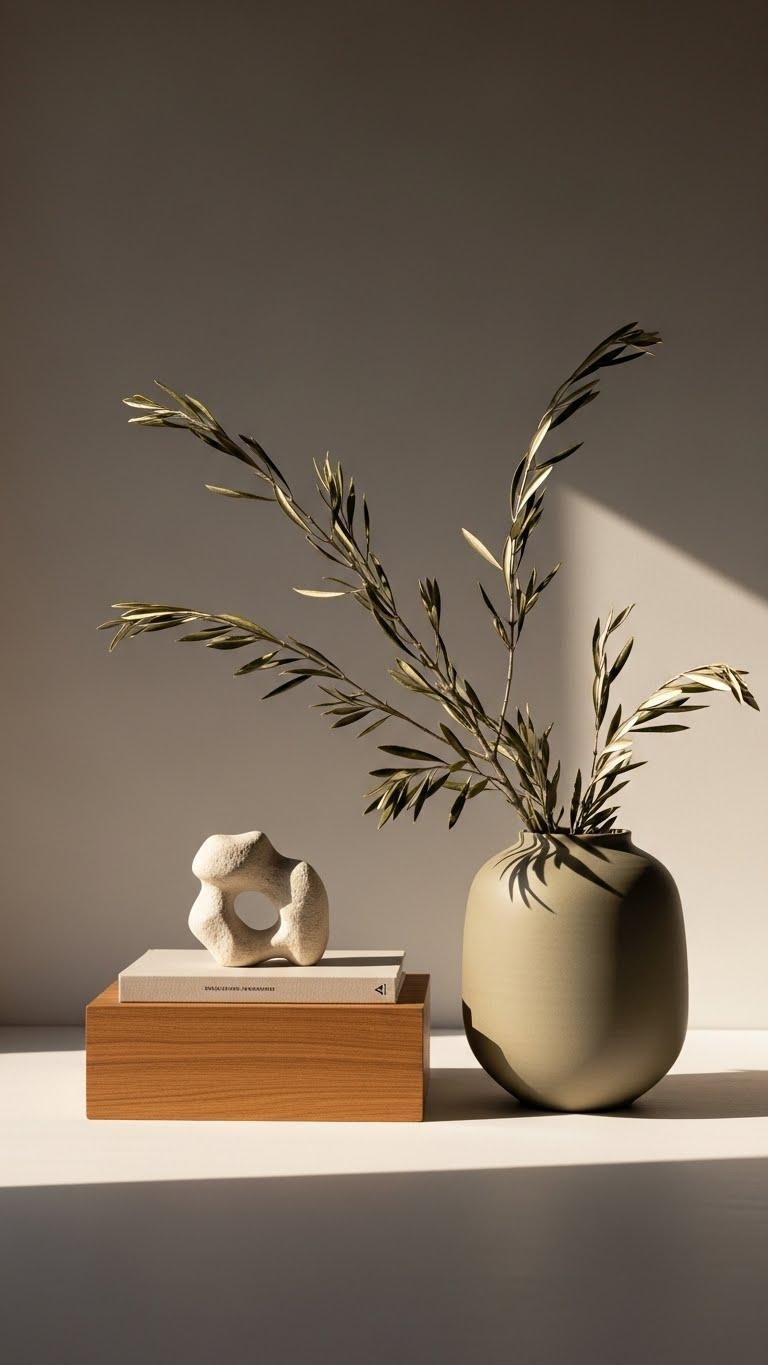
After you’ve set a low book platform and a single objet to anchor the shelf, bring in a dried olive branch arrangement in a ceramic vase to add organic line and quiet movement. You’ll favor olive branches in matte vases, lean into a muted palette, and arrange asymmetrical sprays for effortless rhythm. Place slightly off-center so the composition breathes and feels unconstrained.
Glassware Groupings for Airy Elegance

Often you’ll find that a small cluster of glassware instantly lifts a shelf’s mood—group three to five pieces of varying heights and silhouettes, tuck them slightly off-center, and let the light do the rest. You’ll mix recycled bottleware with a couple of iridescent tumblers for contrast, keep spacing airy, rotate pieces seasonally, and let transparency and shine create a liberated, refined focal point.
Ceramic Bowl Collections With Natural Finds
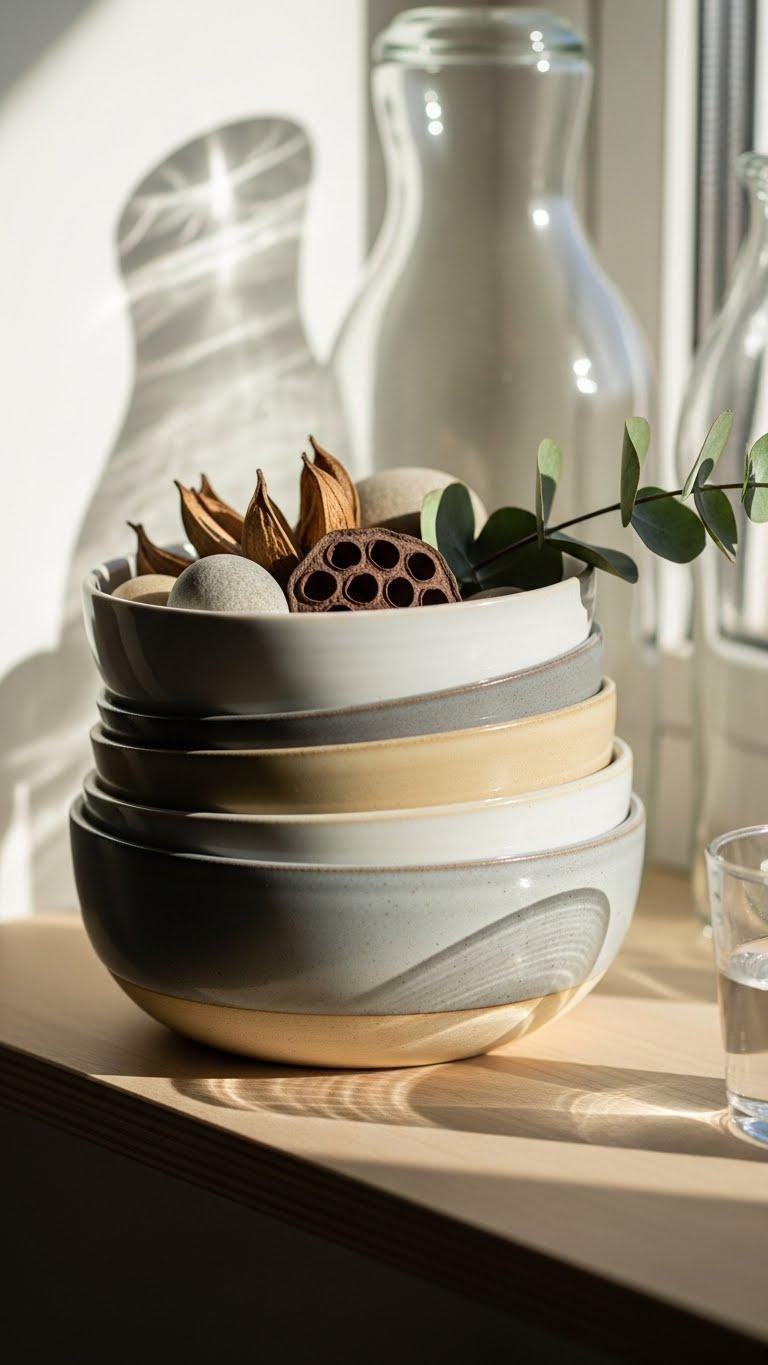
If the lighty transparency of glass wakes a shelf, a cluster of ceramic bowls grounds it—stack three to six pieces in varying diameters and muted glazes, then nest seasonal finds like smooth river stones, dried seedpods, or a sprig of eucalyptus inside to add texture and story. You’ll choose pieces with handmade glazes, rotate seasonal botanicals, and arrange with confident restraint for liberated, tactile calm.
Alternating Tall and Short Elements for Balance

When you pair tall vases, candlesticks, or books with lower bowls, frames, and sculptures, the eye moves smoothly across the shelf and the arrangement reads as intentional rather than cluttered.
You’ll use height contrast to create confidence and calm, alternating pieces to establish scale rhythm. Trust your instincts, vary spacing, and let negative space breathe so each object feels chosen, not constrained.
Groupings of Three for Visual Rhythm

Three is the sweet spot for starters: arrange items in odd-numbered clusters to create a natural, confident rhythm that draws the eye and avoids symmetry’s static feel.
You’ll use rhythmic triptychs—vary scale, texture, height—and place clustered miniatures to anchor negative space. Trust contrast and spacing; you’ll achieve effortless movement and a liberated, intentional shelf that reads like curated rhythm, never clutter.
Vintage Keepsakes and Heirloom Displays

Because cherished objects carry stories, let them take center stage: curate a small, edited display of vintage keepsakes and heirlooms that balances nostalgia with modern restraint. You’ll mix an antique locket, framed ephemera, and folded heirloom linens on varied heights. Keep negative space, limit pieces, and rotate favorites seasonally so your shelf feels personal, intentional, and free.
Stacked Coffee Table Books as Pedestals

Layer books to lift objects off the surface and give your shelf instant visual hierarchy. You’ll use coffee table volumes for pedestal styling, stacking hardcovers to elevate vases, sculptures, or candles. Rotate hardcover rotation for changing moods, swap spines and sizes to control balance. Embrace height play; let varied stacks create rhythm so your shelf breathes and feels free.
Layered Frames and Photos for Personal Touch
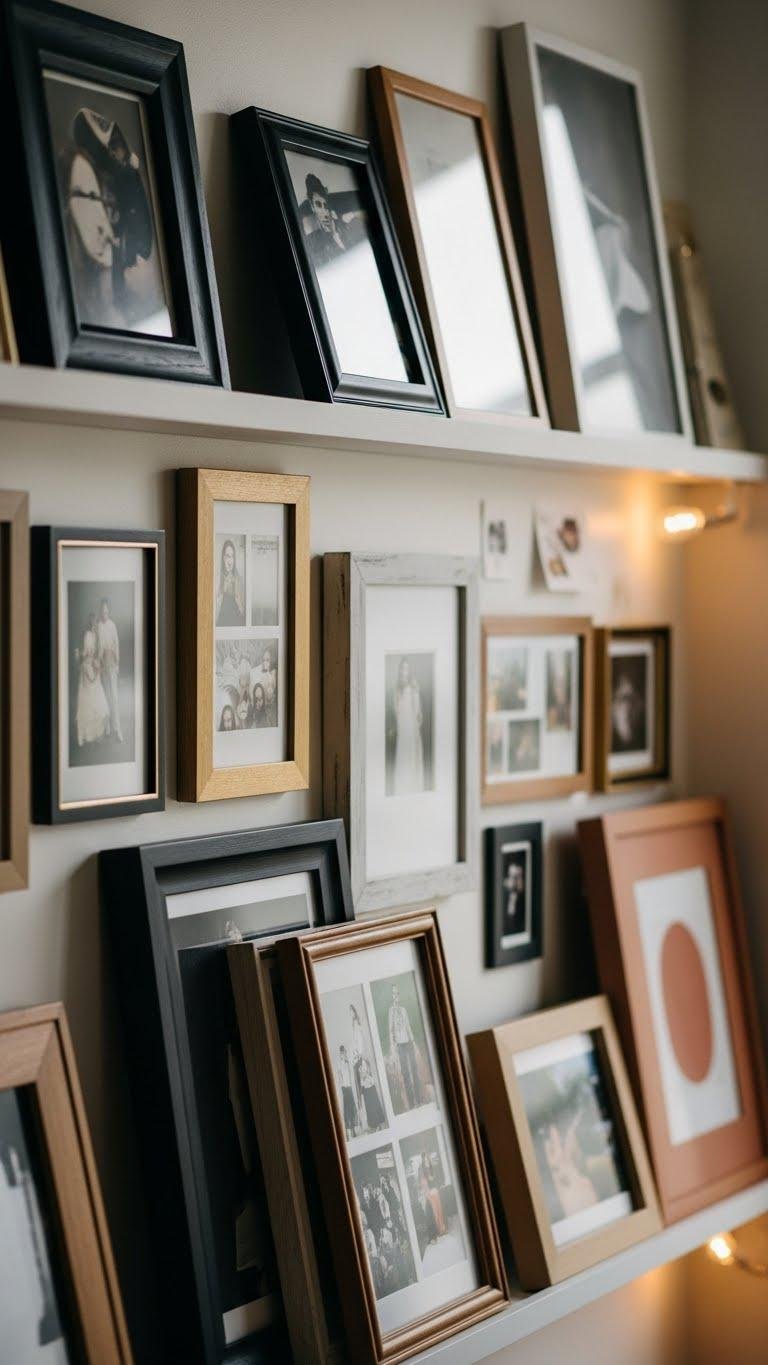
Mix in frames of different sizes and finishes to create a relaxed, personal gallery that feels curated rather than contrived. You’ll layer photos, framed collages and small prints, leaning some and hanging others for depth. Arrange memory grids for symmetry or scatter them for spontaneity. Let each piece reflect choices you own — intimate, bold, uncomplicated — so the shelf breathes with your story.
Metal Trays Anchoring Mixed Textures

On a shelf, metal trays ground a varied collection, giving mixed textures a clear, polished base. You’ll use antique trays and hammered finishes to unite wood, glass, and ceramics without clutter. Place one low tray for small objects, a taller tray behind statement pieces, and let metallic edges create rhythm. This keeps displays crisp, adventurous, and effortlessly curated.
Greenery in Woven Planters or Hyacinth Baskets
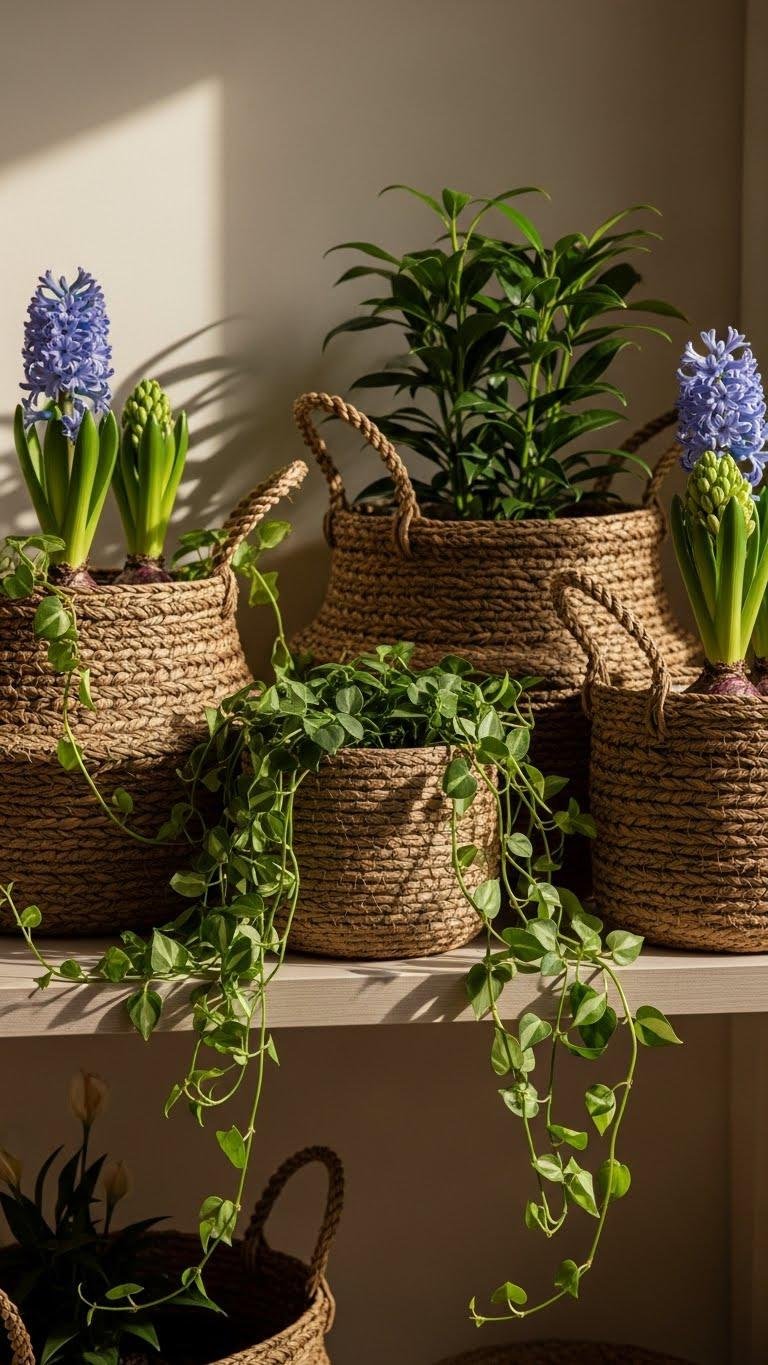
Paired with woven planters or hyacinth baskets, greenery instantly softens a shelf while adding tactile contrast—you’ll get the warmth of natural fibers against glossy leaves.
You’ll choose woven foliage for a relaxed, curated look and place basketed hyacinths to inject seasonal scent and color. Mix heights, let tendrils drape, and keep arrangements effortless so your shelves breathe and invite movement.
Playful Objects Like Chess Sets or Toy Artifacts

After you’ve softened shelves with woven planters and hyacinth baskets, add a playful counterpoint with objects that spark curiosity—think sculptural chess sets, vintage toy cars, or ceramic figurines. You’ll mix Whimsical pawnworks with bold color and texture, letting Toy portraiture hobby pieces narrate personality. Choose varied scales, stagger heights, and keep compositions loose so each shelf feels liberated, not staged.
Minimalist Sculptures for Clean Lines

Because clean lines calm a shelf, introduce minimalist sculptures as your quiet anchors—think slender ceramic forms, matte metal arcs, or blocky stone pieces that read architectural against woven textures. You’ll choose pieces that breathe: minimalist metalwork, ceramic forms, or stone, scaled for negative space. Place them singly or in small pairs so each object asserts freedom, balance, and restrained personality without clutter.
Natural Wood Bowls Filled With Shells or Stones
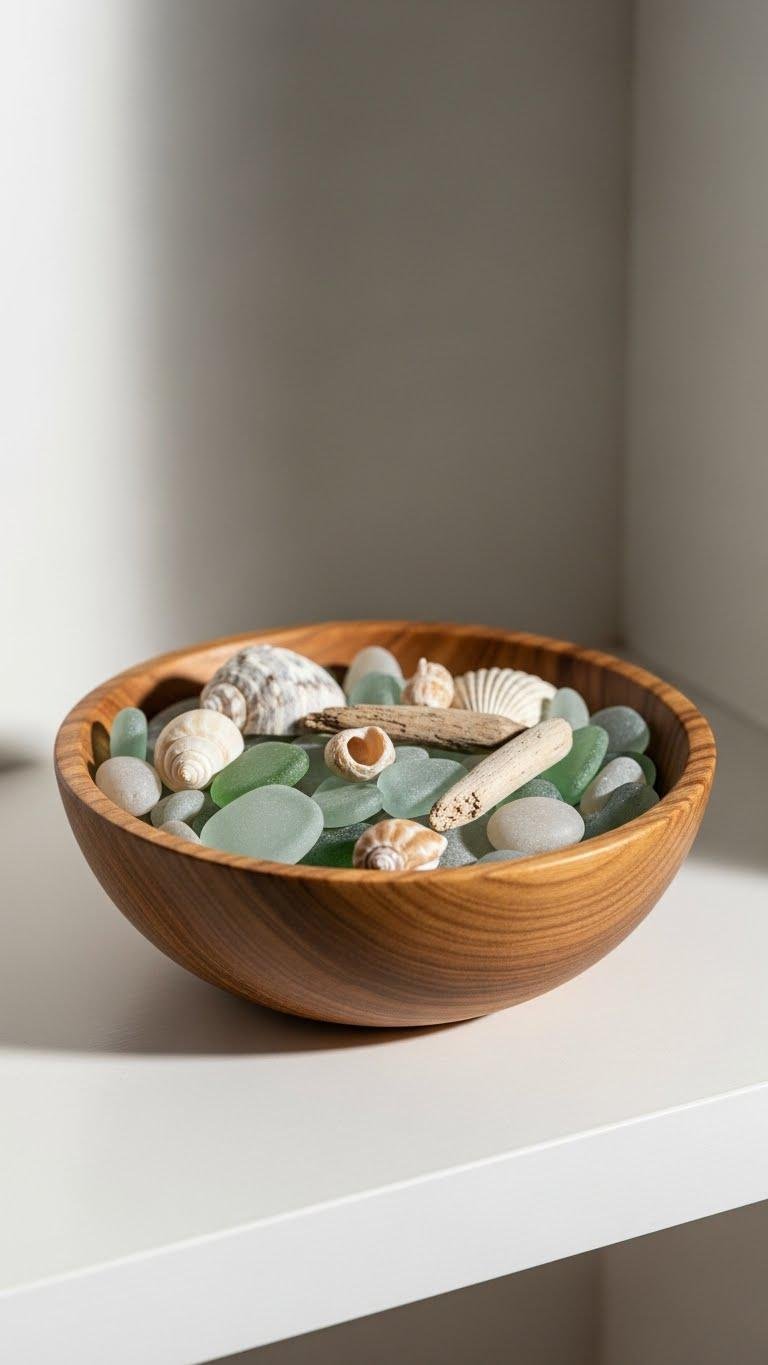
To soften those architectural lines, add a natural wood bowl filled with shells or stones—its warm grain and rounded silhouette will temper the shelf’s geometry while keeping the composition calm. You’ll curate tactile, unforced displays using sea glass, smooth pebbles and small drift wood fragments. Place them asymmetrically, let negative space breathe, and let each organic element suggest effortless freedom.
Ceramic and Glass Pairings for Contrast
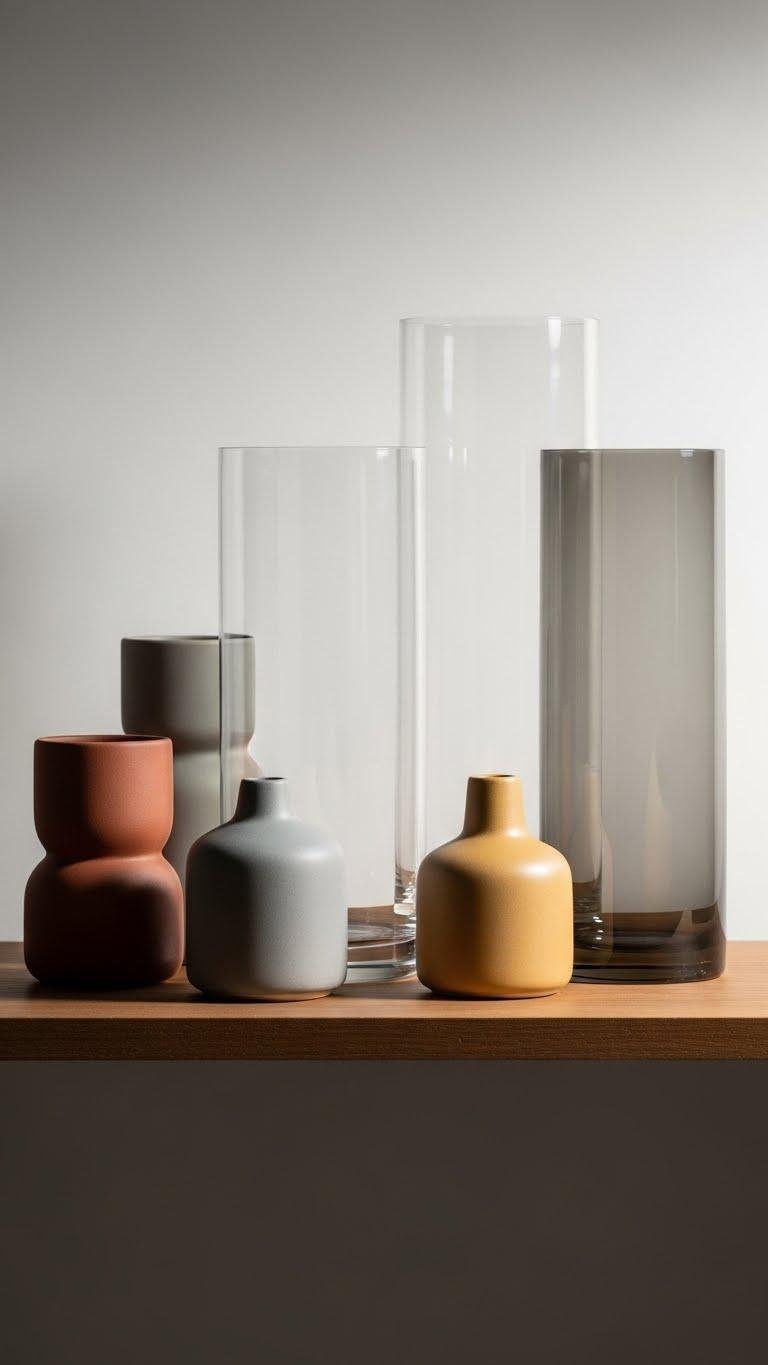
When you pair matte ceramics with glossy glass, you get an immediate, sophisticated contrast that energizes a shelf without shouting. Let matte glaze contrasts anchor shapes while glass adds lightness; mix small sculptural vessels with taller clear pieces.
You’ll embrace translucent opaque pairings that feel deliberate and free, creating rhythm and serenity without clutter, inviting touch and effortless style.
Repeating Color Pops Across Multiple Shelves
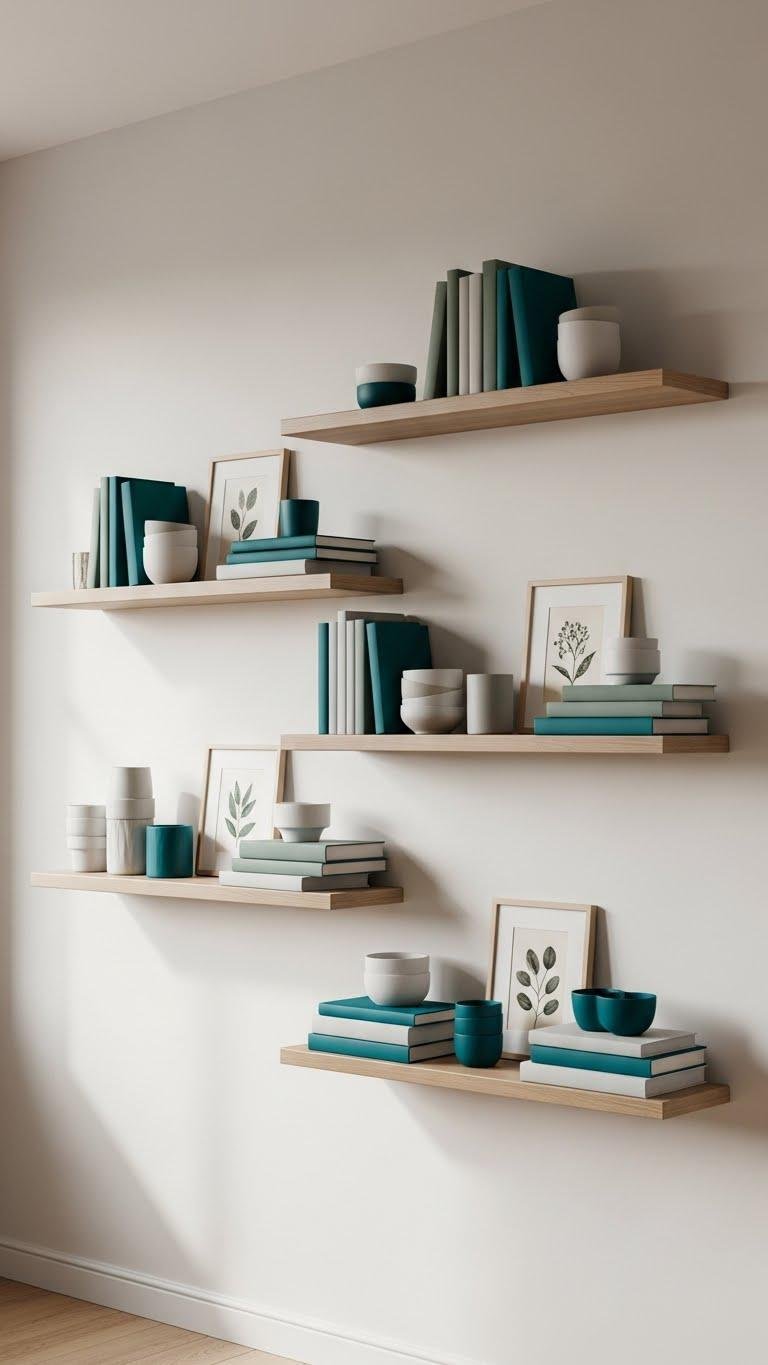
Often you’ll want a single color accent to thread through multiple shelves so the whole display reads as a considered composition rather than a series of isolated vignettes.
You’ll set Accent repeats—small objects, books, or art—in measured intervals to create Color rhythm.
Place items confidently, vary scale, and let negative space breathe; the result feels curated, liberated, and effortlessly cohesive across the room.
Textured Fabric Throws Draped Over Lower Shelves
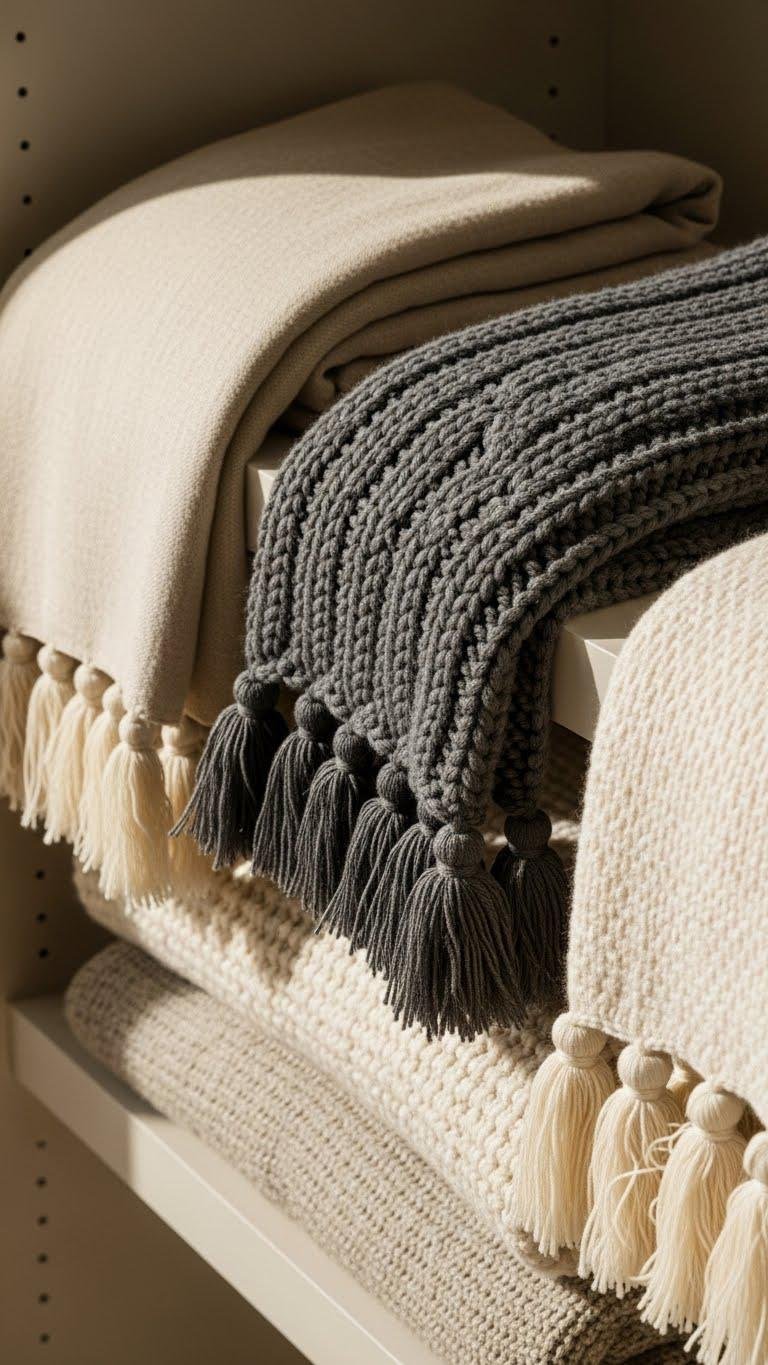
Draping a textured throw over a lower shelf instantly softens the display and anchors the room’s palette, so choose fabrics that contrast the shelf’s lines—chunky knit, boucle, or a crisp woven linen—to add tactile interest without clutter.
You’ll select a linen drape for airy ease, layer a chunky fold for depth, and use tassel contrast to inject playful edge while keeping the look effortless.
Rotating Keepsake Boxes for Seasonal Refresh
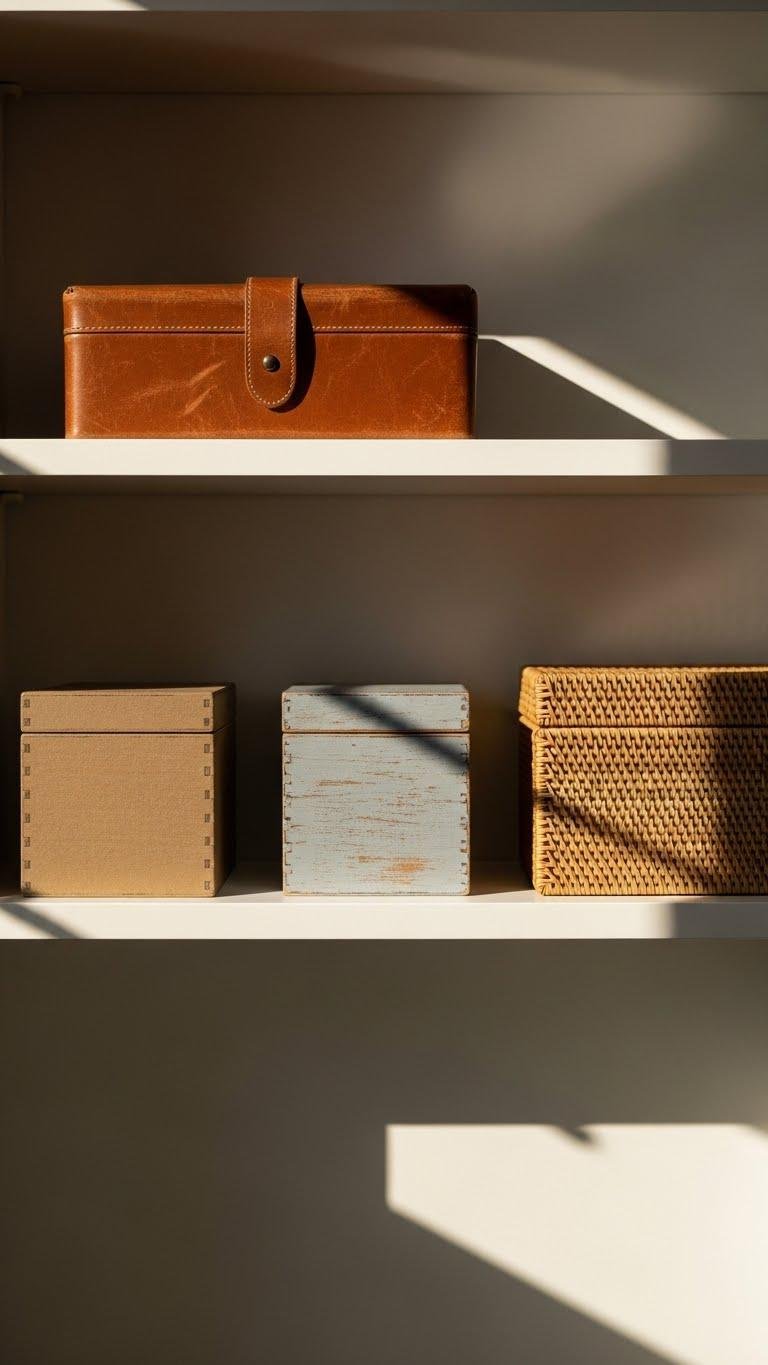
For a quick seasonal refresh, rotate a curated set of keepsake boxes on lower shelves to change the mood without cluttering the space. You’ll lean into seasonal heirlooms and rotating curiosities, swapping texture, color, and story as months shift. Choose boxes with clean lines and purposeful patina so each rotation feels deliberate, freeing your decor to evolve with intention.
Small Collections Displayed on Varying Heights

After rotating keepsake boxes to refresh season and texture, shift focus upward: arrange small collections at varied heights to create rhythm and visual interest. You’ll use mini mantelpieces and staggered pedestals to showcase curios, shells, and tiny sculptures without clutter. Mix weight and negative space, let each piece breathe, and trust asymmetry to deliver effortless, liberated style that reads intentional and alive.
Layered Lighting With Candles and Small Lamps

When you layer lighting with candles and small lamps, you create a soft, sculptural glow that instantly elevates a shelf vignette; mix low, flickering candlelight with focused lamp pools to model textures and set mood without overpowering the display.
You’ll master candle placement for safety and rhythm, use lamp layering to create depth, and trust instinct to balance warmth, shadows, and open space.
Handmade Ceramics and Local Artist Finds

A carefully chosen ceramic piece or a small work from a local maker instantly anchors a shelf, giving it personality and tactile warmth.
You’ll favor pieces with handbuilt texture and intentional flaws that celebrate craft. Mix small sculptures, vases, or bowls glazed in local glazes to tell a neighborhood story. Place them confidently; they’ll offer freedom, depth, and a grounded focal point.
Oblique Stacking: Horizontal Books Under Tall Objects
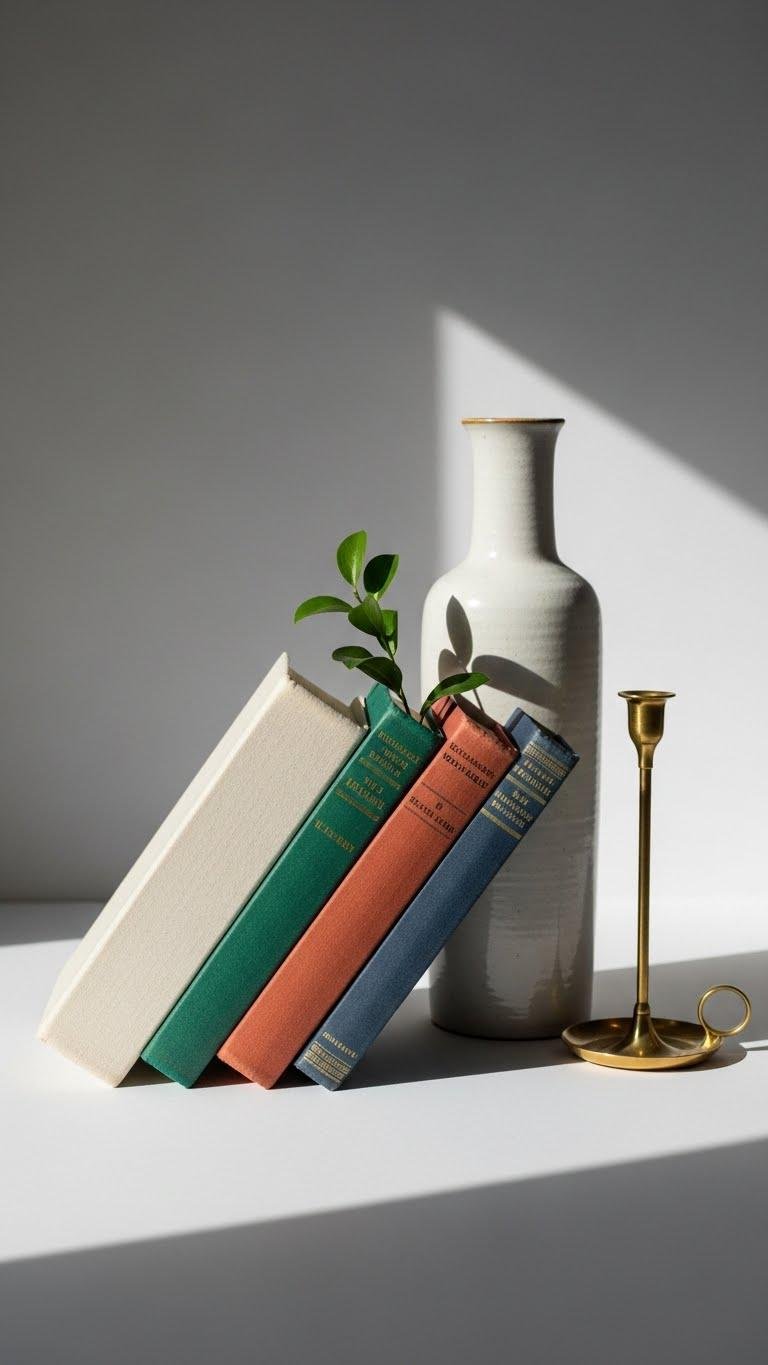
Tilt a stack of books on its side and you instantly create a sculptural base that lifts a tall vase or candlestick out of the ordinary. You arrange stacked spines horizontally, letting their textures read like low relief. Use varying heights and weight anchors to steady pieces; rotate covers, tuck a small green sprig, and keep lines clean so the display feels liberated, deliberate, and effortless.