
You can make trendy updates that still feel grounded and lived‑in by balancing warm off‑white walls and tactile linens with sculptural, organic pieces and a few bold accents. Think gentle curved sofas, handblown pendants, ochre or oxblood touches, and solid wood anchors that age well. I’ll walk through 24 ideas that blend modern lines and handcrafted warmth so your home looks current without chasing fads—start with one small swap and build from there.
Warm Off‑White and Creamy Neutrals

Start with warm off‑white and creamy neutrals as your base to soften sharp lines and make spaces feel inviting; pick tones with yellow or red undertones rather than cool grays so walls and textiles read cozy rather than stark. You’ll favor soft alabaster and creamy eggshell on walls, layer linen and boucle, add matte wood, and keep hardware muted for a liberated, calm aesthetic.
Earthy Accents in Ochre and Oxblood
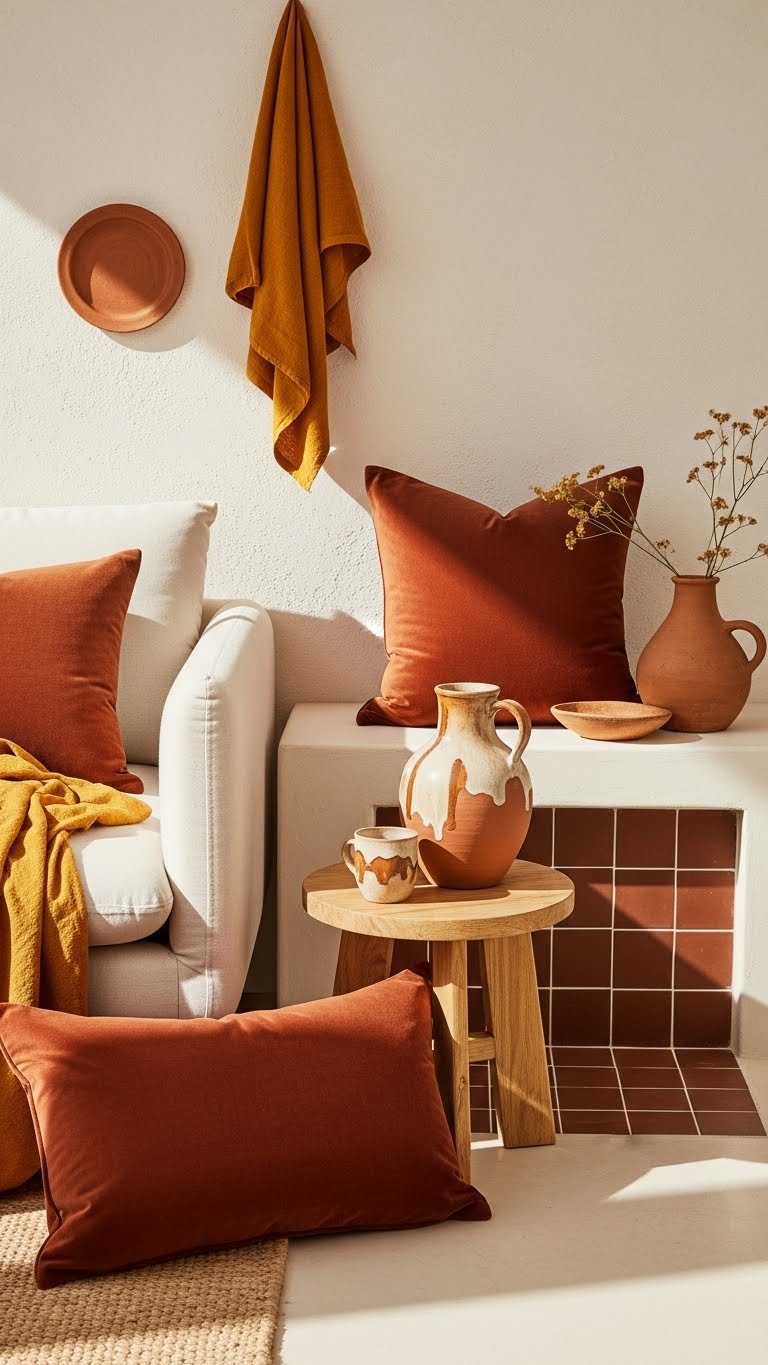
When you want to ground that soft, creamy base, introduce earthy accents in ochre and oxblood to add warmth and depth without overwhelming the room.
Pair sun baked textiles with a terracotta glaze on pottery, layer oxblood throw pillows, and install encaustic tiles as a small focal floor or backsplash.
Keep shapes simple, let color feel intentional, and enjoy liberated warmth.
Deep Blues and Muted Greens as New Neutrals

After grounding a creamy palette with ochre and oxblood, look to deep blues and muted greens to offer a cooler kind of neutrality that still feels layered and lived-in.
You’ll use navy anchors on trim or a statement wall, then balance with sage foundations in textiles and plants. Mix matte and soft sheens, add brass accents sparingly, and keep layouts open to breathe.
Organic Modern Furniture Silhouettes
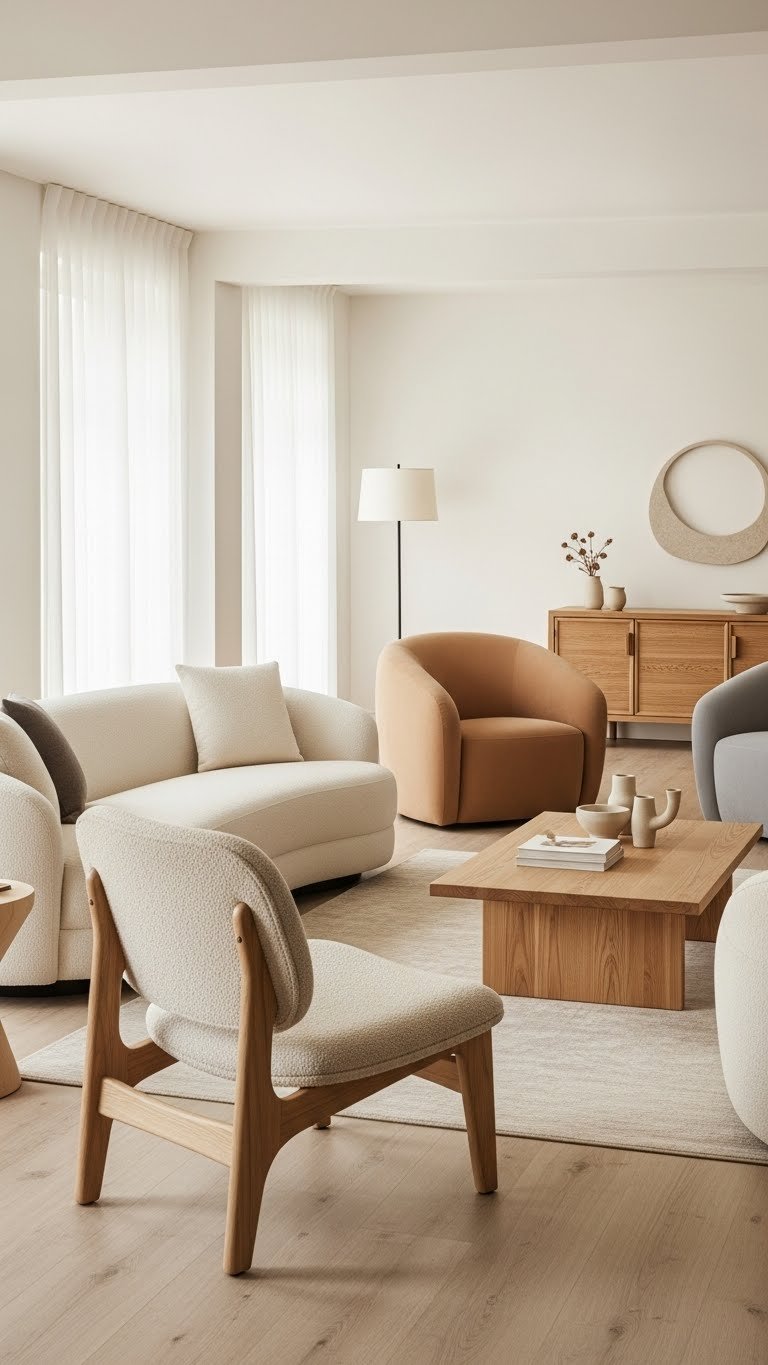
Though rooted in clean lines, organic modern silhouettes soften geometry with gentle curves and tactile materials, so you get furniture that feels sculptural yet relaxed.
Choose pieces with ergonomic silhouettes and soft edged profiles, favor sustainably sourced woods and natural upholstery, and balance minimalist curves with open negative space. You’ll craft a liberated, timeless interior that’s comfortable, intentional, and visually calm.
Gentle Curves in Sofas and Tables

If you lean into gentle curves, sofas and tables will soften a room’s geometry and invite people to linger; choose low-profile sofas with rounded backs and tapered arms, and pair them with coffee tables that echo those arcs—oval or pebble-shaped tops, sculpted bases, or butcher-block edges sanded to a soft radius. Balance with curved ottomans and rounded nesting tables for flow and flexible seating.
Arched Doorways, Mirrors, and Niches
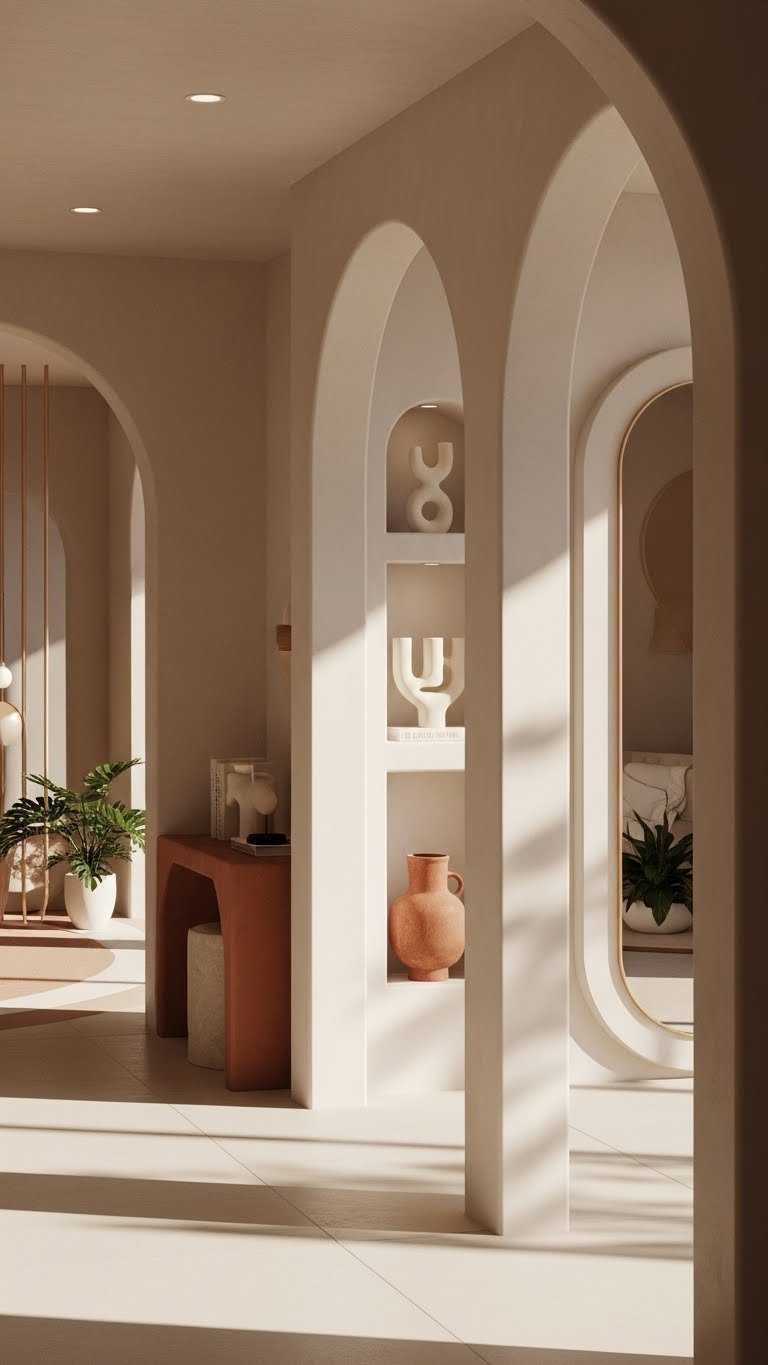
When you introduce arches and niches, you turn flat walls into inviting pathways and display stages—use soft, rounded openings to frame passages between rooms and to create moments of pause.
Embrace arched alcoves for art or plants, add mirror niches to amplify light and depth, and keep finishes neutral. Let curves guide movement; choose scale and placement that free sightlines and daily rhythm.
Ogee and Trefoil Headboard Profiles

Curved architectural details like arched doorways naturally lead you to contemplate similarly shaped furniture, and headboards are a perfect place to echo those soft silhouettes. Choose ogee contours for refined drama or trefoil motifs for subtle Gothic flair.
Mix natural woods or matte upholstery, keep scale airy, and position lighting to emphasize curves — you’ll create a liberated, timeless bedroom statement.
Scalloped Chairs and Upholstery Details
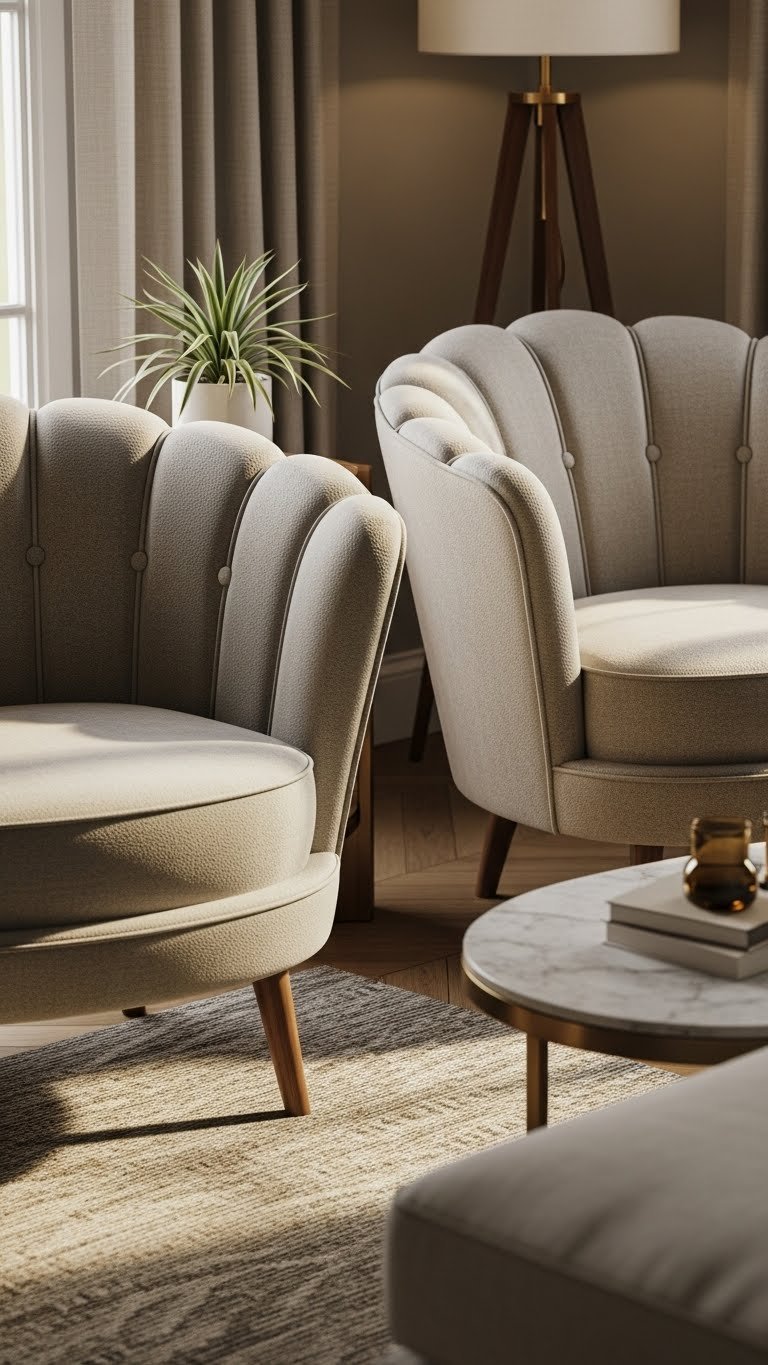
Lean into scalloped chairs to soften a room’s geometry and add an instant touch of craftsmanship; choose silhouettes with evenly spaced lobes or deeper shell-like arcs to set the tone. You’ll pair scalloped upholstery with subtle button tufting for depth, favor curved armchairs to encourage lounging, and use piped seams to sharpen edges. Opt for flexible fabrics and neutral tones to keep the look free.
Natural Stone Statement Pieces

Anchoring a room with a natural stone piece brings immediate weight and texture, so pick one focal element—like a sculpted coffee table, a veined marble console, or a rough-hewn mantel—and let it set the palette. Choose hand carved mantels or raw slab consoles for deliberate contrast, pair with light woods and airy textiles, and keep surrounding decor minimal so the stone breathes and the space feels free.
Rich Wood Grains and Stained Finishes

Many kitchens benefit from the warmth of rich wood grains and stained finishes, so choose woods with pronounced grain patterns—walnut, oak, or ash—to add depth and character.
You’ll protect surfaces with a hand rubbed varnish for a subtle sheen and long wear. Mix figured veneer panels on cabinets or islands for drama, balance bold grains with simple hardware, and let natural tones breathe.
Textured Plaster and Wall Treatments

Introduce textured plaster and wall treatments to add tactile interest and subtle depth to a room without overwhelming its palette. Choose tactile limewash for soft, matte layers that age beautifully, or Venetian plaster for polished, luminous walls. You’ll experiment with subtle color washes, small accent walls, and minimal tool marks.
Keep contrasts restrained, let texture whisper rather than shout, and enjoy liberated, timeless surfaces.
Woven Fibers and Tactile Rugs
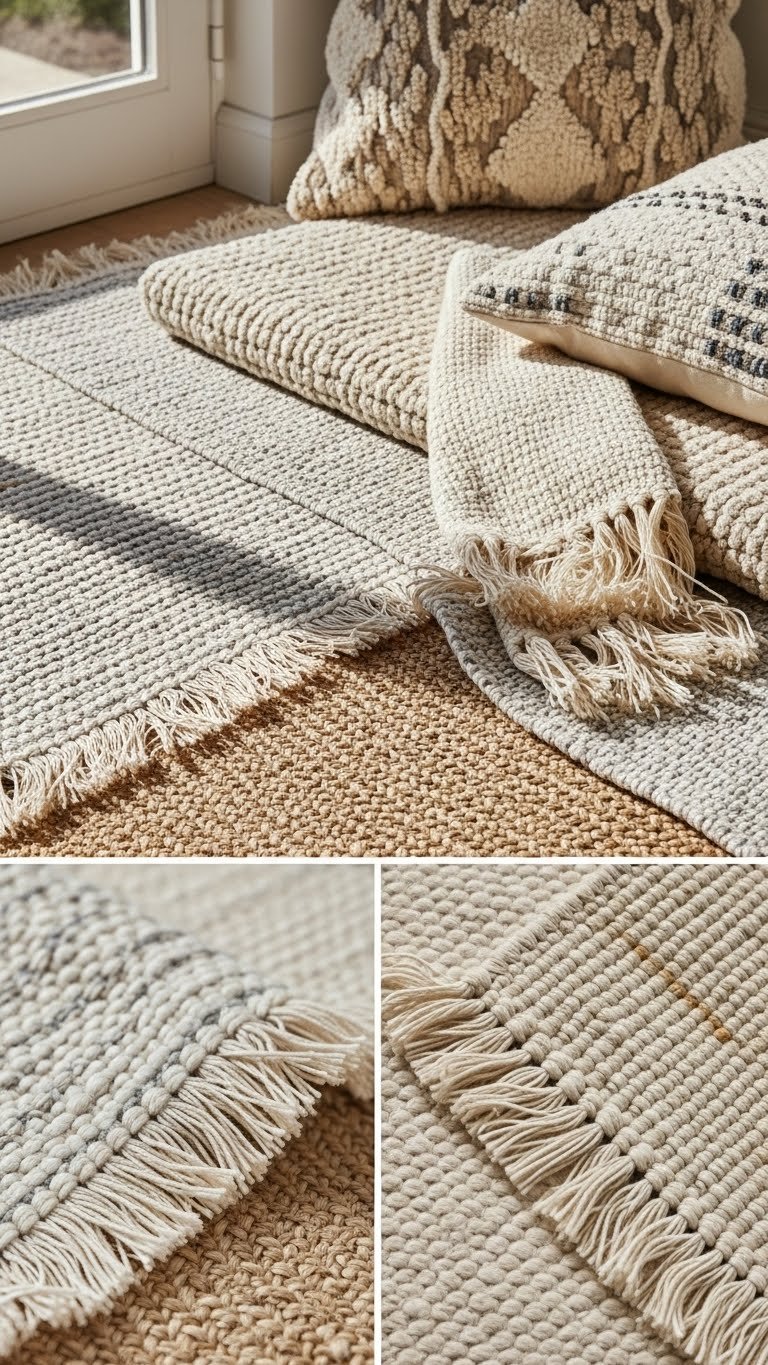
Often you’ll layer woven rugs and tactile textiles to ground a room and invite touch — choose natural fibers like wool, jute, and handwoven cotton for durability and texture, then mix pile heights and weave patterns to create subtle contrast. You’ll favor handwoven durability, rotate pieces, spot-clean spills, and follow jute maintenance tips. Let layered textures feel effortless, lived-in, and free.
Solid‑Color Rugs for Bold Simplicity
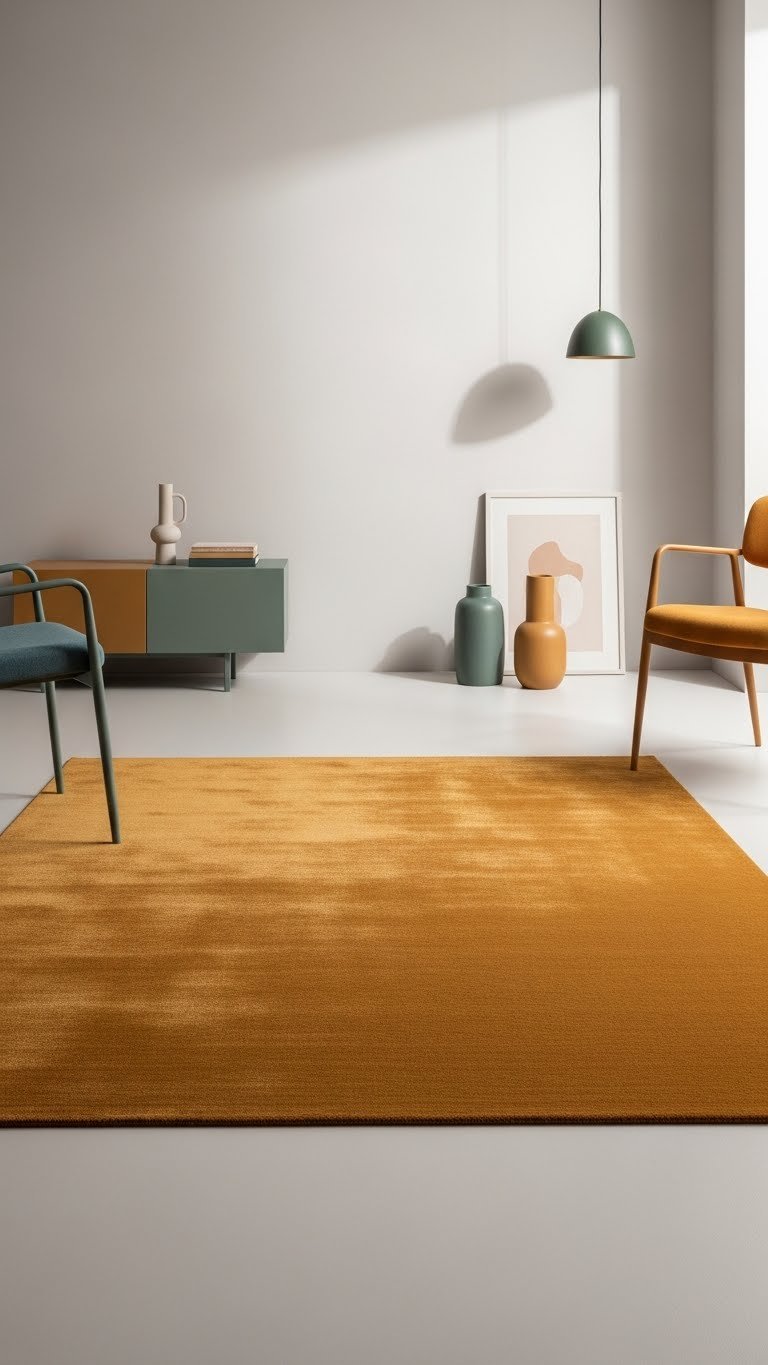
When you want a clean, confident base that anchors a room without competing with other textures, choose a solid‑color rug in a saturated or neutral hue. You’ll create High contrast placement by pairing deep or bright rugs against pale walls.
Favor Minimalist texture for easy care and visual calm. Let furniture float slightly over the edge to convey openness and effortless freedom.
Striped Rugs and Subtle Linear Patterns

Stripes bring quiet structure to a room, giving you a sense of movement without loud fuss — choose narrow, close-set lines for subtle texture or wider bands to guide sightlines and make a small space read longer. Opt for narrow pinstripes or broader bands in muted hues to reinforce tonal linearity. Pair with simple furnishings, balance scale, and let rhythm breathe.
Monochrome Pastel Rooms

If linear patterns give a room rhythm, a monochrome pastel scheme softens that movement into a calm, cohesive presence you can live in.
Embrace soft monochrome walls, trim and textiles in one hue, then vary texture for depth.
With pastel minimalism, pick three functional pieces, limit ornament, and let light and negative space amplify freedom and serene restraint throughout your home.
Vintage and Retro Mixes With Modern Pieces

Although mixing vintage and retro pieces with modern elements might seem tricky, you can create a cohesive, curated look by balancing scale, color, and material.
Pair faded patina metals with crisp white walls, layer retro textiles for unexpected warmth, and add chrome accents sparingly to modernize.
Embrace teak revival furniture as anchor pieces, then let open space and personal finds keep the vibe free and intentional.
Bamboo and Japandi‑Influenced Accessories
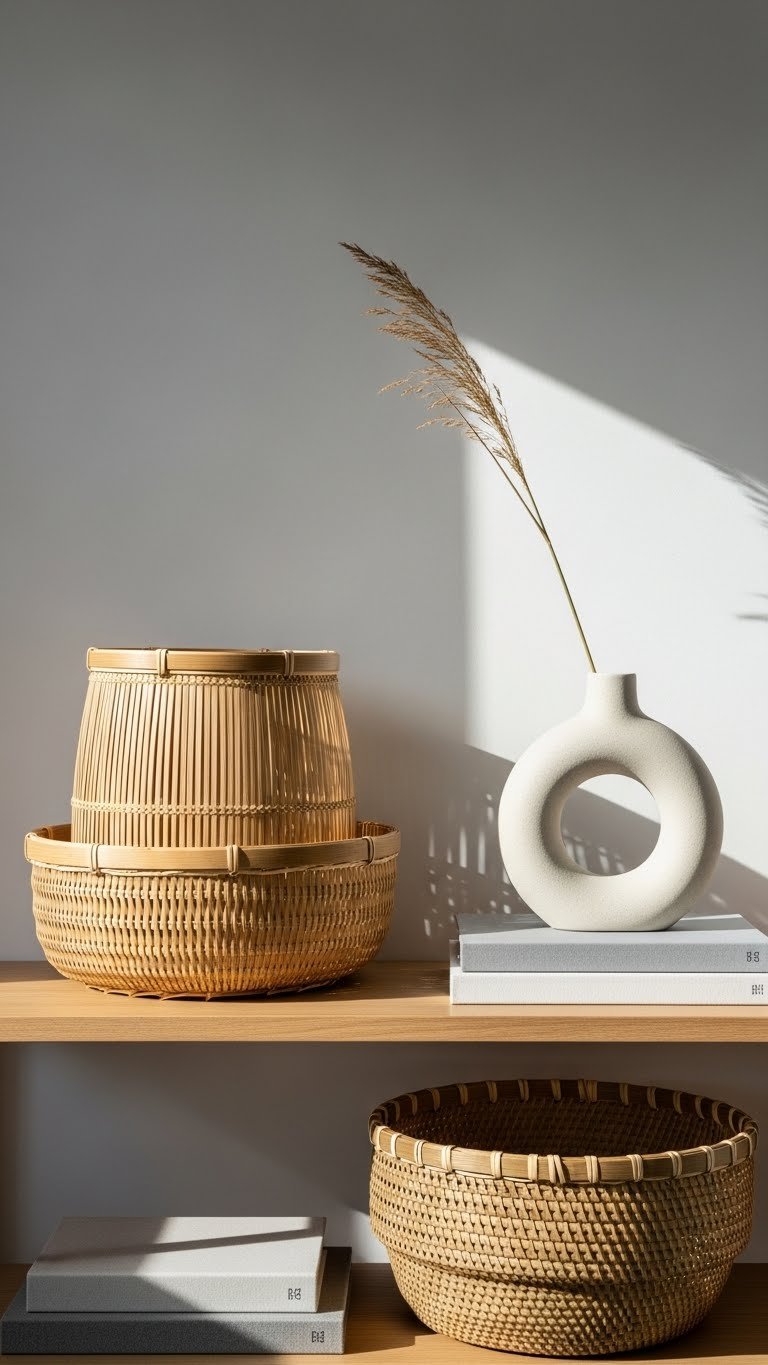
A few well-chosen bamboo and Japandi-influenced accessories can instantly warm a minimalist scheme while keeping it calm and uncluttered. Pair bamboo baskets for tidy storage with a single sculptural japandi ceramics vase to add quiet texture.
Choose natural finishes, muted glazes, and simple lines. Rotate pieces seasonally, keep surfaces airy, and let each item breathe so your space feels free and intentional.
Multifunctional Furniture With Clean Lines

Sustainable materials pair perfectly with furniture that does more than sit pretty — pick pieces with clean lines that double as storage, work surfaces, or guest bedding so your room stays uncluttered and calm. Choose streamlined silhouettes that free your flow, favor hidden storage for a minimalist look, and opt for modular pieces you can rearrange easily to support spontaneity and lasting style.
Sculptural Lighting With Organic Forms

Introduce sculptural lighting to anchor the room and soften hard lines with organic, flowing shapes that feel both artful and intentional.
Choose handblown pendants over rigid fixtures for warm, imperfect glow; place biomorphic sconces to sculpt corners and pathways.
Balance scale with minimal furniture, layer dimmers for mood control, and let each piece act as functional sculpture that frees your space.
Authentic Patina and Handcrafted Finishes

With a weathered edge and visible handwork, authentic patina and handcrafted finishes give your interiors a lived-in elegance that machines can’t mimic.
Embrace hand forged hardware, antique verdigris accents, and brushed woods to craft a relaxed, sovereign aesthetic. Mix textures sparingly, let imperfections lead focal points, and choose finishes that age beautifully so your space evolves freely with you.
Creative Applications of Subway Tile

Drawing the eye like a quiet seam, subway tile can anchor a room beyond the typical kitchen backsplash—think vertical stacks for height, herringbone for movement, or oversized tiles laid with wide grout for a rustic, handmade feel.
You can embrace pattern play on a shower wall, use grout contrast to define geometry, and mix finishes so surfaces feel curated, open, and effortlessly yours.
Timeless Solid Wood Dining Tables

Choose a solid wood dining table that matches how you live: opt for dense hardwoods like oak, walnut, or maple for durability, or pick reclaimed woods for character and sustainability. You’ll appreciate handcrafted joinery for strength and repairability. Consider a live edge slab to celebrate natural lines. Choose finishes that age gracefully, allow easy care, and let your space breathe with effortless, liberated style.